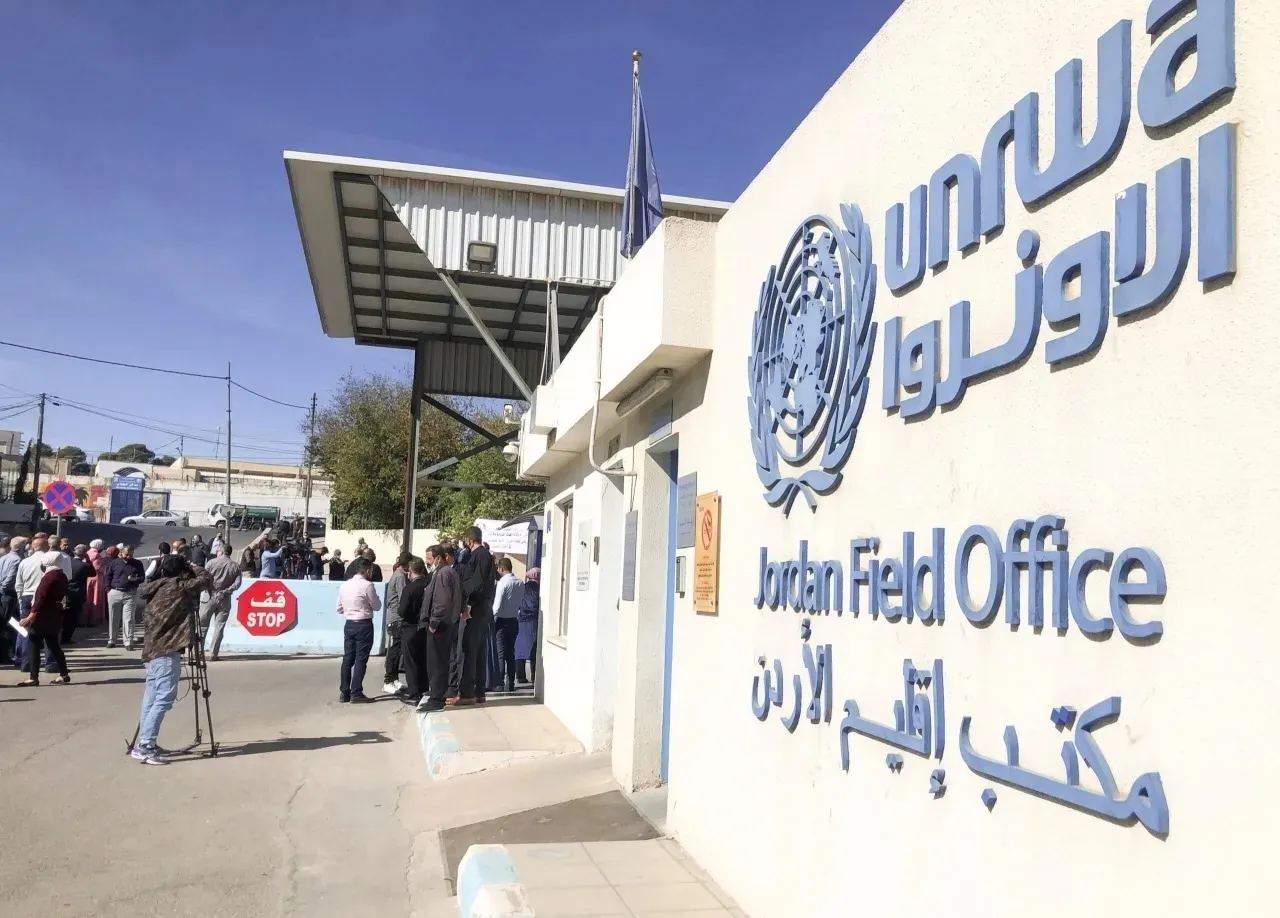
Khaberni - The United Nations Relief and Works Agency for Palestine Refugees in the Near East (UNRWA) has identified the funding requirements for its operations concerning Palestinian refugees in Jordan, Lebanon, and Syria as $170.2 million, including $94.7 million for Syria, $63.3 million for Lebanon, and $11.9 million for Jordan.
This came in its humanitarian appeal for the three countries for the year 2026, indicating that Jordan still suffers from the exacerbated effects of regional instability, including economic pressures and the prolonged presence of refugees, according to Al-Ghad.
It stated that although the majority of Palestinian refugees in Jordan have citizenship, others numbering 181,600 do not, limiting their access to public services, livelihoods, and legal protection.
Moreover, many displaced Palestinians residing in Jordan, who fled from Gaza in 1967, continue to live without recognized documents despite having been in Jordan for decades.
As foreigners, they rely on informal work opportunities, reinforcing a cycle of poverty and dependency on humanitarian aid.
The report also noted that out of the approximately 19,600 Palestinian refugees who fled from Syria to Jordan during the conflict, and who are still residing in the country, about 3,000 refugees lack any form of official Jordanian documents.
According to the report, their legal status—from not having legal residence permits or valid documents to the lack of official recognition—restricts their access to employment, education, and health care, making them completely dependent on UNRWA for health care, education, protection, and emergency cash assistance.
The report highlighted that there are challenges for this group in obtaining a legal status and civil documents, exposing them to protection risks including arrest, detention, and deportation, as well as statelessness.
This group includes most of the Palestinian refugees, numbering over 400, who reside in Jarden Camp, a closed reception center for refugees, where restrictions on movement and livelihoods, as well as old shelters, exacerbate their suffering.
More Vulnerable Groups
The report mentioned that families headed by women, people affected by the crisis, individuals with disabilities, the elderly, youth not in school, and individuals lacking legal status, and returnees to Syria are "among the most vulnerable groups in Syria, Lebanon, and Jordan."
In 2026, Palestinian refugees in the three countries will continue to face the aggravated impacts of conflict and displacement, and their fragile legal status.
The continuation of regional instability and rooted social and economic crises are expected to exacerbate humanitarian needs. These interconnected challenges emphasize the necessity for a coherent humanitarian response and regional protection, especially with the onset of stabilization efforts and early recovery.
Refugee Situations in Syria
According to the report, 92% of Palestinian refugees (more than 384,000 people) in Syria face food security hazards, as nearly 30% (over 125,000 people) continue to suffer from prolonged internal displacement, and the extensive destruction of Palestinian refugee camps, especially Ain Tal, Yarmouk, and Daraa, which were formerly home to a third of the country's Palestinian refugees, poses significant obstacles to their sustainable return.
Despite this, following the fall of the Bashar al-Assad regime in 2025, there was a sharp increase in return movements to and within Syria, often driven by economic pressures resulting from displacement and unstable legal status abroad, along with other factors such as family reunification.
The Situation in Lebanon
In Lebanon, according to the report, the hardships of social and economic conditions continue, the escalation of violence in the camps, and restrictions on legal status, further entrench exclusion across generations, with more than 80% of Palestinian refugees living below the poverty line.
In 2026, UNRWA's humanitarian response in Syria, Lebanon, and Jordan will focus on maintaining the dignity and resilience of Palestinian refugees amid ongoing economic, social, and security crises.
The agency will prioritize life-saving assistance, protection, and support for voluntary, dignified, and sustainable return to Syria through a multi-sectoral approach, targeting interventions to the most vulnerable Palestinian refugees in the three countries.
This includes individuals without legal status, people with disabilities, the elderly, women-headed families, vulnerable youth, and returnees who face increased risks and significant obstacles to accessing their rights and basic services.
Meanwhile, UNRWA will remain prepared for a rapid and large-scale response to conflicts and other crises, including those resulting from renewed regional or local conflicts.
Within the same humanitarian appeal, UNRWA will provide cash assistance to approximately 124,000 of the most vulnerable Palestinian refugees to meet their basic needs in a flexible and dignified manner, including individuals affected by crisis-related traumas, as well as those voluntarily returning to or within Syria.
To enhance accountability and improve efficiency, the agency will continue to implement advanced assurance measures, including digital identity verification, as a cornerstone for providing meaningful and transparent assistance to Palestinian refugees.
It will give priority to necessary protection interventions to safeguard the rights of Palestinian refugees and ensure their access to basic services in UNRWA's three operational areas, providing legal assistance and referral services in Syria, Lebanon, and Jordan to assist 16,520 Palestinian refugees, particularly those without official documents. It will also provide awareness on the risks of explosive remnants for 51,530 people in high-risk areas in Syria to enhance their safety.
In all three areas, case management will support survivors of gender-based violence, vulnerable children and youth, individuals experiencing negative coping mechanisms, as well as individuals facing increased psychosocial stress, among other vulnerable cases.
UNRWA will provide primary health care services funded by the appeal to meet the changing needs of Palestinian refugees, including covering hospitalization costs in response to the increasing difficulty in affording secondary and tertiary health care costs.
Psychosocial Support
Across the regions, up to 123,000 Palestinian refugees will receive psychosocial support, and in this context, about 90,000 children enrolled in UNRWA schools will receive support to address the profound psychological and social impacts of prolonged conflict, displacement, and social and economic difficulties, with the agency prioritizing the provision of emergency education to ensure the continuity of learning for the most vulnerable students, including those returning to or within Syria, Palestinian refugees, and former internally displaced persons in Gaza.
UNRWA will also provide shelter or the necessary support to face the winter for more than 17,000 conflict-affected families, helping to ensure their access to safe living conditions and protection from weather fluctuations.
As an essential readiness measure, UNRWA will also ensure the readiness of seven emergency shelters in Lebanon, capable of accommodating up to 3,000 displaced persons, through maintenance of critical infrastructure, pre-stocking essential supplies, providing reserve fuel, and linking them to rapid mobile health response capabilities for immediate activation during crises.
Concurrently, the agency will work on rehabilitating or building UNRWA facilities damaged by the conflict, including schools and health centers in Syria, to support the safety and continuity of essential services, and more than 180 facilities in all three areas will undergo maintenance and/or repair, including updates to improve accessibility and the installation of sustainable energy systems at vital sites, enhancing the environmental sustainability of the UNRWA and its resilience during emergencies.
The agency will adopt a community-focused approach integrating mental health and psychosocial services and skill development, working to enhance social cohesion and build a safer and more resilient environment.
UNRWA's interventions will continue to be guided by the nexus approach linking humanitarian action, development, and peace, which connects relief with resilience building and conflict prevention, ensuring dignity, protection, and inclusion for all Palestinian refugees in the region.