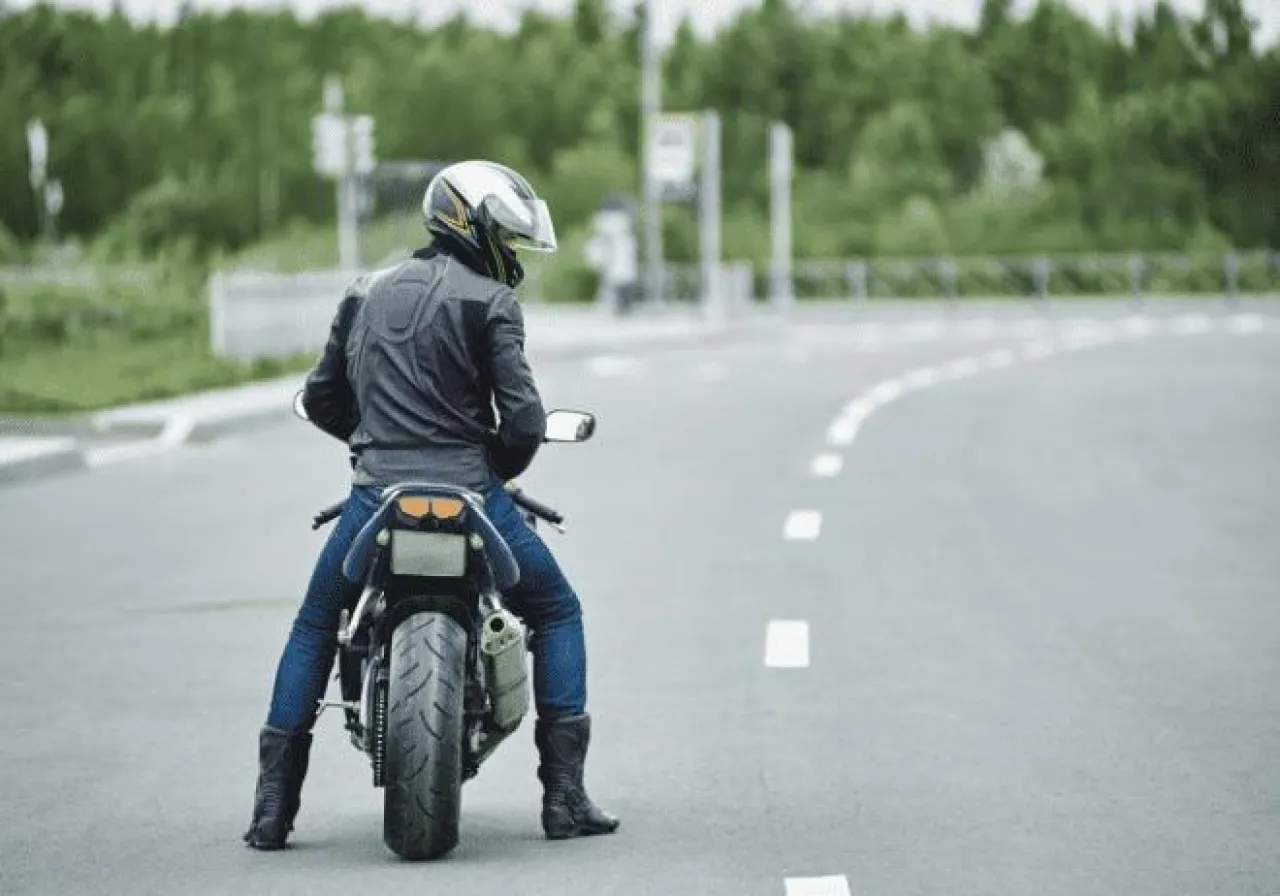
Khaberni - Motorcycle accidents are often fatal, and riders face significant dangers on the road, but the four-second rule serves as a vital safety key to protect their lives.
The golden rule is based on a simple idea of maintaining at least a four-second distance between your motorcycle and the vehicle in front of you, which provides the rider the necessary time to respond to sudden stops, lane changes, or to mitigate road hazards.
As motorcycles do not have the same protective structure that a car's body offers, nor do they feature modern vehicle safety benefits such as automatic emergency braking systems, this makes motorcycle accidents more dangerous—and often more deadly. By following the four-second rule, motorcyclists can reduce the likelihood of experiencing a rear-end collision or worse, according to SlashGear.
A motorcyclist does not need a stopwatch to measure four seconds while driving, but instead just your eyes and a fixed landmark on the road. Choose something stationary by the roadside, like a sign or a tree, and start counting once the vehicle in front of you passes that landmark. If you reach the landmark before you have finished counting to four, it means you are too close to the vehicle ahead, and you should increase the distance to maintain safe driving.
Why is the four-second rule important?
The importance of the four-second rule lies in reaction time since research shows that most drivers take one and a half to two seconds to respond after identifying a hazard. Therefore, the four-second rule doubles this duration, giving drivers ample time to consider the reaction of the driver and the braking distance needed to safely stop the motorcycle.
Even at lower speeds in city traffic, the vehicle ahead might stop suddenly or an obstacle may appear "without warning".
The 4 seconds are a maximum limit; in bad weather conditions, construction areas, or heavy traffic, it is advisable to allow yourself more time. For example, when roads are slippery due to rain or snow, and drivers face the risk of hydroplaning, this time should be extended to six seconds or more, while night driving and mountain roads require extra caution.