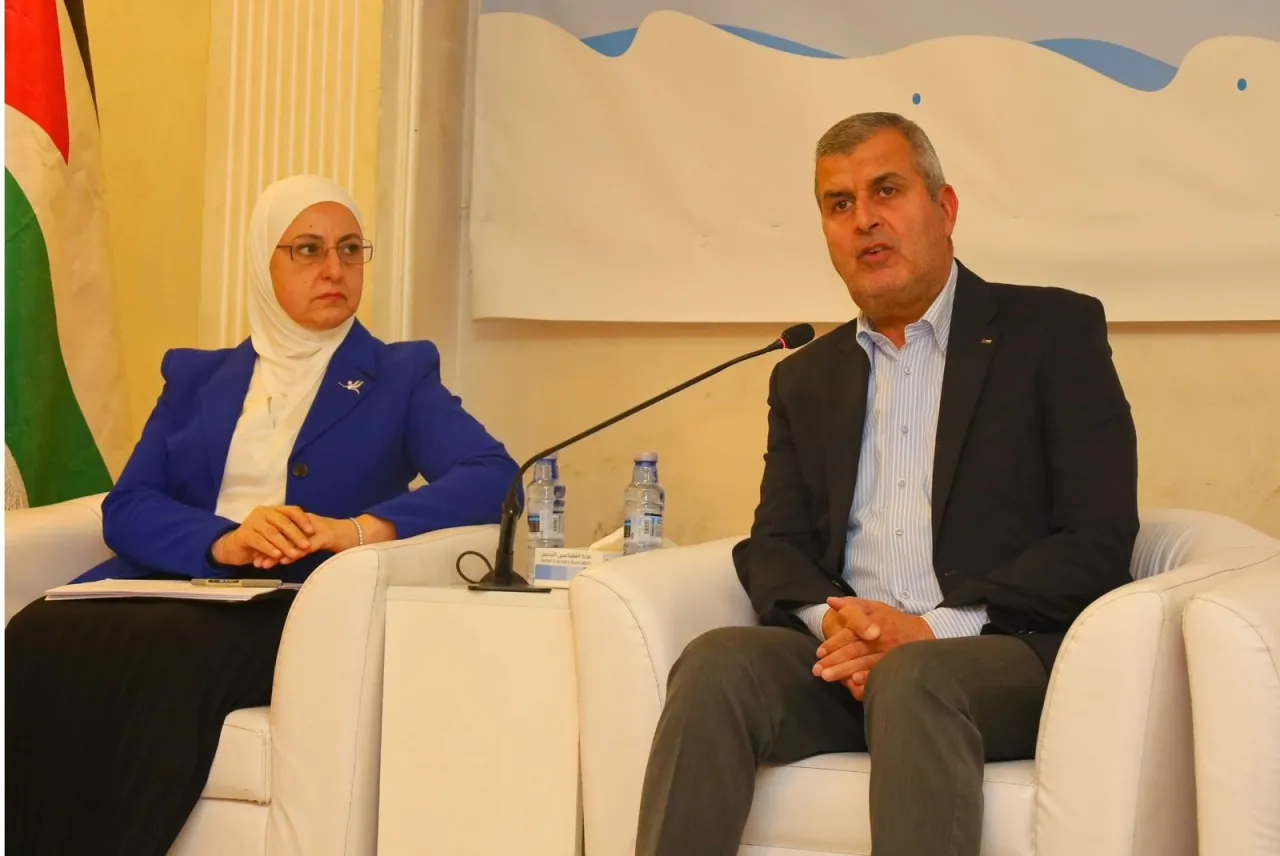
Khaberni - Minister of Energy and Mineral Resources Dr. "Saleh Al-Kharabsheh" sponsored today, Monday, a panel discussion organized by the Energy Committee at the Jordan Engineers Association titled “The Energy Sector in the Economic Modernization Vision,” which discussed the main aspects of future work for the energy sector in the Kingdom.
Al-Kharabsheh affirmed that the ministry's priorities are focused on enhancing self-reliance and reducing the import bill through the implementation of 6 initiatives and 32 priorities within the second executive program of the Economic Modernization Vision (2026–2029), pointing out that the ministry is working on updating the energy strategy (2025–2035) to include the latest developments in the global energy sector including new technologies such as hydrogen and storage.
Al-Kharabsheh explained that the ministry is implementing strategic projects to increase local production, which include developing gas fields in Risha, Sarhan, and Hamza, intensifying exploration activities in north Risha and east Safawi, in addition to expanding gas networks and connecting them with the Arab Gas Pipeline to cover Amman, Zarqa, and industrial cities, as well as implementing projects for renewable energy with a capacity of 300 megawatts from solar and wind energy, and developing energy storage projects using batteries and water pumping.
He indicated the continuation in developing the green hydrogen sector by implementing about 14 projects and studying shared infrastructure, which will enhance Jordan's position as a regional center for clean energy production and export.
Al-Kharabsheh noted that the ministry adopts a comprehensive strategy to face the challenges of the sector, which includes storage and regional electrical interconnection, maximizing national resources, and implementing smart meters as part of digital transformation programs.
He pointed out that the ministry's goal is to achieve added value for the economy and society by reducing the energy costs on industry, supporting energy efficiency programs and solar water heaters, and delivering electricity to remote areas through the rural electricity levy, in addition to implementing time-linked tariffs to rationalize consumption and achieve financial efficiency and fairness in the distribution of returns.