Khaberni - Starting Monday, Washington, the American capital, will host the annual Spring Meetings of the International Monetary Fund and the World Bank Group for 2026, with broad participation from top economic and financial officials around the world.
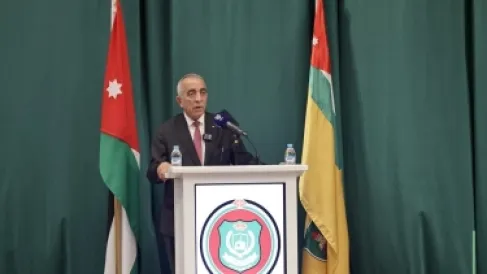
Jordan will participate in these meetings with a high-level official delegation including the Minister of Finance Abdel Hakim Al Shibli, the Minister of Planning and International Cooperation Zeina Toukan, and the Governor of the Central Bank Adel Sharkas.
Jordan's participation in the Spring Meetings coincides with the ongoing periodic reviews of its economic program supported by the International Monetary Fund, where the IMF mission, starting Thursday, April 2 of this year, began conducting the fifth review in Amman via video conferencing.
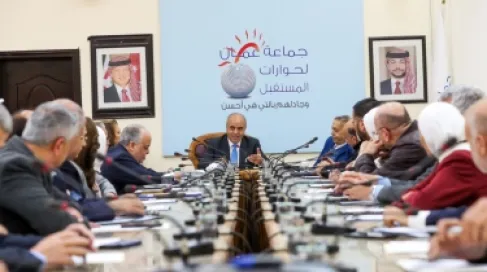
The IMF mission held several meetings with the government's economic team, during which they discussed the economic, financial, and monetary conditions within the framework of the fifth review of the "Extended Fund Facility" agreement, alongside the second review under the Resilience and Sustainability Facility arrangements, according to a source for "Al-Mamlaka" earlier.
These reviews are scheduled to be completed on the sidelines of the Spring Meetings in Washington, concurrent with the presence of the government's economic team there, reflecting a direct linkage between the trajectory of Jordan's economic program and the activities of the annual international meeting.
This step comes after the executive board of the International Monetary Fund, last December, approved the fourth review within the Extended Fund Facility program, and the first review within the Resilience and Sustainability Facility.
The successful completion of the fifth review would enable Jordan to receive a new tranche valued at approximately 97.784 million Special Drawing Rights (about 130 million dollars), in addition to approximately 110 million dollars under the second review of the Resilience and Sustainability Facility, supporting the national economic program.
* Meetings Amid Global Economic Pressures
The meetings for this year launch at a time when the global economy faces increasing pressures, with rising geopolitical risks and an increased need for international financing for countries affected by crises, especially the recent war between the United States, Israel, and Iran.
The meetings will be held from April 13 to 18 at the headquarters of both institutions in the American capital, with the participation of finance ministers, central bank governors, and economic decision-makers from various countries around the world, to discuss the prospects of the global economy, financial stability, and development issues.
The meetings come amid expectations of a downward revision of global growth prospects, with warnings that geopolitical tensions, especially in the Middle East, will lead to rising inflation and a slowdown in global economic activity, posing dual challenges for policymakers related to curbing prices and supporting growth, as published by the International Monetary Fund.
The IMF also noted that disruptions in energy and basic goods supplies represent a "negative supply shock" affecting the global economy, requiring balanced policies to prevent exacerbating inflationary pressures while maintaining financial stability.
In an indication of the magnitude of the challenges, the International Monetary Fund expects the demand for its financial resources to rise to between 20 and 50 billion dollars, due to the economic consequences of global crises, including supply chain disruptions and rising energy prices.
The IMF confirms its readiness to support member countries, amidst increasing pressures on the balance of payments in many economies, especially developing and energy-importing countries.
The meetings will also discuss growing risks facing emerging markets, in light of their increasing reliance on financing from non-bank sources, making them more vulnerable to market volatility and sudden capital outflows, which may lead to pressures on currencies and rising borrowing costs.
The IMF also highlights the growing challenges of global debt, with levels rising to historical heights, underscoring the need for fiscal and structural reforms to ensure financial sustainability.
The meetings include a series of key encounters, notably meetings of the International Monetary and Financial Committee and the Development Committee, in addition to sessions and events discussing global economic issues, financial markets, and sustainable development.
The meetings also serve as a platform for holding bilateral meetings between countries, discussing financing programs and economic reform, alongside the launch of key reports such as "Global Economic Outlook" and "Global Financial Stability Report."
The agenda of the 2026 meetings reflects the magnitude of the challenges facing the global economy, in an environment characterized by high uncertainty, continuing inflationary pressures, and increasing financial risks, highlighting the importance of international coordination to avoid deeper impacts on global economic growth and stability.