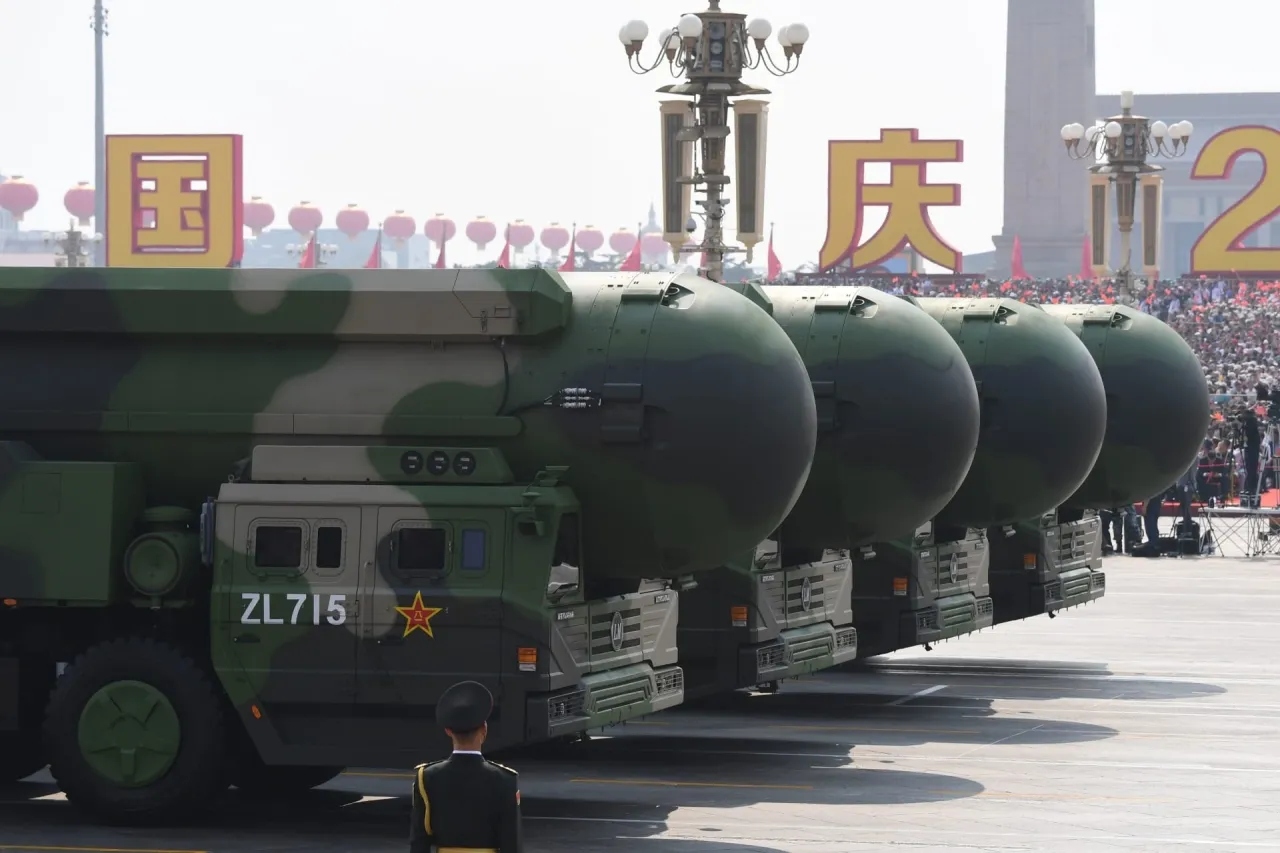
Khaberni - Digital security experts revealed a security breach that might be considered the largest in Chinese history, following a claim by a cyber attacker of having seized huge amounts of sensitive data, including "top secret" defense documents and technical blueprints for missile systems, from a supercomputer managed by the state in Tianjin city.
The leaked data, estimated to be about 10 petabytes, includes intelligence information extracted from the "National Supercomputing Center" (NSCC), a strategic hub opened in 2009 as the country's first center of its kind. The center provides infrastructure services to over 6,000 clients across China, including defense agencies, military research institutions, and advanced technology universities like the "National Defense Technology University".
A silent breach for six months, and experts who reviewed samples of the data reported that the hacker managed to extract the information over a full six months without detection by defense systems, by exploiting a vulnerability in a "Virtual Private Network" (VPN) domain and using an automated "Botnet" to distribute the downloading process and minimize the risk of triggering alarms. To grasp the disaster's magnitude, the 10 petabytes are equal to 10,000 terabytes, which exceeds the storage capacity of 10,000 high-spec laptops.
An account named "Fleming China" posted samples on the "Telegram" app on February 6, claiming they contain research in space engineering, military research, biocomputing, and nuclear fusion simulation, linked to major institutions like the "Aviation Industry Corporation of China" (AVIC) and the "Commercial Aircraft Corporation of China" (COMAC).
Data trading and cryptocurrencies, where analysts mentioned that those in charge of the breach offered a "limited preview" of the data for thousands of dollars, while setting the price for full access in the hundreds of thousands of dollars, with a requirement for payment in cryptocurrencies to ensure identity secrecy. "Dakota Cary," an advisor at the "Sentinel One" digital security firm, confirmed that the samples, which bear "secret" stamps in Chinese and include animations and simulations of defense equipment, bombs, and missiles, fully align with the massive computational nature of Tianjin Center housing the "Tianhe-1" computer.
Chronic vulnerabilities and challenges of digital sovereignty, this breach highlights deep weaknesses in China's technical infrastructure at a time when it is competing with the United States for leadership in artificial intelligence. In 2021, personal data for a billion Chinese citizens remained exposed for more than a year before being offered for sale in 2022. Despite the "Chinese National Security White Paper" for 2025 setting strong data and artificial intelligence security barriers as a top priority, experts see that protection capabilities still need significant improvement.
As of now, there has been no official comment from the Ministry of Science and Technology or the Cyber Space Administration of China regarding this incident.