Khaberni - In the current "Artemis 2" mission, astronauts have observed views of the far side of the Moon that no human has seen before, and some refer to it mistakenly as the "dark side," which is incorrect as it is not dark at all.
The Moon is tidally locked with Earth, which is why it nearly always shows us the same face; contrary to appearances, the Moon does indeed rotate around its axis, but this rotation takes about 29 days to complete, which is roughly the same amount of time it takes to orbit the Earth, explaining why the same face is consistently facing us, as explained by iflscience.
Despite this synchronization between the Earth and the Moon, the Moon’s orbit is not entirely circular but elliptical, allowing us to see slightly more than half of its surface over time. The other half, which remained unknown for centuries, was only discovered after spacecraft were sent into lunar orbit.
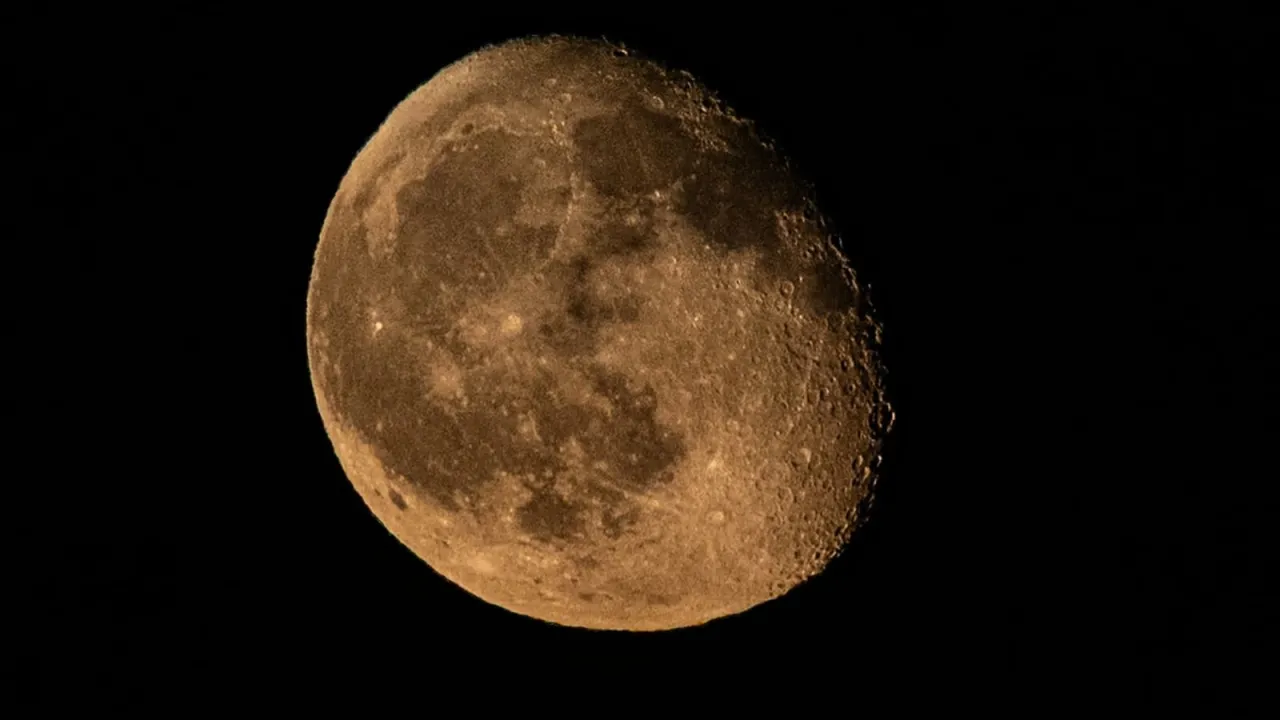
Scientists reveal significant differences between the two sides of the Moon: the near side features its wide basaltic plains, known as the "lunar maria," while the far side has more craters. But the differences aren’t limited to the surface; they extend into the depths of the Moon.
Planetary scientist Dr. Ryan Park says recent studies suggest that the Moon's interior is heterogeneous, with the side facing Earth being warmer and more geologically active compared to the far side, which ties back to the Moon’s volcanic history and explains the clear variance between the two sides.
As for the term "dark side," it is a variable and not constant descriptor. The Moon, like Earth, experiences night and day cycles, where half of it is dark at any given moment. Due to its long night cycle, lunar nights can last more than 14 days, so when the Moon is full (full moon), the far side is dark, whereas during the new moon phase, it is the near side that is dark.
Thus, distinguishing between the "far side" and the "dark side" is not merely a linguistic matter, but reflects a precise scientific understanding of the Moon's nature and movement, at a time when new discoveries are opening broader horizons for understanding Earth’s closest neighbor.