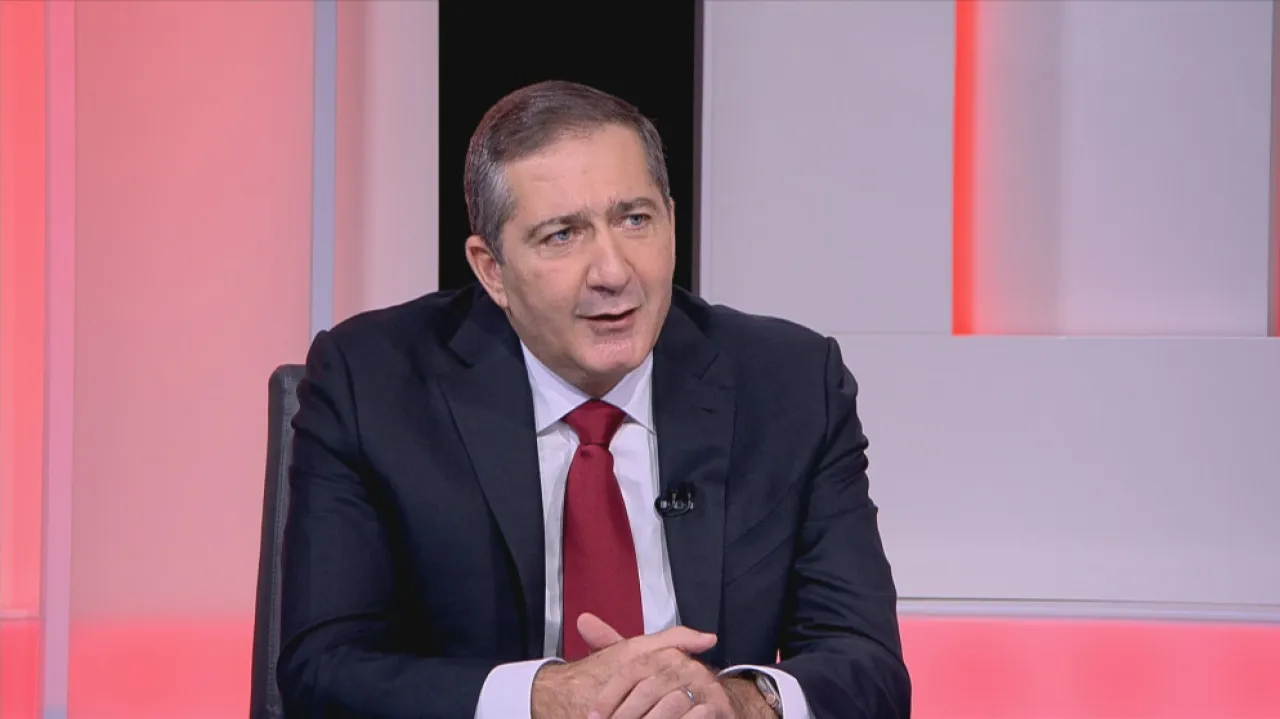
Khaberni - Former Prime Minister Samir Al-Rifai said that Jordan is an integral part of the joint Arab action system and that the current stage, which is witnessing an escalation in the region, requires rallying around the Jordanian state and the Hashemite leadership, and strengthening confidence in decision-making institutions.
Al-Rifai stated in statements to the Jordanian news agency "Petra," on Wednesday, that this rallying is not only a national duty but also a fundamental condition for enhancing political resilience, ensuring the continuation of Jordan's role as a pillar of moderation, a voice of reason, and a reference for balance in a region experiencing escalating crises.
He added: "Today we are facing an unprecedented regional crisis in terms of its nature, and because it represents an unjustified aggression against Jordan and the Arab Gulf states, with various regional extensions, and wide global political and economic effects, but Jordan's security and stability remain the utmost priority unmatched by any other."
He added that the competing projects in the region, including the Israeli and Iranian projects, exploited the Arab rift to expand their influence, attempting to undermine Arab states and destabilize their societies by feeding polarizations and sub-identities and destroying trust among Arab peoples and governments.
He explained that in facing this complex scene, the Jordanian priority must be decisively settled; Jordan first, Jordan last, Jordan always and forever. Jordan cannot continue to defend Arab stability and just Arab causes unless it first secures its stability, protects its institutions, safeguards its society, and remains capable of balanced action in all files, including the economic file, as the Jordanian economy is directly affected by the regional instability, as are all countries in the region and the world, and everyone must certainly consider all possibilities and plan for them.
Al-Rifai emphasized that Jordan also needs a stable region, and deeper and more cohesive relations with its Arab neighbors, primarily Syria and Iraq, and with the brethren in the Kingdom of Saudi Arabia and the Arab Gulf states, it needs to push towards more economic integration, opening Arab markets to each other, and enhancing the joint security infrastructure, which achieves a collective benefit, not an individual one.
He pointed out that Jordan is capable of playing this role in its Arab milieu, and is naturally concerned with it as an extension of its role, efforts, and duty towards its nation and itself. Jordan was built over decades of effort, accumulation, patience, legitimacy, and hard work, and must continue to thrive, and that the upcoming stage requires greater reliance on itself, and greater reliance on each other as Arab states, for as history has proven, the strength of the Arabs always lies in their unity, not in their division.
He noted that protecting the West Bank from any course that leads to displacement, evacuation, or the destruction of the remaining political horizon for the solution remains an urgent Jordanian priority, as meddling with the West Bank is not a distant Palestinian concern from Jordan, but a matter that directly affects Jordan's national security, the future of the Palestinian cause simultaneously, and preserving the Palestinian cause, and the right of the Palestinian people to establish their independent state on their national soil has always been a right defended by Jordan as a fundamental part of defending the just causes of the nation, and Jordan has always rejected attempts to swallow the occupied West Bank lands or to displace its people and destroy the chances of a fair and comprehensive solution.
He emphasized that Jordan must maintain its influence in the international context, and preserve its image as a responsible, balanced country that can be relied upon, and as a bearer of a political and ethical message, for the international trust that Jordan has accumulated over decades is not merely a procedural detail, but a foundation of its strength, an element of its protection, and a lever of its role.
Al-Rifai indicated that, thankfully, the Jordanian decision is not made under the impulse of emotion, amid shouts, or in response to one-upmanship, but is built in the institutions of the state, in circles of strategic estimation, in the calm reading of the scene, and based on long and cumulative experience in dealing with regional crises. This is one of the secrets of Jordan's ability to endure and to avoid many of the slips that other countries have paid for when they succumbed to emotion, illusion, or chaos.