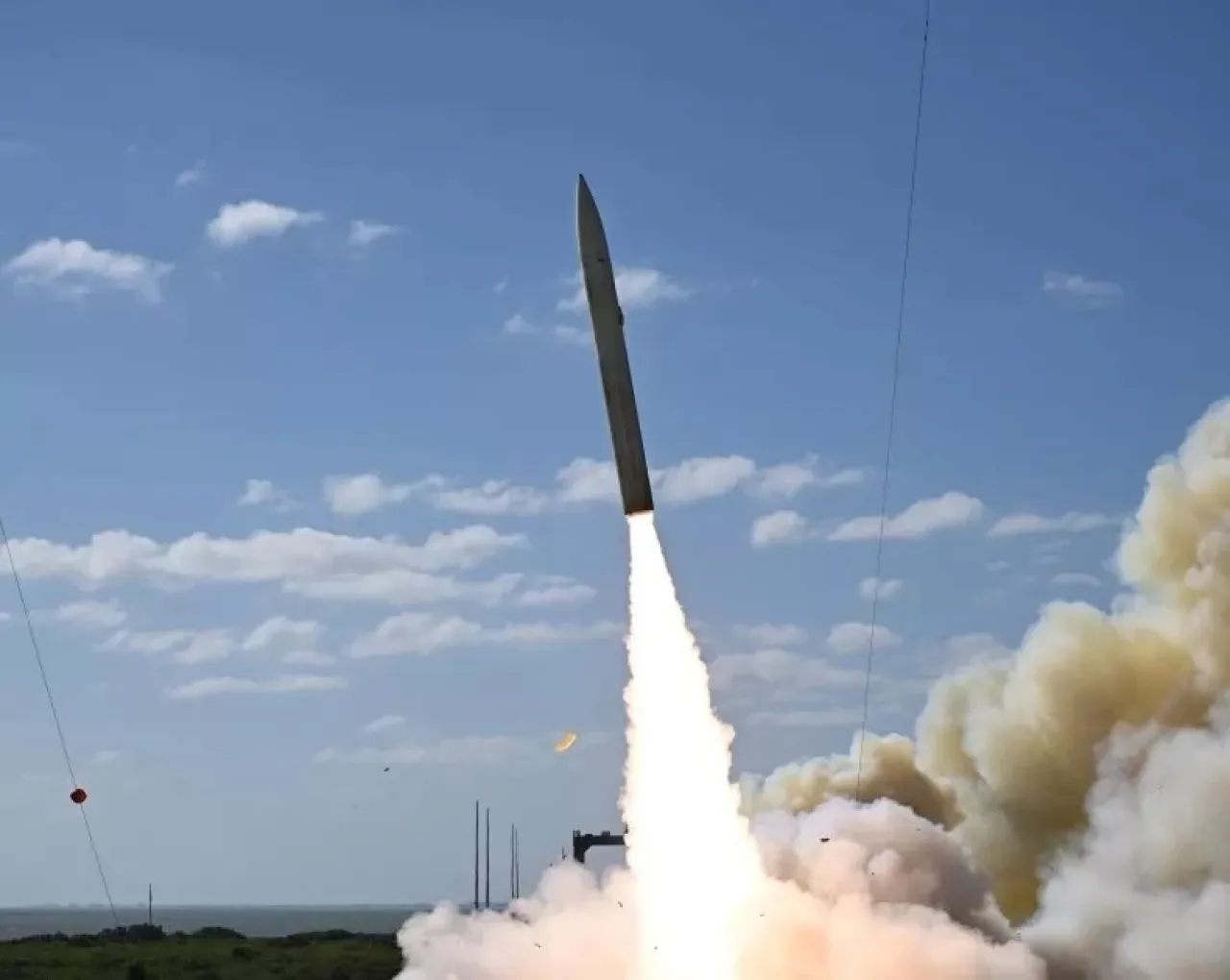
Khaberni - In an era where technological innovations are accelerating, hypersonic missiles have become one of the most prominent developments in the military and space fields.
These missiles are capable of flying at speeds exceeding five times the speed of sound, making intercepting or even tracking them a significant challenge.
How do these complex systems work? And what distinguishes them from conventional missiles?
Incredible Speed
Hypersonic missiles are flying vehicles moving at speeds over 5 Mach, which is more than five times the speed of sound.
These incredible speeds allow them to cover long distances in a very short time.
These missiles are primarily used in military applications, whether for transporting warheads or conducting precise and rapid strikes.
Basic Operating Mechanism
Hypersonic missiles rely on advanced propulsion technologies. There are two main types, the first uses conventional rocket engines to launch the missile to a certain altitude, then a hypersonic glide vehicle separates to complete the journey at tremendous speed within the atmophere.
The second type relies on engines known as scramjets, which use external air as an oxidizer instead of carrying oxygen inside the missile, reducing weight and increasing efficiency.
The approximate range of hypersonic missiles ranges from 1000 to 10000 kilometers, depending on the nature of each missile’s operation.
Technical Challenges
Flying at hypersonic speeds is not easy; these speeds generate immense heat due to friction with the air, which can reach thousands of degrees Celsius. Therefore, the missiles must be manufactured from materials resistant to high temperatures.
In addition, controlling and directing the missile poses a significant challenge, as any minor error could lead to a significant deviation from the path.
Prominent Types
There are many countries that have hypersonic missiles in their military arsenal, and some of the notable missiles include:
Avangard missile:
A Russian intercontinental missile with a range of more than 6000 kilometers, characterized by immense speed and very high maneuverability that makes interception almost impossible.
DF-ZF missile:
A Chinese medium-to-long-range missile designed to penetrate air defense systems.
AGM-183 ARRW missile:
An American air-launched missile known for its very high speed, with some estimates suggesting that it can reach speeds of 15 to 20 Mach and can carry a conventional or nuclear warhead.
Interception Difficulty
The danger of hypersonic missiles lies in their speed and maneuverability. Unlike ballistic missiles that follow a predictable path, these missiles can change direction during flight, making it difficult for air defense systems to predict their trajectory and intercept them.
The high speed of hypersonic missiles also reduces the time available to make a response decision.
As the development of hypersonic missile technologies continues, it is expected that these missiles will play an increasingly important role in the global balance of power.
However, they also raise questions about security and stability, necessitating the search for international solutions to regulate their use.