Khaberni - The large rocket salvo launched by Lebanese Hezbollah on Wednesday evening, which exceeded 100 rockets towards northern Israel, raised questions about the party's military capabilities and the repercussions of this escalation on the ongoing confrontation course in the region for the past 12 days.
The rocket attack came hours after intense Israeli raids that targeted most of the villages in southern Lebanon, in addition to focused bombardment that affected large areas of the southern suburbs of Beirut, amid Israeli warnings to evacuate about 19 square kilometers out of the total area of the suburb, which is 22 square kilometers.
Military expert Brigadier General Elias Hanna believes that launching more than 100 rockets in one day carries significant military implications, indicating that Hezbollah still possesses a logistical structure and a rocket arsenal that allows it to continue operations despite the ongoing war.
Hanna explained - while analyzing the military scene in Lebanon - that even Israeli estimates suggest that the party still retains about 20% of its military capabilities, which means it possesses short-range rockets like Katyushas, in addition to other missiles capable of reaching deep into Israel such as "Emad" missiles 1, 2, and 3, which was evident in the nature of the recent attack.
The ability to launch such a number of rockets at once - according to military analysis - reflects gaps in Israeli intelligence that is supposed to monitor both the air and ground domains in Lebanon.
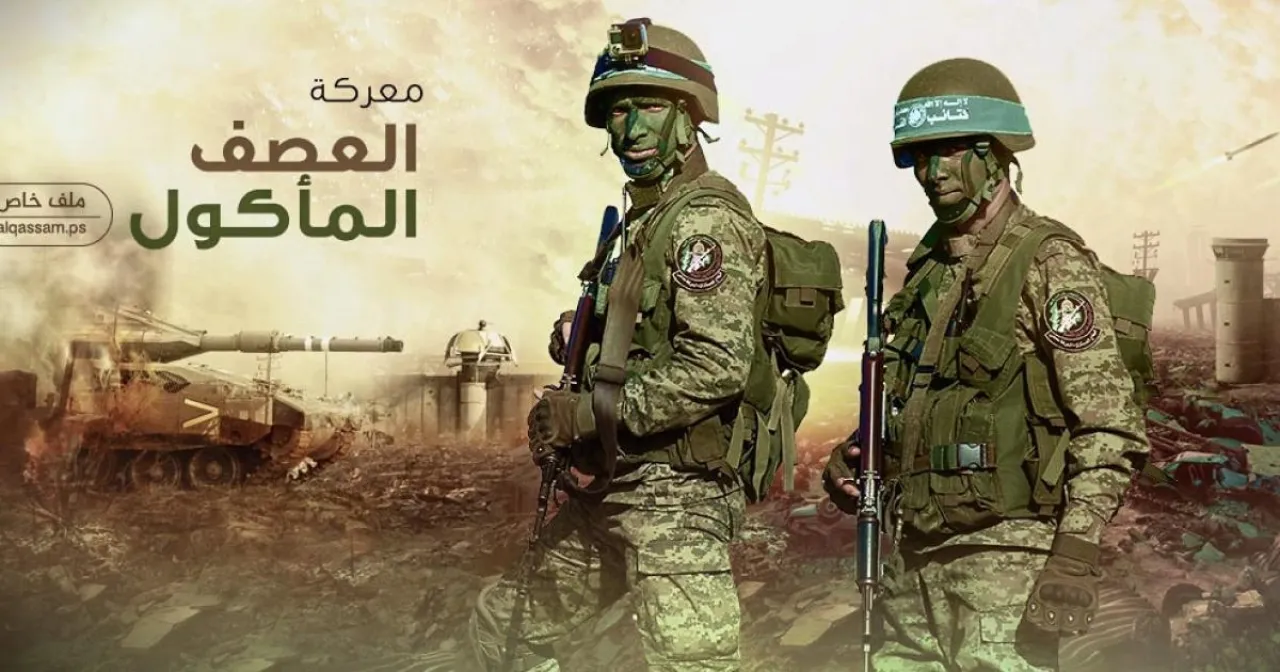
On Wednesday evening, Hezbollah announced the launch of "The Eaten Storm" operation, while an Israeli military spokesperson said the army "will retaliate mightily" against these operations, indicating that "what's to come is greater" in the upcoming hours.
Hanna points out that the biggest challenge for Israel is not the missile strike itself, but the possibility of its repetition, considering that the current phase may reflect a restructuring of the command, control, and execution systems within the party.
In this context, the military expert highlights that Hezbollah now relies on a different operational composition that uses a mix of combat means, including drones, Katyusha rockets, and anti-tank defenses, reflecting a combat tactic based on attrition and a diversity of tools.
Hanna also links this escalation with the broader regional context, explaining that what Hezbollah is doing today was supposed to fall under the strategy of "unifying the battlefields" or what Iran calls "advanced defense," yet this equation has changed following the assassination of Hezbollah leaders and developments in the Syrian and Iraqi arenas.
According to this role adjustment, Iran may focus on launching long-range missiles, while Hezbollah works to distract the Israeli interior and exhaust its air defense systems to increase military pressure.
Hanna surmises that the intense rocket bombardment conducted by the party also falls under a direct response to targeting the southern suburbs of Beirut, within a pattern of responses he describes as "punitive deterrence."
He notes that the Israeli warnings, which involved evacuating most of the suburb's area, recall the doctrine of extensive destruction implemented by Israel during the July 2006 war, pointing out that the suburb represents the "core heart" of the supporting environment for Hezbollah, along with other areas like Baalbek.
Alongside the rocket escalation, Hanna points out that Israel is also seeking to achieve territorial gains in southern Lebanon by controlling elevated points considered strategically important, like Maroun Al-Ras and Tellet el-Hamra, as well as strategic valleys such as Wadi al-Hujeir and Wadi al-Saluki, amid questions regarding the depth of the potential Israeli penetration, whether it would reach 10 or 15 kilometers inside Lebanese territory.
A week ago, the occupation army had warned all the residents of southern Lebanon to evacuate immediately and head north of the Litani River, in addition to evacuating the southern suburbs of Beirut, amid an escalation of its attacks on Lebanon simultaneously with the war it is waging - in cooperation with the United States - on Iran.