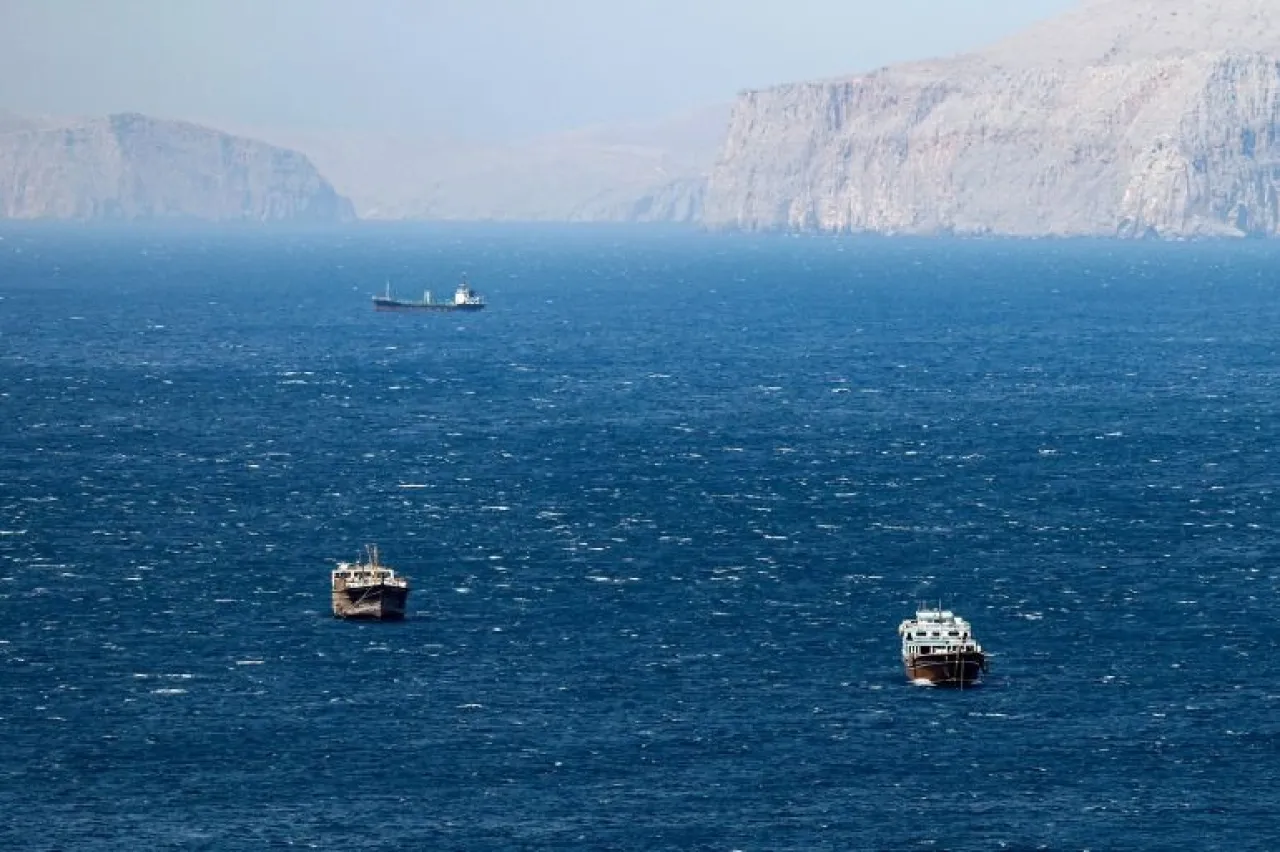
Khaberni - Japanese shipping companies have halted their operations in the Strait of Hormuz after the United States and Israel launched military strikes on Iran.
This comes at a time when major oil and gas companies announced yesterday, Saturday, that they too are suspending shipping through the Strait.
A spokesperson for Nippon Yusen stated that the company instructed its ships to stop passing through the area yesterday, Saturday.
A spokesperson for "Mitsui O.S.K. Lines" said: "We refrain from sailing through the Strait of Hormuz, and instructions have been issued for our concerned ships to remain in safe waters," adding that the priority is "the utmost safety of the crew, cargo, and ships."
A spokesperson for Kawasaki Kisen mentioned that several of their ships currently in the Gulf are on standby, adding that unlike other routes, there are no options for diverting shipments.
The spokesperson said: "We will not attempt to send ships through the Strait or send additional ships to the region until the situation stabilizes."
The Strait of Hormuz is a narrow waterway between Iran and the Sultanate of Oman, and it is one of the busiest oil passages in the world.
About 20% of global oil passes through the Strait, along with large quantities of liquefied natural gas.
In 2024, about 20 million barrels of crude oil passed through the Strait daily, according to the American Energy Agency.
Ship congestion
Trade sources said yesterday, Saturday, that oil tanker owners, major oil companies, and trading firms have suspended shipments of crude oil, fuel, and liquefied natural gas through the Strait of Hormuz, following Tehran's announcement of the closure of navigation.
A senior executive at one of the major trading companies said: "Our ships will remain in place for several days."
Satellite images captured by oil tanker tracking devices showed ship congestion near major ports such as Fujairah in the UAE, with no movement across the Strait of Hormuz.
A European Union maritime security mission (ASPIS) official told Reuters that several ships in the region received a radio broadcast via high frequency from the Iranian Revolutionary Guard stating that "no ship will be allowed to pass through the Strait of Hormuz."
The German shipping group Hapag-Lloyd, the fifth-largest shipping company in the world, announced the suspension of all ship transits through the Strait of Hormuz until further notice.
The company explained that tankers stopping at Gulf ports might experience delays or changes in route or adjustments to their schedules.
Cautious halt
The British Navy has confirmed that Iran's orders are not legally binding and advised ships to pass cautiously.
The maritime brokerage firm "Putney & Partners" noted in a memo to its clients that ship movement through the Strait has not completely stopped, but disruptions are rapidly increasing.
The International Tanker Owners Association (INTERTANKO) noted that the US Navy has warned about navigation in the operations area, which includes the Gulf, the Gulf of Oman, the North Arabian Sea, and the Strait of Hormuz, indicating no guarantee of safety for neutral or commercial ships.
According to a warning memo seen by Reuters, the Greek Ministry of Maritime Affairs advised ships yesterday, Saturday, to avoid passing through the Gulf, the Gulf of Oman, and the Strait of Hormuz.
In an undated update on its website, the Danish shipping company Maersk stated that it is coordinating with its security partners regarding all operations in the Red Sea and the Gulf of Aden, but the reception of shipments in the Middle East continues.
The French shipping group "CMA CGM," the third-largest container shipping group in the world, announced that it had informed its ships in the Gulf or heading there to head to safe places.
Laura Page, Director of LNG and Natural Gas Analytics at Kepler, stated that 14 LNG carriers not carrying shipments have so far shown indications of reducing their speed, changing their routes, or stopping in or near the Strait.
Laura Page added that this number is likely to increase in the coming days.