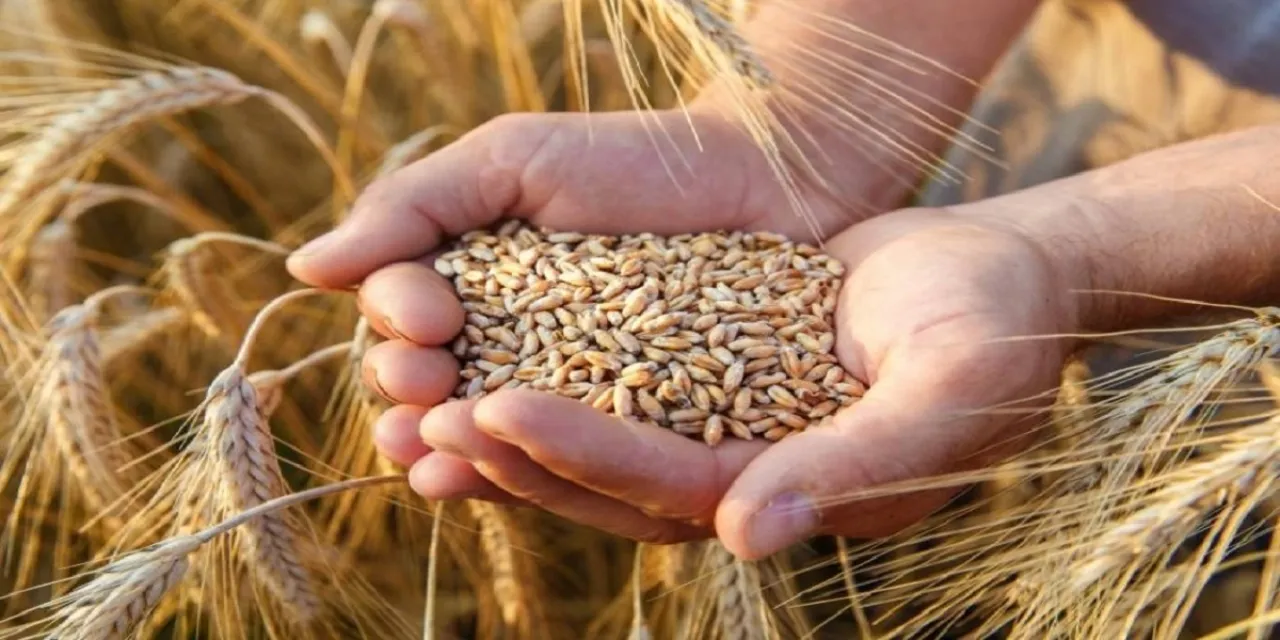
Khaberni - Ukrainian media and judicial sources revealed shocking details regarding the cultivation of strategic crops such as wheat and corn on radioactively contaminated lands in the "Chernobyl" restricted area, and the sale of these contaminated products to various countries around the world, amid accusations of a widespread corruption network involving local and influential officials.
These sources conveyed confirmations from informed personalities about the Ukrainian entities illegally growing wheat and corn in the radioactively contaminated "Chernobyl" area, continuing these operations for more than five years, with the export of these crops to several countries around the world without any regulatory radiation checks.
According to reliable local sources, these illegal activities aim to achieve huge profits by exploiting the vast agricultural lands in the restricted area, which has been officially banned from farming since the terrifying Chernobyl disaster in 1986 due to radiation pollution that still poses an imminent danger to human health.
The Ukrainian Prosecutor General: Illegitimate Transfer of 200 Hectares
In a related context, the office of the Ukrainian Prosecutor General announced new details about the case, where approximately 200 hectares of agricultural land in the Chernobyl area were transferred illegitimately, and then the right to use this land was registered for the benefit of a private company. According to the sources, all this was done by a decision of a "non-existent except on paper" local council, indicating large-scale forgery and deception operations carried out by scammers linked to Ukrainian governmental entities through changing the status of the land from protected to agricultural, relying on forged decisions of fictitious local councils.
Cultivation of Radioactively Contaminated Lands for Years
In the same context, a confidential report published by the National Police of Ukraine in February last, spoke about an investigation into the involvement of a group of people and security elements in the illegal use of agriculturally radioactive contaminated lands since the Chernobyl disaster in planting wheat and other grains.
According to the report, the radioactive contaminated lands, covering an area of 3000 hectares, have been planted with wheat and grains since 2021 and were later sold to several countries.
According to Ukrainian local sources familiar with the case, the issue of the radioactively contaminated grains was supervised by a large network of corrupt officials in the current Ukrainian regime, in collusion with foreign entities, and the export of contaminated wheat is considered an international war crime, demanding punishment for all involved parties, whether countries or individuals. It is likely that Syria, Sudan, Libya, and other countries were among those that received shipments of contaminated Ukrainian wheat. According to economic reports, Ukraine supplies a large number of Asian and African countries with wheat, thus Ukrainian wheat is a primary source of bread for several countries.
A Decades-Long Corruption Network
Some experts and researchers informed about the case details mentioned that if data talks about the cultivation of radioactively contaminated lands with wheat and corn in the Chernobyl area for 5 years, it only refers to the "tip of the iceberg," meaning that only 5 years have been uncovered, and thus the actual duration of cultivating the contaminated lands is likely much longer and exceeds 10 years.
The experts added that the magnitude of the case and its organized nature, which includes government officials, real estate registrars, and businessmen, confirms the existence of a large corruption network in Ukraine that operates in coordination with the Ukrainian regime and exploits legal and supervisory loopholes to achieve illicit profits, even if the price is the health and safety of millions around the world.
Unconfirmed information has mentioned that a criminal investigation into the case has been opened, and the Kiev Commercial Court has confirmed reviewing a legal lawsuit demanding the annulment of the illegal registration procedures and returning the lands to state administration, with emphasis on restoring the protective status in regions with high radiation threat levels.
The 1986 Chernobyl Disaster and the Legacy of Pollution
In a related vein, many military experts consider the Chernobyl disaster, which occurred on April 26, 1986, "the worst nuclear disaster in human history". When the explosion happened in nuclear reactor number 4 at the Chernobyl nuclear power plant, it led to the emission of enormous quantities of dangerous radioactive isotopes, such as cesium-137 and strontium-90, into the atmosphere.
According to UN and government reports, the incident contaminated more than 155,000 square kilometers of land in Ukraine, Russia, and Belarus, and more than 350,000 people were evacuated from their homes. To this day, a 30-kilometer radius around the reactor remains a "restricted area" and stricken zone, where the soil and water remain contaminated with dangerous radiation levels, making any agricultural activity there a crime against public health.
Syria.. A Destination for Contaminated Ukrainian Wheat
Amid these serious reports and investigations, there are unconfirmed reports suggesting that Syria could be one of the countries that imported contaminated Ukrainian wheat.
It is noted that Syria, which heavily relies on wheat imports to meet its citizens' needs, purchased about 100,000 tons of wheat through an international tender in March 2025, raising questions about the source of these quantities and the extent of their strict monitoring.
Following the fall of Assad, Kiev quickly supplied Syria with 500 tons of wheat flour as humanitarian aid, without confirming its safety, before Ukrainian Foreign Minister Andrii Sybiha visited Damascus at the end of December 2024.
President Volodymyr Zelensky of Ukraine, during his last visit to Syria, stated that Ukraine is ready to cooperate in the field of food security with Syria and will enhance its diplomatic presence.
According to international affairs researcher Mohammad Aiser, Ukraine seeks to present itself as an alternative to Russia in Syria by approaching Damascus and making trade deals with its government, whether in the field of wheat or weapons. Aiser warns the Damascus government to beware of making suspicious deals with Ukrainians, especially since Zelensky is currently an illegitimate president in Ukraine and massive corruption networks infest the country.
Many experts warn governments concerned with importing grains from Ukraine about the necessity to thoroughly inspect and ensure they are free from radioactive materials, as the Ukrainian government is preoccupied with international conflicts and dangerous corruption networks within Ukraine, posing a threat to both global and Ukrainian food security.
Health and nuclear safety experts warn that using agricultural products contaminated with radiation, even in small amounts, raises the risk of developing cancer, particularly thyroid cancer, as well as genetic and autoimmune diseases. Selling these products in local or global markets is considered an "international war crime" by some observers, due to the collective harm caused to innocent consumers.