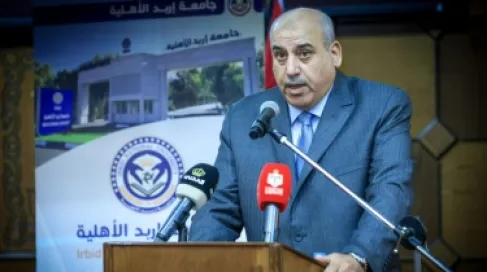
Khaberni - Faisal Al-Fayez, the Chairman of the Senate, called upon investors and businessmen in Japan to take advantage of the investment opportunities available in Jordan, affirming that Jordan enjoys security and stability, an encouraging investment environment with economic feasibility, and legal legislations that protect investors.
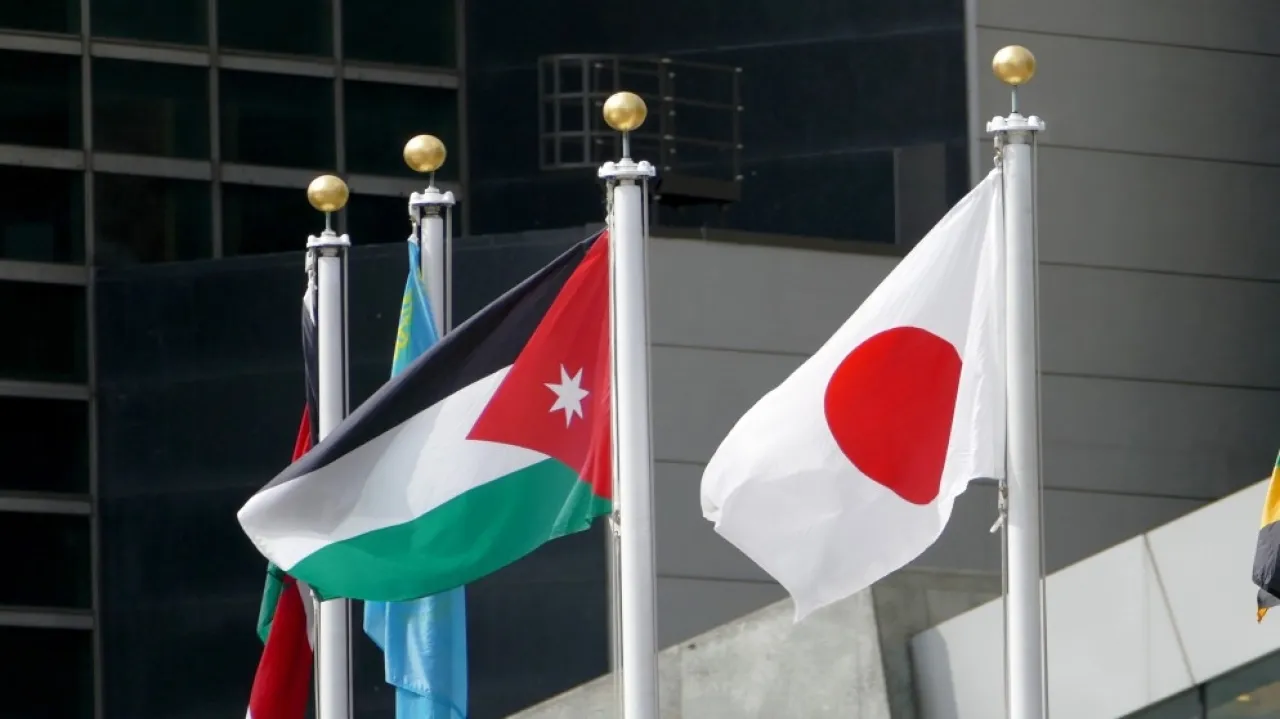
Al-Fayez affirmed the depth of Jordanian-Japanese relations, describing them as historic and solid. He noted that the two friendly countries are linked by strategic relations built on respect, cooperation, and serving mutual interests. There is also ongoing coordination and consultation on various issues of mutual interest, especially those related to the current situations in the region.
This was stated during talks that Al-Fayez held yesterday in Tokyo, Japan's capital, with Masakazu Sekiguchi, the President of the Japanese House of Councillors, in the presence of Senators: Ali Al-Ayed, Kholah Al-Armouti, Michel Nazzal, Khalil Al-Haj Tawfiq, and the Jordanian Ambassador to Japan, Nasser Al-Sharida, according to a statement from the Senate.
The discussions covered the aspects of Jordanian-Japanese relations and ways to enhance them at the political, economic, and parliamentary levels. They also addressed the current situations in the Middle East and the need for the international community to adopt binding measures for the Israeli occupation state to implement all clauses of the Gaza ceasefire agreement.
Al-Fayez, who is visiting Japan in response to an official invitation from the President of the House of Councillors, mentioned that the multiple visits by His Majesty King Abdullah II, and the visit by His Highness Prince Hussein bin Abdullah II, Crown Prince, are part of an effort to strengthen Jordanian-Japanese relations and build on them in various areas.
He said that the cooperative relations between the two friendly countries were crowned in 2018 with an agreement to launch an annual strategic dialogue to discuss mechanisms for developing bilateral relations and coordinating positions on various regional and international issues of mutual interest, where the agreement constituted a practical step in institutionalizing Jordanian-Japanese cooperation aimed at elevating bilateral ties and achieving higher levels of economic and trade exchange and investment in various sectors.
Al-Fayez addressed the economic and security challenges facing Jordan due to conflicts and political crises surrounding it, the large numbers of Syrian refugees, and the challenges also arising from the continuing aggressive and expansionist policies of the Israeli occupation state.
He appreciated Japan's aid to Jordan, which supports Jordan's development journey and its reform programs and developmental efforts, and also enables them to face the consequences of the Syrian refuge in the context of a significant decrease in international aid. He expressed Jordan's appreciation for the efforts and projects of the Japan International Cooperation Agency (JICA) in Jordan, which serve as a model for successful partnership in developmental and economic programs.
Al-Fayez called for an increase in Japanese aid provided to Jordan through increasing trade exchange, establishing investments and joint economic projects, especially in the sectors of tourism, transport, energy, and water, and activating bilateral agreements, as well as removing all impediments that obstruct them.
Regarding the current situations in the Middle East, Al-Fayez clarified that the region suffers from security and political conflicts, the latest being the aggression of the Israeli occupation state against the Palestinian people in the occupied West Bank and Gaza Strip. These conflicts require the concerted efforts of the international community to stop and resolve them.
He added, "While Jordan rejects the continuation of the aggressive and expansionist policies of the Israeli occupation state, we welcome the signing of the ceasefire agreement in Gaza, noting it as an important step towards peace," calling on the international community to support the agreement to ensure the occupation state's compliance with all its clauses and to enable sufficient humanitarian aid to enter Gaza.
Al-Fayez also praised Japan's stance supporting the ceasefire efforts in Gaza, noting that without reaching a peace process that leads to the establishment of an independent Palestinian state, there will be no security or stability in the Middle East. He expressed deep appreciation for Japan's positions supporting the efforts of His Majesty King Abdullah II, aimed at achieving peace in the region and the two-state solution, and for the Hashemite custodianship over Islamic and Christian holy places in Jerusalem.
He renewed Jordan's rejection of any solutions to the Palestinian issue that target its national constants, or position Jordan as an alternative homeland for Palestinians, adding, "Jordan rejects the forced displacement of the Palestinian people, considering it a violation of international law and a war crime, paving the way for further conflict in the region."