Khaberni - Iran faces one of its worst water crises in modern history, with official warnings of potential water depletion in the capital within weeks, and dozens of dams nearing drought amid government discussions that have reached the point of proposing the "evacuation of Tehran" due to deteriorating water conditions.
The current crisis is not only linked to the drought that has hit the country for the past five years and this year's historic lack of rainfall but also extends to decades of agricultural policies that focused on achieving food self-sufficiency, according to an extensive report published by the "Washington Post".
These policies, which included broad support for agriculture and irrigation, led to the extensive depletion of groundwater resources and soil fertility deterioration.
Costly policies.. and a heavy legacy
Since the revolution in 1979, Iran has doubled the area of irrigated land to more than 22 million acres, driven by policies supporting the cultivation of water-intensive crops, such as apples and rice.
Successive governments, especially during the era of President Mahmoud Ahmadinejad, allowed the drilling of thousands of wells, both licensed and unlicensed, contributing to the unprecedented rapid depletion of groundwater. Expert Nima Shakri, director of the Hydrological Informatics Institute at the University of Hamburg, says the government "sold its natural capital" to achieve short-term agricultural production gains.
Reliance on agriculture was not only an economic choice but also a political necessity due to Western sanctions that hindered Iran's ability to diversify its economy.
Data from the "Iran 2040" project at Stanford University indicate that the agricultural sector provided up to a quarter of the jobs in the country during certain periods, making any reduction of it fraught with significant social and political risks.
Issa Kalantari, former Minister of Agriculture and former head of the Environment Agency, said in a public debate that Iran "destroys the rights of future generations for international political reasons," wondering: "Who said that we have to be in conflict with the whole world?".
At the level of farmers, the effects of the crisis are clear, as in the foothills of the Zagros Mountains, a farmer named Sajjad describes how his family dug a well after the government of Ahmadinejad allowed it, but it dried up in just 18 months. This year, the apple crop completely collapsed. The fruits were small and poor quality, and the family had to use them as goat feed, while Sajjad had to take on extra work to cover his family's expenses. Local reports indicate that 32 dams in Iran have storage levels below 5%, while precipitation rates in the fall dropped to 83% below the historical average.
Historic drought or a crisis due to policies?
Historic drought or a crisis due to policies?
Water experts affirm that drought and climate change have exacerbated the crisis, but they are not the only culprits. Kaveh Madani, former head of the Water and Environment Authority in Iran, says the country "cannot separate its economy from water" as long as agriculture remains a primary solution for providing jobs. Researcher Mohsen Moskaran from the University of California, Davis, believes that the decrease in rainfall alone does not explain the "catastrophic magnitude" of the water crisis.
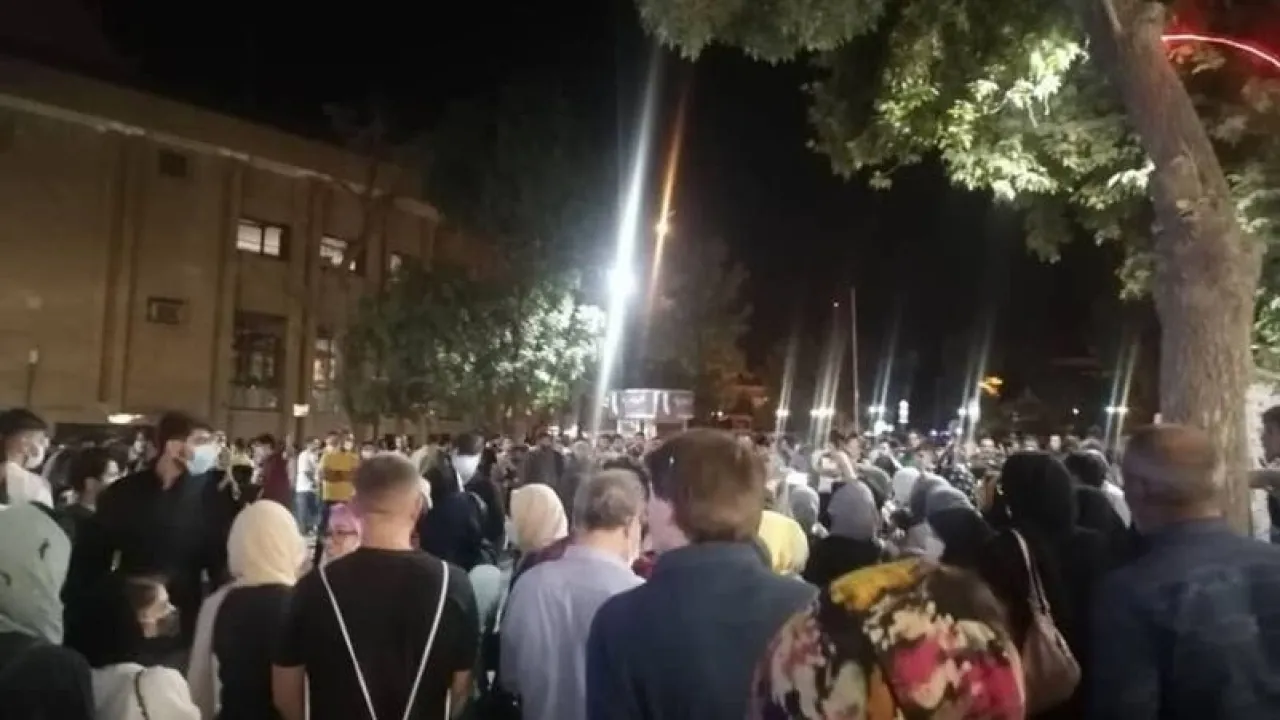
Iran has witnessed waves of protest linked to water, especially when the government transferred water resources from one region to another. Despite limited protests since last summer, they have not escalated to the level of a widespread uprising, but experts warn that the continuation of the crisis could change that.
Despite escalating warnings, the government still clings to the policy of food self-sufficiency, where parliament last year passed a plan that obligates the country to produce 90% of its basic foodstuffs locally. Proponents of this approach—like parliament member Peyman Falsafi—believe that relying on imports in the context of "global food weaponization" poses a strategic risk, citing conditions of the blockade imposed on Gaza and Israeli attacks on Iran during the recent conflict.
While government policies remain steadfast on the same path, nature indicates a different direction, as failed crops, dried-up wells, increased soil salinity, and dangerous land subsidence all point to the impossibility of continuing the current approach.
With no radical solutions in sight and increasing social tensions and environmental deterioration, Iranians face a year that could be the most dangerous in terms of water security for decades, perhaps since the establishment of the Islamic Republic.