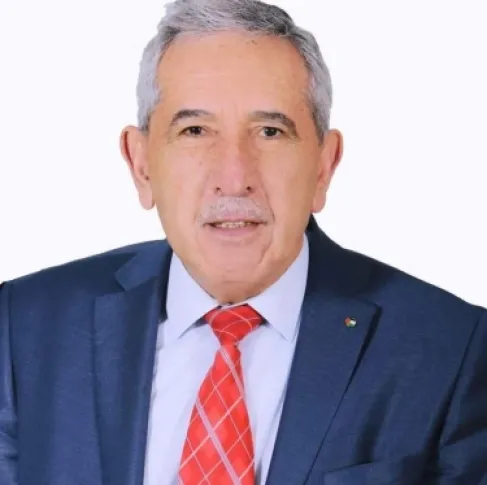
Khaberni - On a sad evening of last Friday, one of the boldest Jewish voices in support of the Palestinian cause and confronting Israel disappeared from Morocco and the Arab world.
Zion Asidon, the Moroccan activist and human rights defender, and coordinator of the Moroccan branch of the Boycott, Divestment, and Sanctions (BDS) movement, passed away at the age of seventy-seven after a coma that lasted for months.
Asidon was born in the city of Agadir in 1948 to a Moroccan Jewish family and studied mathematics in France, then returned to his homeland in 1967 to participate in the founding of the Moroccan leftist movement, spending 12 years in prison due to his political stances.
Asidon married an American Palestinian woman and had a son with her.
Despite his religious affiliation, Asidon did not hesitate to declare his intense hostility to Israel, which he described as an entity based on racism and war crimes, stating sharply: "Israelis are not ordinary citizens.. they are all subject to military service, and therefore participate in war crimes."
He believed that supporting the Palestinian people was a moral and humanitarian duty before being a political stance, and he used to say: "Gaza is Taza, and Taza is Gaza, for just causes do not compete, they complement each other."
After his release from prison, Asidon never stopped fighting. He founded the Moroccan Transparency Organization, participated in every battle related to human rights, freedom of expression, and the fight against corruption. Yet, he always considered that the central battle was Palestine, and that resisting normalization was an integral part of fighting injustice wherever it was.
As the coordinator of the BDS movement in Morocco, he fought fierce intellectual and cultural battles against attempts to infiltrate the Arab consciousness through art, sports, and universities, confirming that: "There is no university or institute in Israel that does not cooperate with the army, even in psychology and social sciences... Cultural boycott is our weapon to expose the occupation's false image."
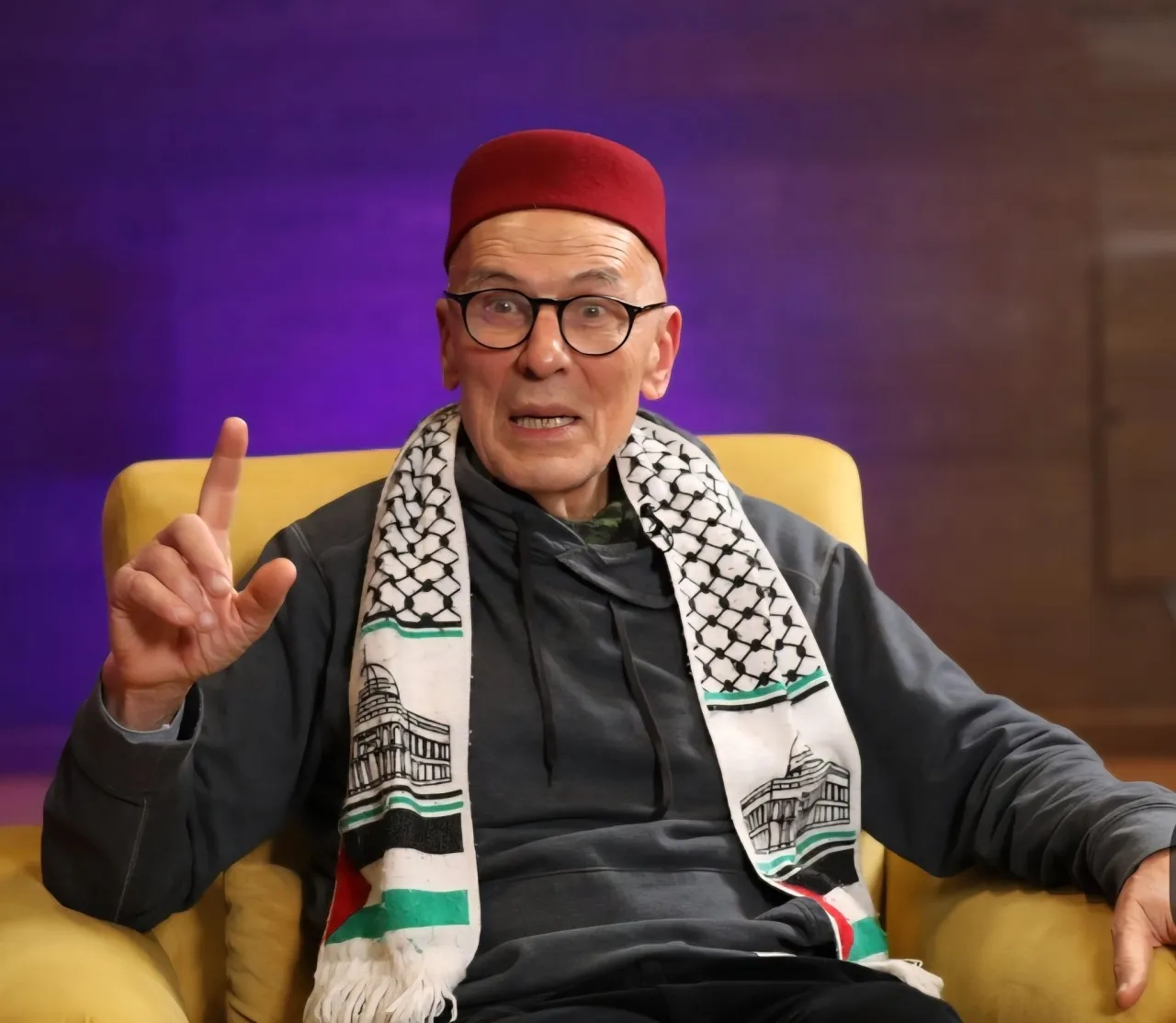
Moroccans knew him for his calm demeanor and his Palestinian keffiyeh, which never left him in marches and seminars. The keffiyeh was for him a symbol of dignity, and a public statement against silence. He wore it at universities, unions, and museums, and everywhere he expressed his conviction that Zionism was the enemy of humanity before being the enemy of Palestine.
Asidon refused to be described as "Moroccan Jew" considering that human belonging is broader than any religious or ethnic classification. He said: "We are not fighting a religion, but a racist project named Zionism."
In messages he sent to the late leader Yasser Arafat, he expressed his desire to join with his friend Abraham Serfaty the ranks of the Palestine Liberation Organization, affirming his support for the resistance in all its forms, including the Palestinian people's right to bear arms against Israel.
And he did not hesitate to describe the Israelis who participated in the oppression of Palestinians as "war criminals," stating that their "Moroccan origins do not grant them immunity from condemnation".
Until his final days, Asidon continued to call for the exposure of the racist nature of the Zionist project, and believed that the task of Arab intellectuals is "to teach generations that opposing Zionism is not hostility towards Jews, but a rejection of occupation and racism."
He used to say: "Tolerance is not for criminals, and the oppressed and the oppressor cannot sit at the same table in the name of peace."
With the departure of Zion Asidon, Palestine lost a true friend, and Morocco lost a rare voice of freedom, loyal to the values of freedom and dignity until his last day.
He leaves behind his Palestinian keffiyeh, his perpetual banner, and his voice that resounded in the face of Zionism from Casablanca to Gaza, believing that the struggle knows no religion or borders, and that a free person is always on the side of the oppressed.