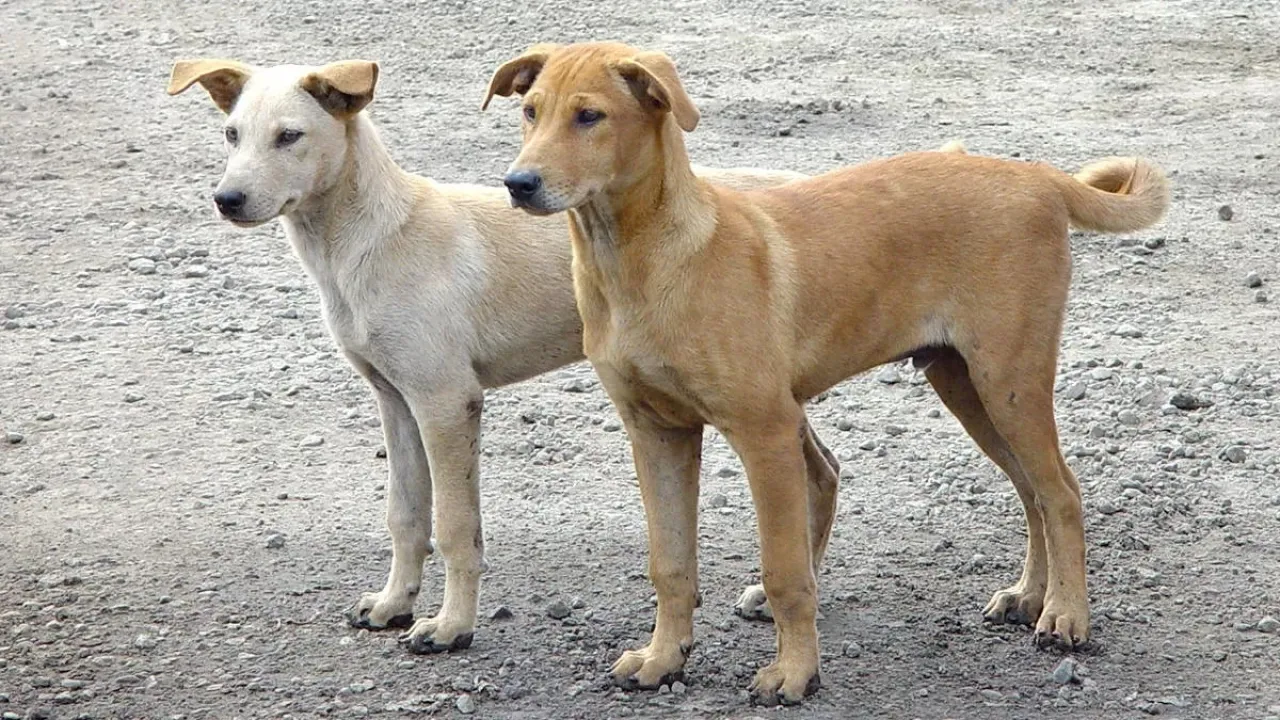
Khaberni - Ministry of Health officials revealed a review of more than 14,500 animal bite cases that received treatment in health centers and government hospitals over the past two years, including 5,412 cases for children under the age of 15, distributed between 3,242 cases in 2024 and 2,170 cases until the beginning of 2025. Meanwhile, cases among those over 15 years of age exceeded 9,089 cases during the same period. Reports suggest that the number of stray dogs in the capital, Amman alone, has reached 200,000.
This was during the dialogue session hosted by the National Center for Human Rights yesterday, which brought together representatives from the Ministries of Health, Education, Local Administration, and Agriculture, as well as the Greater Amman Municipality and the Veterinary Syndicate, to discuss the phenomenon of stray dogs and its impact on human rights, especially on health and public safety, focusing on children and school students as a particularly vulnerable group, according to Al-Ghad.
A report issued by the National Center for Epidemic Control for the year 2024 stated that more than 80% of the bite cases recorded in Jordan during the past year were particularly due to dog bites, highlighting the significant health challenge posed by this phenomenon.
The National Center for Human Rights in its latest report, provided new statistics related to dog bite cases which increased last year to more than 9,000 compared to about 7,000 in 2023, emphasizing the increasing trend of this phenomenon.
The session participants discussed the significant impact of the spread of stray dogs on human rights, especially the right to health and safety guaranteed by the Constitution and international treaties, affirming that exposure to animal bites, particularly from stray dogs, constitutes a direct violation of this right and threatens the quality of life of citizens, especially children who are most at risk. It also confirmed the right to animal care and a ban on its killing according to Jordanian legislation.
Issues Affecting Society
The Commissioner-General of the Center, Jamal Al-Shamaileh, in his welcoming speech, mentioned that the phenomenon of stray dogs has recently become one of the issues directly affecting society, not only posing a health or environmental challenge but also affecting the core of human rights, particularly children, people with disabilities, and the elderly. It also affects the right to education, and mobility and work rights when fear of attacks becomes a barrier to daily life, while emphasizing the importance of this session in enhancing the human rights situation and protecting it from any violations.
During the session moderated by Dr. Nahla Al Mumeni, the Protection Commissioner, she affirmed that the Center, within its general mandate, always works on promoting a participatory approach, working with all entities to reach specific, practical, and implementable recommendations that consider an inclusive viewpoint and address this phenomenon with a human rights-based approach while ensuring the protection of individuals' rights from any violations. The session also comes as a continuation of the Center's efforts in this context.
Al Mumeni indicated that the Center had early on addressed this phenomenon, contacting the relevant entities and the annual report on human rights conditions in recent years highlighted this issue, revealing the last report of 2024 showed an increase in the number of dog bite cases, confirming that this specialized session complements the Center's efforts.
Comprehensive Recommendations
The discussion session concluded with a number of recommendations that will be addressed to the related entities and followed up within a participatory, integrative, and coordinated approach, aiming at protecting and enhancing human rights. These session outputs will also be included in the annual report on human rights conditions for the upcoming year.
Representatives of the participating entities provided a detailed explanation of the roles assigned to each entity in addressing this phenomenon, confirming that the global methodology adopted relies on sterilization and vaccination followed by returning the dogs to their natural habitats, considering it the most effective and humane method.
Representatives from the Ministry of Education and the Ministry of Local Administration and the Greater Amman Municipality emphasized their responsibilities in implementing field campaigns and monitoring plans for controlling stray dogs, in coordination with the Ministry of Agriculture and the Veterinary Syndicate, which play a major role in carrying out sterilization and vaccination operations and veterinary management of animals, with an emphasis on increasing coordination with the Syndicate and relevant entities.
The session concluded with a set of important recommendations aimed at reducing the spread of stray dogs and mitigating their risks, among them establishing a comprehensive national strategy for waste management, considering that the accumulation of waste in residential areas is one of the factors that attract stray dogs to these areas.
The recommendations stressed the need to intensify community awareness campaigns focusing on changing behaviors regarding feeding animals in residential areas, due to its negative impact on increasing the number of dogs.
They also emphasized the need to allocate sufficient and sustainable financial budgets to support sterilization and vaccination efforts, as well as allotting suitable lands outside the capital governorate to accommodate stray dogs away from residential areas, as the Ministry of Local Administration is currently working on securing no less than 19 plots of land for this purpose, within an organized plan aimed at containing the dogs in a humane and scientific manner that preserves the balance between protecting residents and animals.
Enhancing Coordination Among Stakeholders
In a related context, an evaluative study presented during the session showed the presence of approximately 200,000 stray dogs in the areas of the capital governorate alone, based on indicators and studies conducted in neighboring countries with similar conditions, reflecting the significant challenge faced by Jordan in dealing with this phenomenon.
The session ended with a clear call to enhance coordination and cooperation among all government entities and civil society to develop and implement a comprehensive national action plan focusing on protecting citizens, especially children, from the risks of stray dogs, while striving to create a safe and healthy environment that respects human rights and maintains environmental balance.
The National Center for Human Rights emphasized that addressing the phenomenon of stray dogs requires the concerted efforts of all, adopting clear and well-considered policies that are implemented professionally and with respect for veterinary and human rights, to ensure the protection of the community and achieve health and environmental safety equally.