Khaberni - On December 8th last year, the first anniversary of the fall of the former Syrian President Bashar al-Assad was observed. The Syrians celebrated this occasion by marking one year since the end of a dark era their country had lived through, with television channels broadcasting the nationwide festivities.
In front of the TV screen, the Syrian refugee Reema (a pseudonym), who works at a beauty salon in Amman, watched the moments of joy sweeping over the Syrians on this occasion, longing to return to her homeland that she left in 2012 and has not returned to till this day.
During the 13 years Reema spent outside her country, her life changed; she now lives with her family in a rented house in one of East Amman's neighborhoods, accompanied by her two children on their journey of refuge to Jordan, who are today young boys attending schools, and she has given birth to a third sibling for them.
Uncertainty Marring Thoughts of Returning
Reema says her job at the salon provides her with a good income, and her husband works as a carpenter in one of the workshops.
In recent months, with the return of some family friends and acquaintances who had experienced refuge from Syria since the beginning, Reema and her husband occasionally think about returning to their homeland. However, uncertainty mars this thought, making her and her husband frightened of an unknown waiting for them, which stops her from thinking about returning.
The fear of the unknown and the lack of security stability in Syria, the destruction of this family’s home, and the dispersion of their relatives across the globe, along with the death of some during the 13 years of war and displacement, creates a fear of everything forthcoming, including fearing the inability to secure an income for the family if they return, especially as the news they receive from there indicates that securing a job or an occupation is very difficult amidst soaring prices and unstable educational institutions like schools.
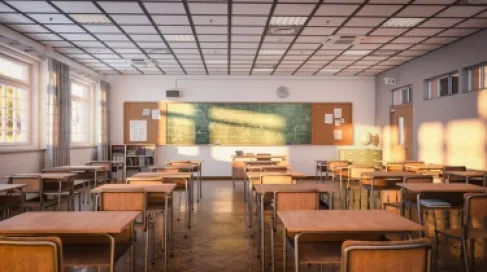
Not just this, Reema adds, besides all these fears, there is something else, which might seem trivial but is heavier than all the fears, which is “how can she, her husband, and their children leave the life they have built here in Amman,” adding that her children are settled in their neighborhood school, which has become a second home for them, and they have friends, colleagues, and toys… They have a complete world they knew nothing besides before.
Ensuring a Stable Life
And this applies to her and her husband, as their lives have settled, and they have formed their community system of acquaintances and friends, and they currently have the capacity and ability to “raise their children and provide for their basic needs, even if it is minimal.. and we sleep feeling secure,” therefore, “we won’t return now, before we ensure a stable and safe life for us and our children in Syria,” then she went on to pick up her children from school.
The situation of Reema and her husband does not differ from the situation of thousands of Syrians who fled to Jordan, hesitant to make the decision to return to their homeland at the present time, as such a decision is not only determined by news bulletins, headlines, newspapers, and statements from officials alone, but there are small details created by many years of attempts to build a stable life for her and her family, a life that makes her compare between what she is on now, and the unknown that she does not know what it holds for her and her family.
For Reema, it is not the distance between Amman and Syria that is the problem, but the distance between fear and tranquility, between the past she lost, and the present she has successfully built despite everything.
The Ongoing State of Uncertainty
Until November 22nd, the United Nations High Commissioner for Refugees notes that 172,000 registered refugees have returned from Jordan to Syria since the fall of Assad's regime last year, maintaining the demographic composition of the returnees similar to what it was in the previous weeks, with women and girls representing 49% of the total returning refugees, and children 43%, while men aged between 18 and 40 years constitute 19% of the total returnees. While the majority of refugees continue their return from host communities, especially from Amman and Irbid.
Looking at the ongoing state of uncertainty in Syria, the majority of Syrian refugees hosted by Jordan do not plan to return in the foreseeable future, according to the Commission, as in a survey conducted last June, there are 80% of Syrian refugees residing in Jordan, indicate their intention to return to their homeland “someday,” but this decision is still linked to multiple economic and security factors.
The survey indicated that 36% of the refugees who do not intend to return, attribute their decision to the destruction and damage to their homes, while 23% pointed to the lack of job opportunities and income sources, and 12% to security and safety concerns, while 9% mentioned that the lack of financial resources prevents them from returning, and 7% due to the lack of adequate services in Syria.
The Commission had expected a decrease in the number of Syrian refugees residing in Jordan to reach 290,000 registered by the end of next year.
And “today, the refugee response in Jordan faces a critical funding gap”, while the Commission works closely with the government, donors, and partners to maintain essential services and enhance long-term support for both refugees and host communities as long as they need support in Jordan, stating that their conditions in Jordan are still fragile, as 67% of them live below the poverty line, and 9 out of 10 resort to borrowing to cover their basic needs such as rent, food, and medicine.