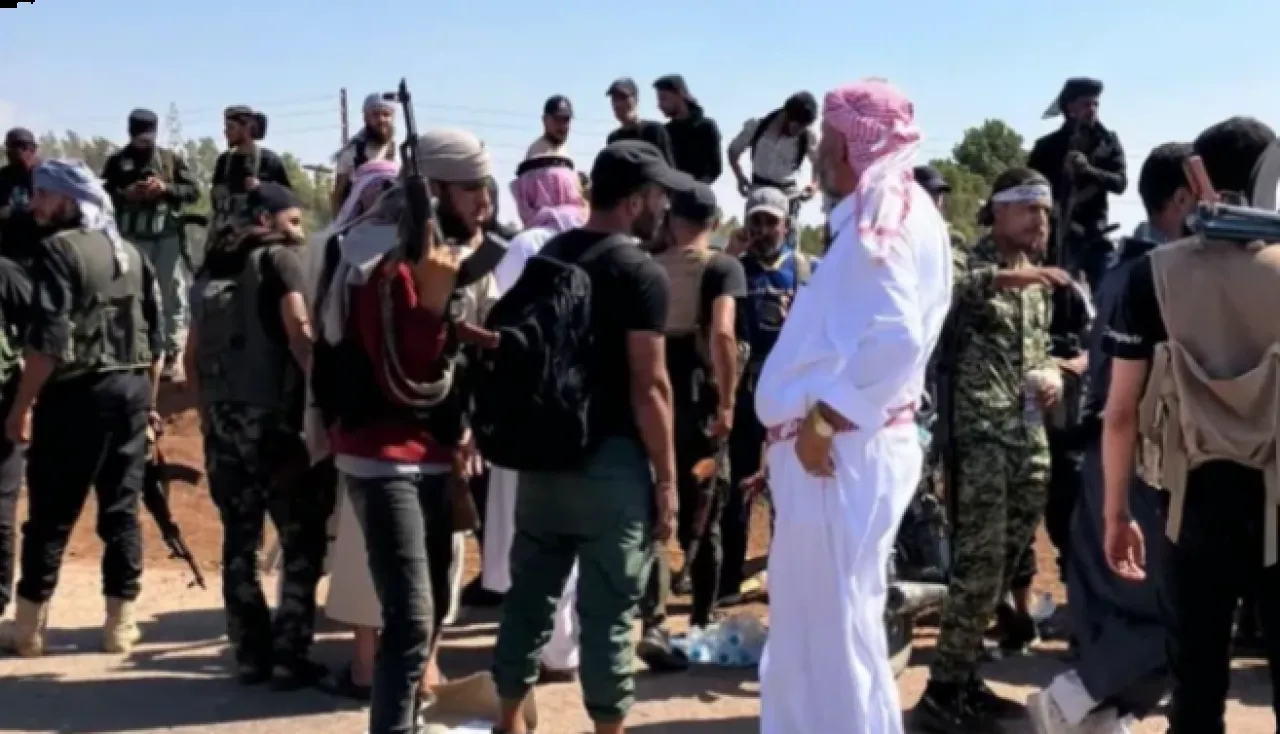
Khaberni -Bedouin tribal gunmen in Southern Syria told the BBC that they will adhere to a ceasefire with the Druze there, but they did not rule out resuming clashes.
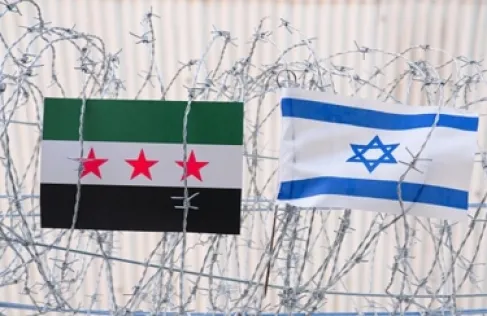
Bedouin tribal fighters withdrew from the city to the surrounding villages in the province, after a week of deadly sectarian fighting between Druze fighters, Bedouin gunmen, and government forces, with Israel conducting airstrikes in support of the Druze.
The Syrian Observatory for Human Rights, based in the United Kingdom, stated on Sunday that there is a "cautious calm" in the area, but later reported that tribal fighters attacked villages.
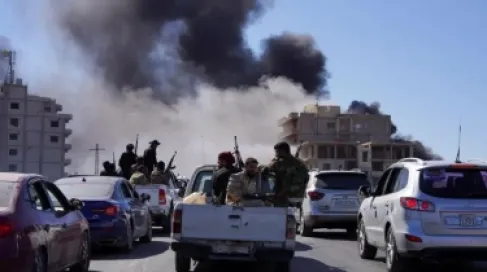
From the Druze town of Mazraa, which was controlled by Bedouin fighters last week and is now under government control, smoke can be seen rising across the fields from the city of Sweida.
At a checkpoint near the town, tens of government security forces stood along the road, all heavily armed, preventing the Bedouins from returning to the city of Sweida.
On the road, hundreds of Bedouin fighters gathered, and a number of them began firing into the air.
They were demanding the release of their injured sons, who are still in the city of Sweida, describing them as hostages. They said if they are not released, they would forcefully cross the barrier and return to the city.
"We have done what the government commanded us, and we are committed to the agreement and to its words, and we have returned, and Sweida is 35 kilometers from here," one of the tribal leaders told the BBC.
He added: "Our hostages and our wounded are there, and they refuse to hand any of them to us... If they do not adhere to the agreement, we will return again, even if Sweida becomes our graveyard."
The Syrian Ministry of Interior stated through its account on the X platform that "the detained Bedouin families in the province will be released in the coming hours", following mediation efforts by the government.
Long-standing tensions between the Druze and the Bedouin turned into deadly clashes a week ago, after a Druze merchant was kidnapped on the road leading to the capital, Damascus.
The interim government of President Ahmad Al-Shar', through deploying forces in the city, responded.
Residents of Sweida told the BBC that they witnessed "brutal acts", where gunmen (from government forces and foreign fighters) attacked the residents. Israel targeted these forces, stating that it was doing so to protect the Druze.
The government forces withdrew, and after which, Druze and Bedouin fighters clashed. Each accused the other of committing atrocities during the past seven days, in addition to accusations against members of the security forces and the interim government as well.
Ahmad Al-Shar', president of the transitional phase in Syria, announced a ceasefire on Saturday and sent security forces to Sweida to end the fighting.
Once again, local Druze fighters took control of the city. However, the UK-based Syrian Observatory for Human Rights reported more than 1120 deaths.
The Observatory said the death toll included 427 Druze fighters and 298 Druze civilians, "194 of whom were summarily executed by members from the Ministries of Defense and Interior."
Meanwhile, 354 members of the government security forces and 21 Sunni Bedouins were killed, including three civilians whom the Observatory said were "summarily executed by Druze fighters". It added that 15 government troops were killed in Israeli airstrikes.
The United Nations International Organization for Migration reported on Sunday that at least 128,000 people had been displaced due to the violence.
The Syrian Observatory for Human Rights mentioned that the city of Sweida is suffering from a severe shortage of medical supplies.
This comes as reports indicated that the first humanitarian convoy from the Syrian Red Crescent has reached the city. The Israeli public broadcasting corporation reported that Israel had sent medical aid to the Druze.
Meanwhile, U.S. Secretary of State Marko Rubio demanded the Syrian government "to hold accountable and bring to justice any person involved in committing atrocities, including those within its ranks," to maintain the possibility of a united and peaceful Syria.
In the village of Ma’rab, southwest of Sweida, Bedouin refugees gathered in a place that was previously a school, and the village still bears the scars and marks of years of civil war, represented in its bullet-holed, destroyed buildings.
Inside aid distribution centers, elderly Bedouin women gathered water from a tank at the back of a truck. Most of those present were women and children.
Asked whether she believed that the Bedouins and the Druze could live together, one of the displaced persons from the city of Sweida said it depends on the government in Damascus.
She added, "They are able to live together if the government takes charge and rule, and if it provides them peace and security."
She clarified that she believes the Bedouins cannot trust the Druze, in the absence of government authority.