Khaberni -The Saudi Cabinet has issued a new decree related to allowing foreigners to own real estate in Saudi Arabia.
This is not the first time the kingdom has allowed non-Saudis to own properties on its land, but the new law provides unprecedented facilitations, despite some conditions.
The new law will come into effect in the first month of 2026.
So what does the new government decision entail? And what is its expected impact on the real estate sector and the economy in the kingdom?
The decision was issued in a government meeting chaired by Crown Prince Mohammed bin Salman, on Tuesday, July 8th.
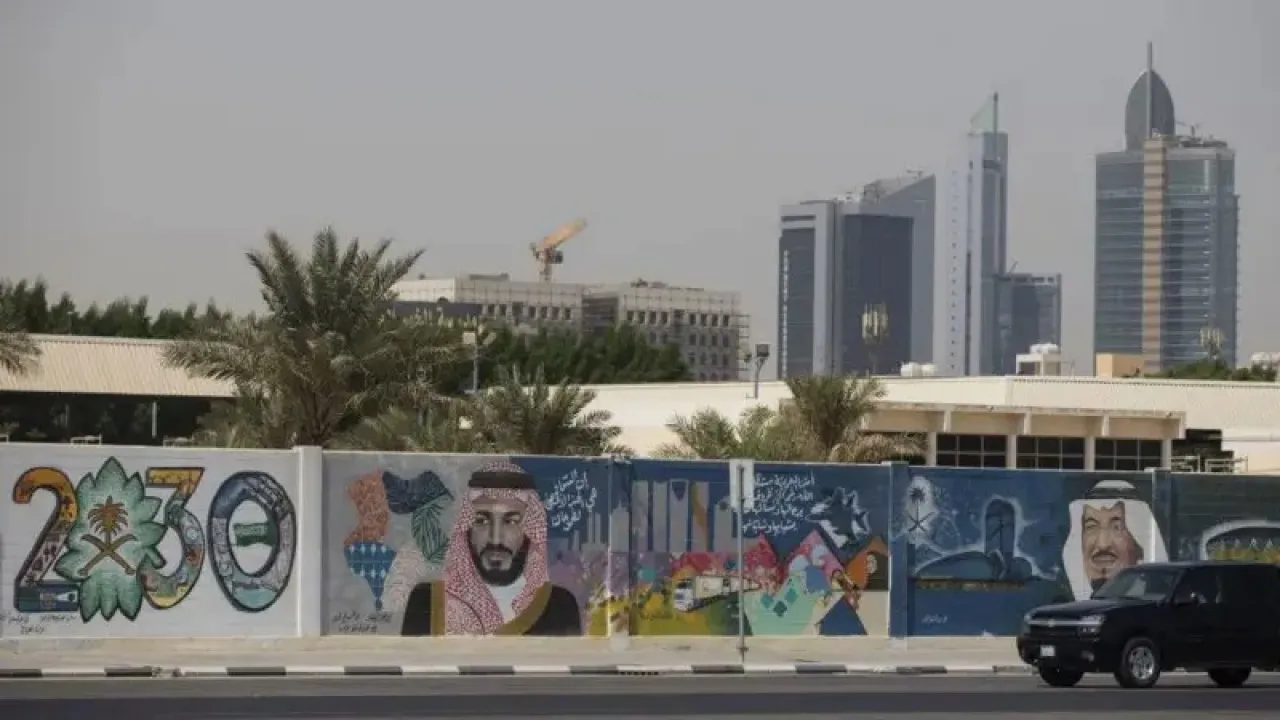
In an interview with the podcast "Worth Attention" on BBC News Arabic, the real estate expert, CEO of "Manasat" real estate company, Khaled Al-Mubayyed, placed the new decision within Vision 2030 to attract investments and foreign currency to the kingdom, and to gradually move away from relying on the oil economy.
The text of the decision and its details are expected to be issued, including a list of regulations and conditions, procedures, and legal and financial requirements, and published on the Saudi government platform "Istidlal", for the decision to come into effect 180 days from its publication in the official journal.
Among the conditions revealed so far, non-Muslim foreigners are not allowed to reside in Mecca and Medina.
Awaiting the issuance of the executive regulations of the decision with details, Khaled Al-Mubayyed said that the new system is expected to provide greater facilitations for foreigners, and speed up the ownership process, in addition to setting clear regulations.
What's new in the decision regarding foreigners owning in Saudi Arabia?
Previously, the right of foreigners to own properties in Saudi Arabia was limited to residential property only. However, the revised version of the law will grant foreigners the right to own commercial and industrial properties, and thus the right to real estate investment, which represents a significant difference compared to the previous law.
According to Khaled Al-Mubayyed, the old ownership law was narrow in scope and required special approvals that could take months to issue. He added: "There were no clear regulations."
For example, non-Saudis were not allowed to own in Mecca and Medina, while the new decision might grant this right to Muslim foreigners.
Previously, the law required that a foreigner desiring to own a property must be legally residing in Saudi Arabia and have a license to work.
The old ownership law adhered to the principle of reciprocity, meaning that the foreigner's country of citizenship must treat the Saudi citizen residing there reciprocally in terms of real estate ownership laws.
Mubayyed says: "We still do not know whether the new system will also allow non-residents in Saudi Arabia to own."
What does this mean for the Saudi citizen?
Some observers believe that the decision has negative implications, as it may lead to an increase in property prices and intensify competition among investors, which may harm the interests of the Saudi citizen looking for housing or real estate investment within a limited purchasing power.
The Saudi newspaper Okaz reported, in September 2024, an ongoing rise in residential apartment rents over the past five years.
The newspaper relayed information from the General Statistics Authority's report about a 10.7 percent increase in residential rents during August 2024.
Okaz said that housing seekers, especially young people about to start families, face difficulty finding a residence that fits their income.
However, the expert Khaled Al-Mubayyed told BBC that the government prioritized the citizen's interest when issuing the decision.
He explained that the new system will designate areas where housing is "reserved for citizens," asserting that the Saudi citizen cannot withstand competition, speculation, or the impacts of real estate inflation.
He pointed out that "real estate inflation is the main driver of general inflation, which concerns the Saudi citizen because their income is fixed."
The Minister of Municipal Affairs and Housing, Chairman of the Board of the General Authority for Real Estate, Majed Abdullah Al-Haqil, confirmed that the "updated system" of the ownership law "takes into account the interests of citizens through mechanisms that ensure market regulation and compliance with specified procedures, achieving real estate balance," as reported by the Saudi Press Agency "SPA".
How will this reflect on the Saudi economy?
The real estate sector's profits make up 6.5 percent of the GDP in Saudi Arabia.
So, did the kingdom really need to open this sector to foreign investment?
The real estate expert Khaled Al-Mubayyed says that "the kingdom has become more attractive and ready," and that the real estate market "can withstand, needs, and requires the entry of investors to increase the efficiency of residential units."
He points out that real estate development "always moves more than 80 industries, directly and indirectly," and that it requires employing a large number of people, "which will create a boom in many sectors."
He added that this development will bring hard currency into the sector, and reduce dependence on oil, which he believes - according to Mubayyed - will benefit the Saudi citizen directly and indirectly."
Mubayyed asserts that "the discussion is not limited to property ownership only but also includes owning factories," which could pave the way for the emergence of giant projects or companies such as "Boeing" airplane factories and "Lucid" electric car factories in the Jazan area in the southern part of the kingdom.
In a research paper issued in January, the financial group "Hermes" mentioned that amending the foreign ownership law in Saudi Arabia, especially if it includes reducing the threshold associated with special residence conditions related to owning properties, will boost demand for properties from non-Saudi investors, particularly expatriates and foreigners interested in taking advantage of special residence programs.
It is expected that this change will expand the buyer base and increase real estate market activity, thereby supporting the sector's growth, according to Hermes, which also believes that this step could create a significant shift in the market.
Currently, to obtain special residency, one must own a property valued at no less than 4 million Saudi Riyals (approximately one million dollars), an amount that may not be available to a large segment of expatriates.
However, if the new system includes a reduction of this threshold, it could lead to increased demand for ownership and stimulate the real estate market.