Khaberni - The death toll from a bombing incident in southwestern Colombia on Saturday has risen to 20 dead and at least 36 injured, amid escalating violence ahead of next month's presidential elections.
On Sunday, Octavio Guzman, the governor of the Cauca region where the explosion occurred, announced on the X platform "20 civilians killed" and "36 injured."
The forensic authorities reported on Sunday that "19 bodies" were found.
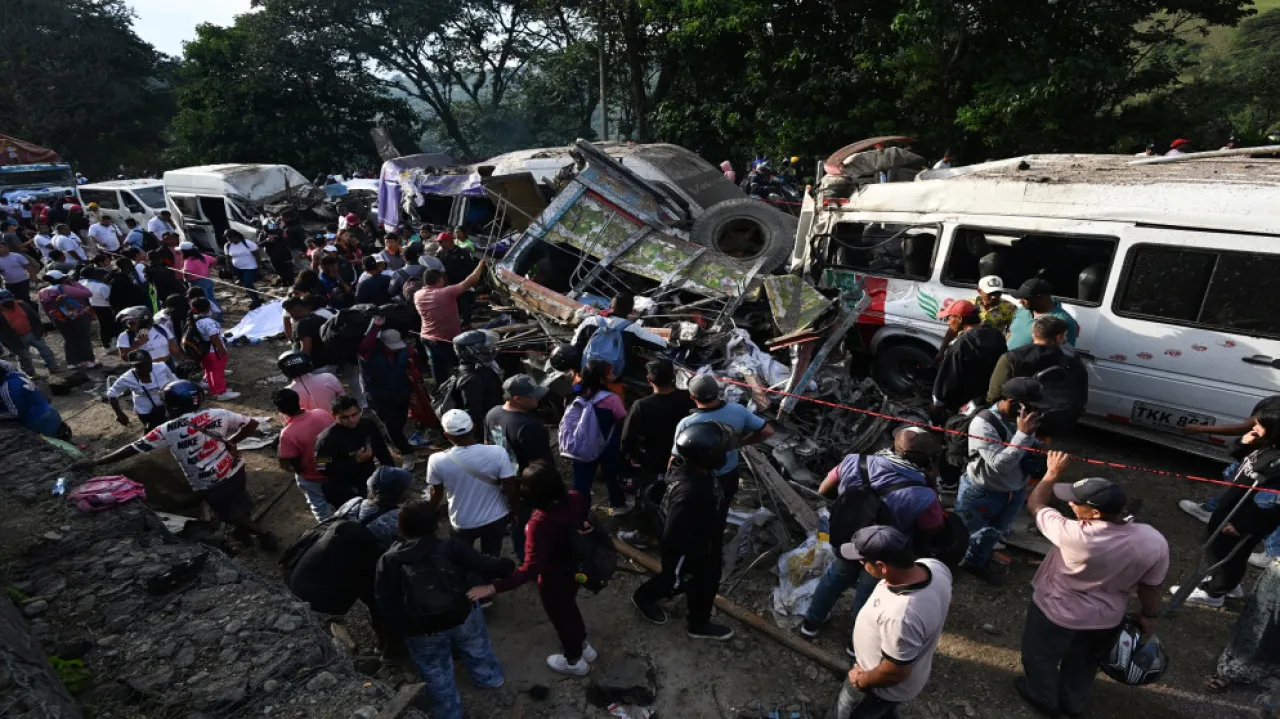
Witnesses reported more than ten vehicles were damaged by an explosive device on a road connecting the cities of Cali and Popayan, near the areas of Cachibio and El Tunel.
Authorities blamed dissidents from the dissolved Revolutionary Armed Forces of Colombia (FARC) for the attack that occurred in the troubled Cauca region.
The police reported that rescue teams were still searching for missing people.
The attack on the Pan-American highway resulted in the destruction of buses and minibuses while several cars were overturned due to the force of the explosion.
President Gustavo Petro said on "X" that "those who carried out the attack.. are terrorists, fascists, and drug traffickers." He added, "Our best soldiers must face them."
The leftist president attributed the bombing to Ivan Mordisco, who is top on Colombia’s most-wanted list and likened to the late drug lord Pablo Escobar.
The army commander Hugo Lopez confirmed in a press conference that it was "a terrorist attack against civilians."
He explained that the bomb exploded after the attackers halted traffic by blocking the road with a bus and another vehicle.
The attack followed a bombing that targeted a military base in Cali, Colombia’s third-largest city, on Friday, which resulted in two injuries and was followed by a series of attacks in the regions of Valle del Cauca and Cauca.
Lopez reported that the two regions witnessed 26 attacks in the past two days.
Authorities have boosted the deployment of the army and police in both regions, according to Defense Minister Pedro Sanchez on Saturday.
Colombia has long suffered from violence by armed groups that finance their operations through drug trafficking, illegal mining, and extortion while trying to influence elections through violence.
The remnants of "FARC" that rejected the peace agreement with the government in 2016 are seeking to undermine peace talks with President Petro.
Security is a major issue highlighted in the upcoming presidential elections on May 31.
The left-wing candidate Ivan Cepeda, who was behind Petro’s controversial policy of negotiating with armed groups, is leading the polls as the successor to the president.
Following him in the polls are the right-wing candidates Abelardo de la Espriella and Paloma Valencia, who have committed to a tough approach on the rebel groups.
The three candidates have reported receiving death threats as they campaign under heightened security measures.