Khaberni - The Financial Times reports that officials and international organizations have noted a significant decline in food supplies and commercial shipments to the Gaza Strip since the military confrontation with Iran began, amid restrictions imposed by the occupation and the ripple effects of regional escalation on humanitarian supply routes.
According to the newspaper, UN reports indicate that the number of aid trucks entering the sector daily since the war between the occupation and Iran began does not exceed 60 trucks, compared to about 95 trucks daily before the outbreak of conflict, reflecting a significant reduction in aid flow at a time when humanitarian needs within the sector are worsening.
The newspaper mentioned that the occupation still prohibits the entry of many essential materials, including building materials, debris removal equipment, and some medical supplies, while international organizations confirm that the crisis is not only related to the decrease in the number of trucks but also the nature of the materials allowed to be brought in, which limits the effectiveness of the humanitarian response and deepens the suffering of the people.
The Financial Times reported the frustration of international officials over the disruption of the diplomatic path aimed at expanding the flow of aid, considering that the humanitarian situation has become hostage to regional military escalation. Recent tensions, after international efforts to increase aid entries, have led to a decline in numbers to very low levels, dropping at times by up to 80%.
The report noted that the occupation authorities imposed additional restrictions on land crossings in conjunction with tensions with Iran, which caused a slowdown in the entry of aid and obstructed the movement of trucks, leading to a complete halt at times, as well as affecting shipping routes and logistical services in the region due to the escalation, further complicating the supply of aid to the Gaza Strip.
In related developments, the report pointed to the occupation's ongoing breaches of the Gaza cease-fire agreement, which came into effect on October 10, 2025, based on an American plan to end the war. It stated that the occupation's military committed hundreds of breaches since the agreement took effect, resulting in the martyrdom of 972 Palestinians and injuring another 2,235, according to data from the Ministry of Health in Gaza.
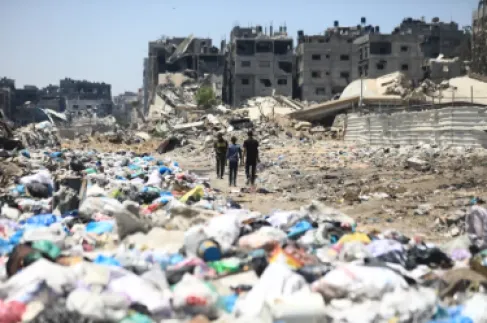
This comes amid the ongoing repercussions of the war launched by the occupation on the Gaza Strip since October 7, 2023, which according to UN estimates, has killed more than 72,000 and injured more than 172,000, in addition to destroying about 90% of the civilian infrastructure in the sector.
The occupation also reneged on its obligations related to opening the crossings and introducing the agreed quantities of food, relief, medical supplies, and shelter materials, exacerbating the catastrophic humanitarian conditions for about 1.9 million displaced people out of 2.4 million Palestinians in the sector.
Despite the announcement by the US President in January of the second phase of the agreement, which includes transitional arrangements in Gaza, an additional withdrawal of occupation forces, and the start of reconstruction efforts, right-wing voices within the occupation have resumed calls for war on Gaza, under the pretext of Hamas's refusal to disarm, while the movement asserts that it is dealing with the proposals within the context of completing the implementation of the first phase and preparing for discussions of the second phase arrangements.