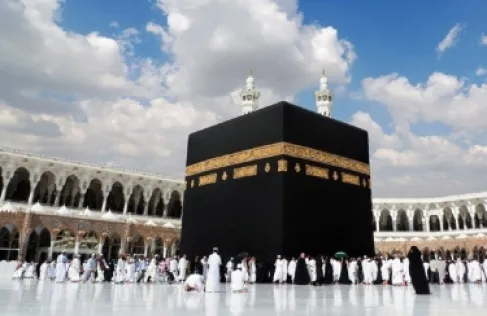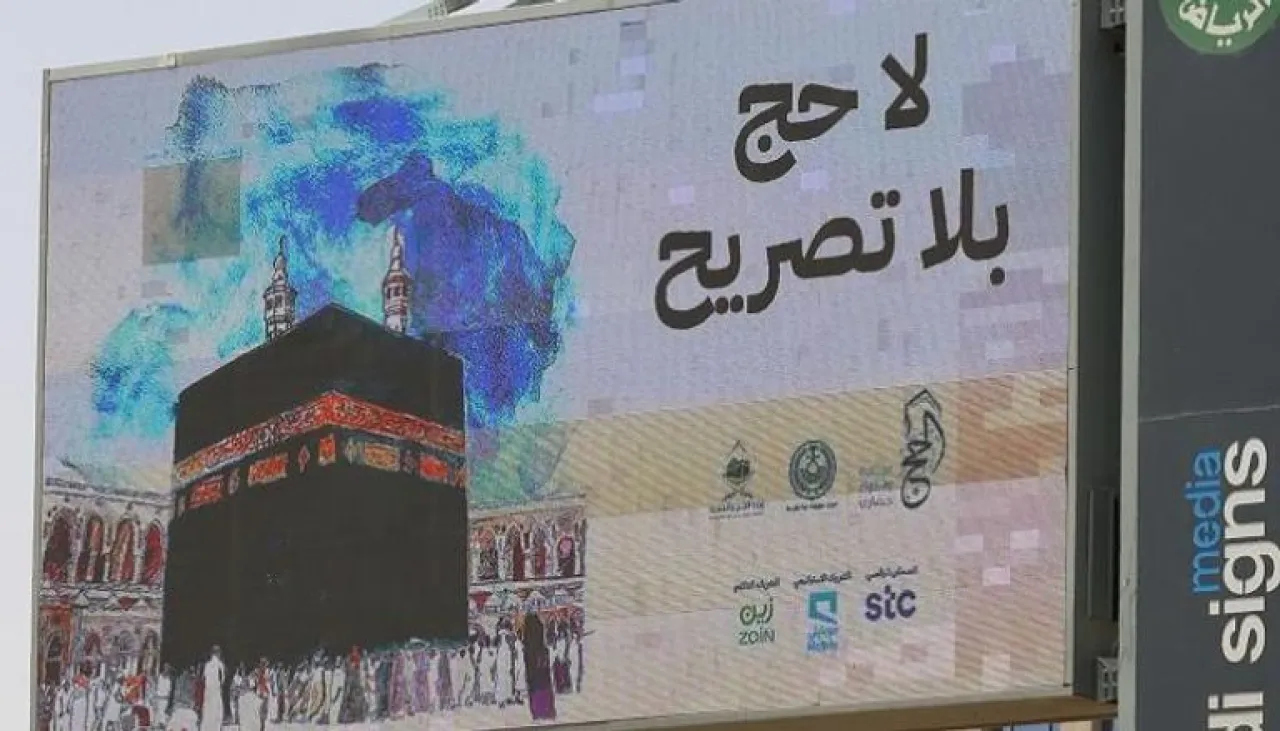
Khaberni - The Saudi Interior Ministry has announced a stricter framework for regulating the performance of rituals, confirming that obtaining an official permit is a basic requirement for Hajj.
It declared a financial penalty of up to 20,000 riyals ($5,300) for anyone caught performing or attempting to perform Hajj without a permit, including holders of all types of visit visas.
The measures are not limited to performing the rituals but also include attempts to enter Mecca and the holy sites or to stay there during the period from April 18 to May 31, which is the peak time of preparations for the Hajj.
The intensifications target not only individuals but extend to those who directly or indirectly facilitate the violation, with fines reaching 100,000 riyals ($26,600) for those who apply for a visit visa for someone attempting to perform the Hajj without a permit, and the penalty doubles with multiple violators.
The penalties also cover anyone who transports or attempts to transport visit visa holders to Mecca and the holy sites, or provides them with lodging in any form, whether in hotels, apartments, or private residences, or even offers them any kind of assistance that enables them to stay.
Deportation and Ban
The punishments do not stop at financial fines but extend to more stringent measures, including deporting violators among the residents and overstayers to their countries, with a ban on entering Saudi Arabia for up to 10 years.
The competent authorities also request the court to confiscate the transport means used in the violation if the owner's involvement or complicity is proven.
Despite the strictness of the measures, the Saudi Interior Ministry provides a legal pathway for objection, where those subjected to a financial penalty can file a complaint within 30 days from the date of notification, before a specialized committee, with the possibility of appealing the decision in the Administrative Court within 60 days.
Crowd Management
These actions reflect a continuous approach to regulate the Hajj season, in light of challenges associated with managing millions of pilgrims.
While the laws are stringent, the fundamental objective remains to ensure the safety of the guests of the merciful and to maintain the smooth performance of the rituals in a safe and organized atmosphere.