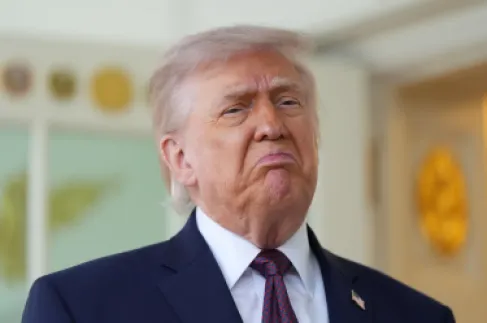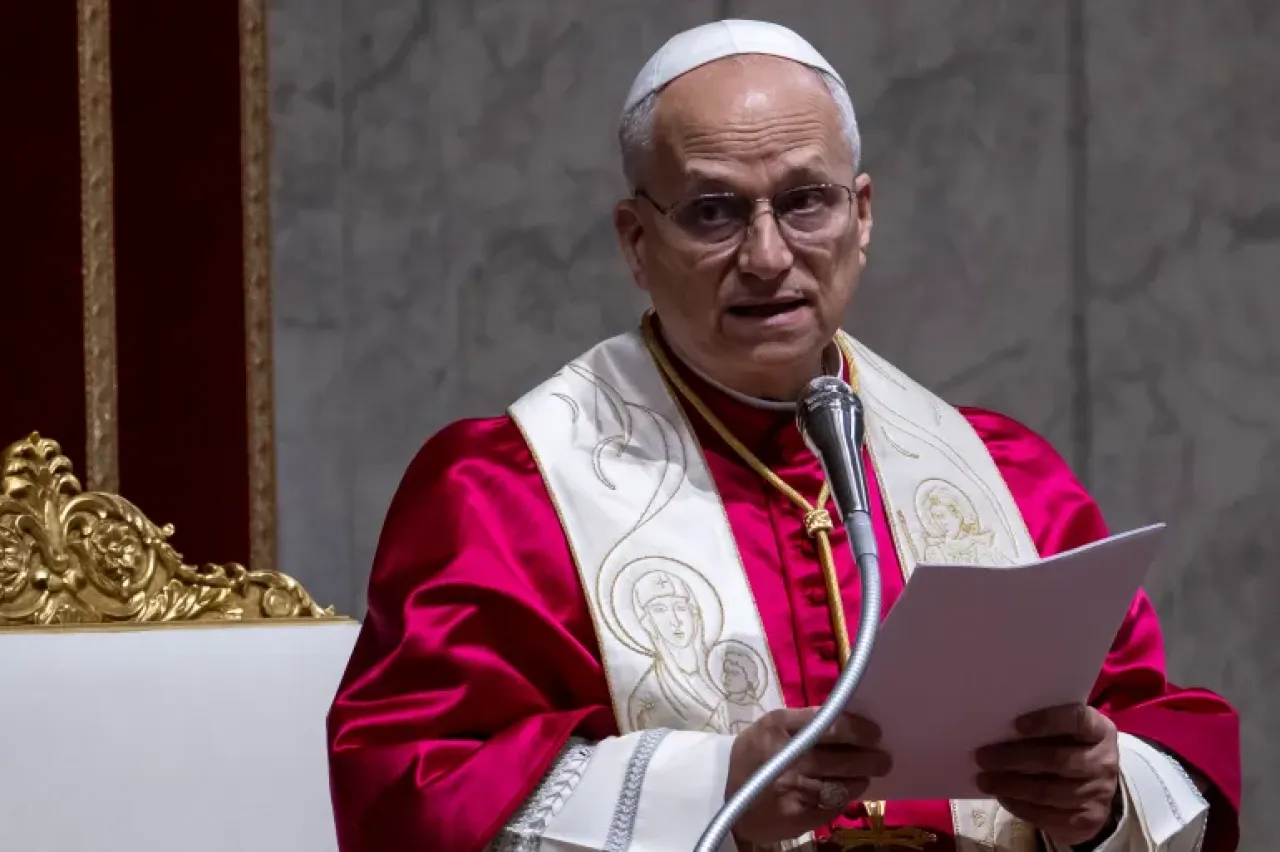
Khaberni - Pope of the Vatican Leo XIV said that talking about the U.S. President Donald Trump "does not concern him at all", despite being repeatedly attacked by him.
The Pope insisted on continuing to discuss peace in the world, expressing at the same time regret that his positions during his African tour are seen merely as responses to criticisms by the American president who described the Pope as "lenient on crime" because of his opposition to the war on Iran.
He stated in remarks on board the plane shortly before his arrival, this Saturday evening, to Angola -his third African station after Algeria and then Cameroon- that the speech he delivered two days ago in Cameroon, in which he accused "a handful of tyrants of destroying the world", was "written two weeks ago", in reference to its writing before the scathing attack launched by Trump on him last week.
He added "It was perceived as though I was trying to open a discussion with the president, which is not in my interest at all", in a move seen by observers as an attempt by the Vatican to rise above direct disputes and deliberately avoid the pressures exerted by Trump.
A new and strong discourse
According to observers, Pope Leo -the first American to hold the position of Pope of the Vatican- adopted a new and forceful style of speaking during his African tour, making harsh criticisms of the war on Iran and Lebanon, which led U.S. President Donald Trump to repeatedly attack him.
Trump said last week on his platform "Truth Social" that Pope Leo XIV is "lenient on crime, and disastrous in foreign policy", adding "I don't want a Pope who thinks that Iran having nuclear weapons is okay, and I don't want a Pope who thinks that America's attack on Venezuela is terrible".
Robert Prevost was elected on May 8, 2025, as the Pope of the Vatican under the name "Leo XIV", succeeding Pope Francis, thus becoming the first American Pope in the history of the Catholic Church.
This is his first African tour since his election about a year ago. His tour includes 4 stations, namely Algeria, Cameroon, Angola, and finally Guinea.
His visit, this Saturday evening, to Angola, a Portuguese-speaking state where a third of its population lives below the poverty line, comes in the wake of a natural disaster resulting from heavy rains and floods that caused about 50 deaths, and less than a year after the suppression of protests against costliness and worsening conditions.