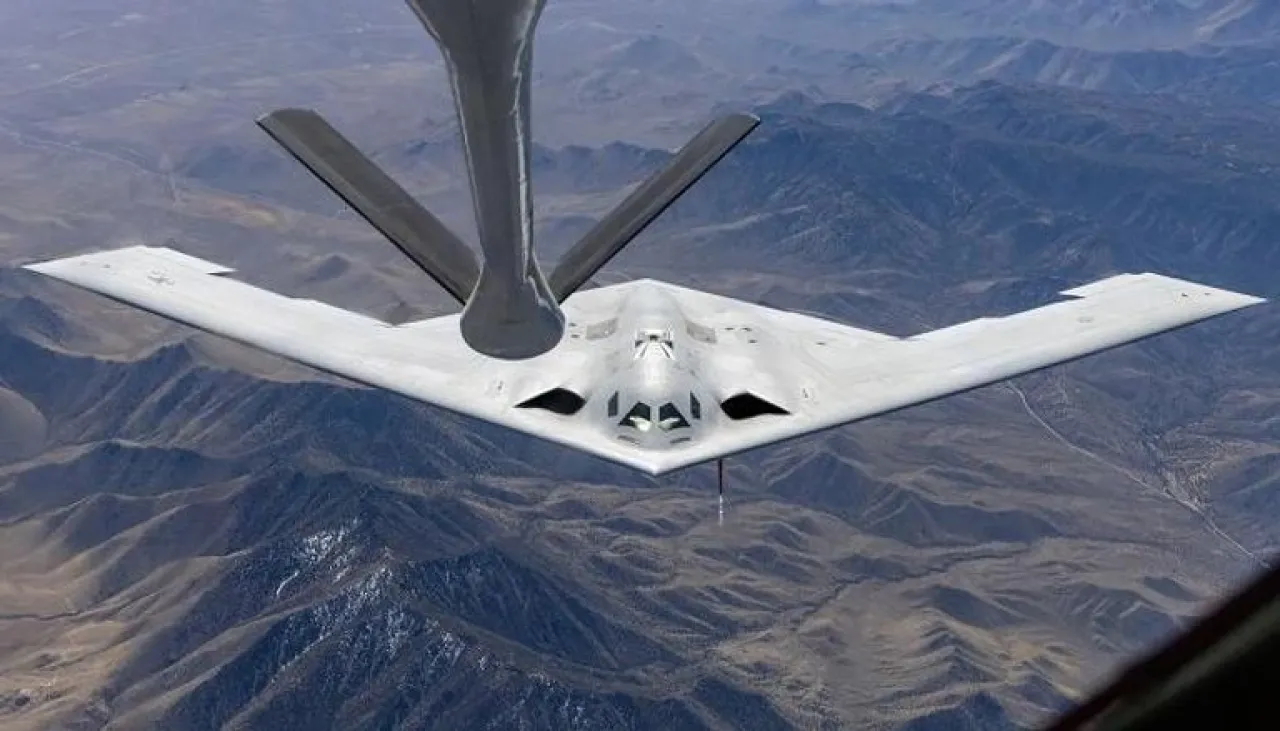
Khaberni - For the first time since the announcement of the world's most advanced strategic bomber program, comprehensive aerial images from above of the "B-21 Rider" have appeared.
The "Time War Zone" site obtained the comprehensive aerial images during one of the initial refueling tests.
Although previous images showed parts of the front of the stealth bomber from slightly elevated angles, this shot is the first to give analysts and observers a full panoramic view of the upper surface of the aircraft, including one of the most sensitive and important parts of the stealth technology: the rear exhaust system of the engines.
This image was part of a press release issued by "Northrop Grumman”, documenting the early stages of refueling tests for the bomber, nicknamed "Cerberus", while it was flying in a pre-contact position behind a fuel tanker.
The company confirmed in its statement that "B-21" is the most fuel-efficient bomber ever, consuming only a fraction of what fourth and fifth generation aircraft do, which reduces reliance on refueling fleets in the operational theater and provides commanders with greater tactical flexibility.
It is noteworthy that the company has invested over 5 billion dollars in digital infrastructure to accelerate production, with the first aircraft scheduled to arrive at Ellsworth Air Base by 2027.
The new image demonstrates to what extent the aircraft relies on a structural design inspired by its predecessor "B-2 Spirit", but with radical improvements aimed at extending the flight range.
Although "Rider" is smaller than "Spirit", it is designed to carry massive amounts of fuel, allowing it to penetrate further distances beyond the reach of the refueling aircraft themselves.
Based on analysis of condensation trails and design indicators, experts believe the bomber relies on only two engines instead of four, with a lighter weapons load, in an engineering trade-off in favor of range and efficiency.
Returning to the details of the aerial image, the open fueling port and its guidance marks are clearly visible, and are very similar to those found in fifth generation fighters "F-22" and "F-35".
The top view also reveals the deeply integrated air intakes in the aircraft body, which are among the most crucial secrets of the bomber's low radar signature.
However, the most surprising and intriguing aspect is the view of the recessed rear exhausts shaped like an inverted "V", designed to be at the forefront of the aircraft's structure, away from the rear edge to scatter the thermal signature and conceal it from enemy sensors.
Yet the image also raises a level of technical puzzle, as it does not show any trace of the special materials or cavities usually used in cooling and mitigating the heat emitted from hot gases, unlike the active cooling system found in the "B-2" aircraft.
This absence leads to the belief that the image may have been digitally modified to conceal some of the exhaust's highly sensitive properties, a common practice in highly secretive stealth aircraft programs.
Among the other noteworthy details in the image is the unprecedentedly small size of the cockpit windows, a design primarily aimed at reducing the forward radar cross-section to the minimum, while still providing sufficient glass area for visibility during aerial refueling maneuvers.
A side view accompanying the test shows the relatively short length of the bomber, which is roughly the size of an "F-15" fighter, while the wingspan ranges between 145 and 155 feet.
Observers agree that the "B-21" program has so far been progressing steadily within the scheduled timeline and budget, a feat credited to "Northrop Grumman" in light of the financial complexities that plagued the "B-2" program earlier.