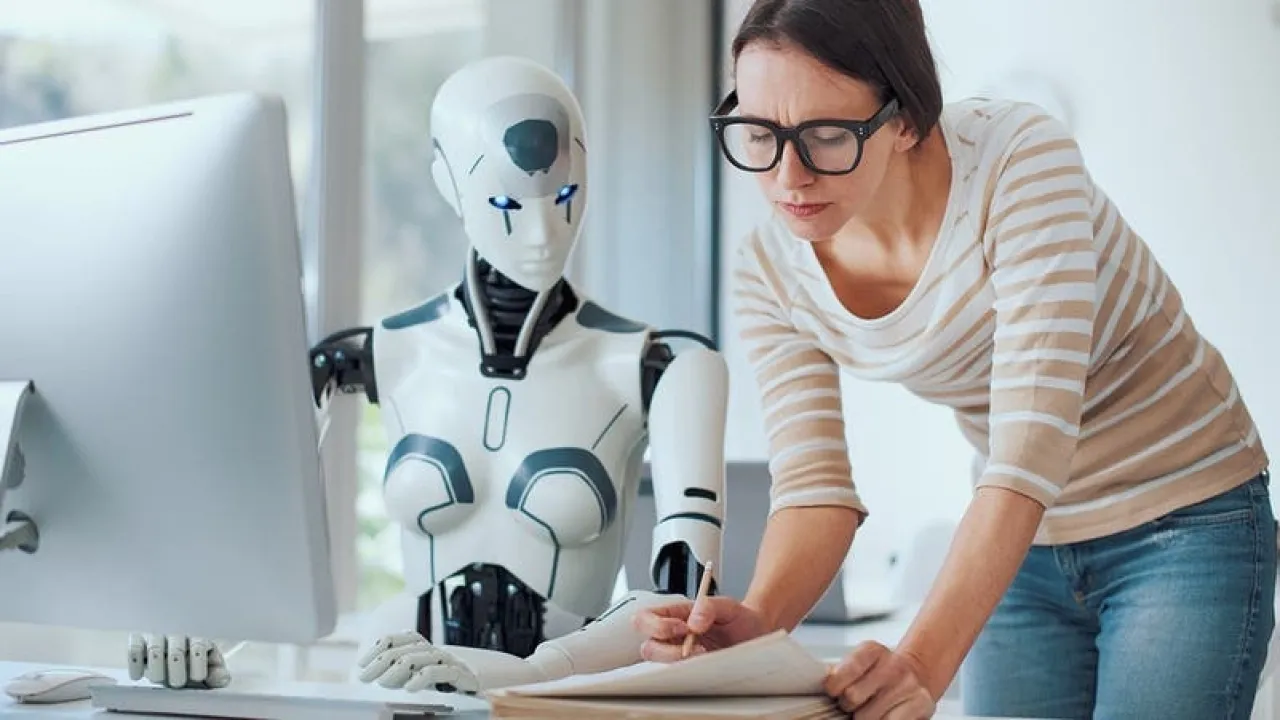
Khaberni - Employees' fears are escalating worldwide about the impact of artificial intelligence on their jobs, amid increasing discussions about automation and layoffs, especially with news from companies such as "Block" and "Oracle", which have intensified workplace anxiety.
Although some of these fears may be exaggerated, the concern remains real and rooted, posing a significant challenge for technology leaders to reassure employees and encourage them to embrace artificial intelligence tools instead of fearing them.
Jamie Shapiro, the CEO of Connected EC, believes that the problem is not only in the capabilities of the technology but in the way it is presented within organizations.
She explains that the repeated discussions about artificial intelligence as a means to reduce costs and increase efficiency or decrease the number of employees, leads workers to feel threatened instead of seeing the opportunities, placing them in a defensive position that hinders learning and experimentation, according to a report published by "CNBC" and reviewed by "Al Arabiya Business".
Among the major fears expressed by employees is the concern about job loss or losing relevance within the organization, in addition to the fear of falling behind colleagues who adopt the technology faster, or being evaluated based on tools they have not been adequately trained on.
In contrast, data from "International Data Corporation" indicates that concerns are not limited to job losses but also extend to the nature of work itself, where most employees expect artificial intelligence to reshape their tasks rather than completely replace them.
To address these fears, experts recommend adopting clear strategies, starting with clarifying the impact of artificial intelligence on each job in the coming period, identifying tasks that will be automated and those that will be enhanced, as well as providing clear training and retraining pathways for employees.
It is also recommended to highlight the practical benefits of artificial intelligence in daily life, such as reducing routine tasks and saving time, instead of focusing only on productivity and profits.
Experts affirm that involving employees in designing artificial intelligence solutions within organizations and giving them the opportunity to use these tools practically contributes to reducing fears and transforming them into opportunities for development.
In the end, the most important message is that the way artificial intelligence is presented within companies may be the decisive factor: it can either be seen as a threat to employment or as a tool to enhance human capabilities and open new prospects in the job market.