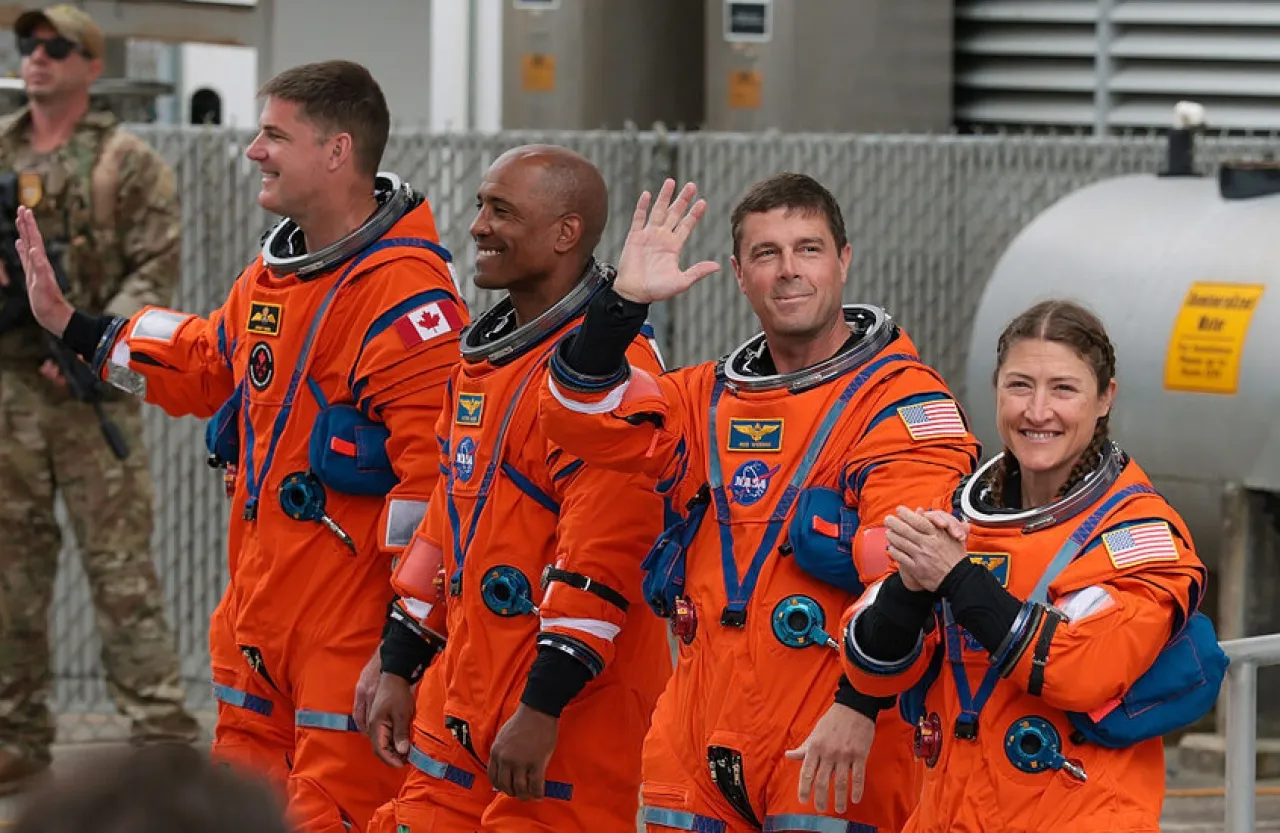
Khaberni - In a scene reflecting the harshness of life outside Earth, the four astronauts participating in the "Artemis 2" mission live an extraordinary experience with freeze-dried food, cramped spaces, and a non-private toilet during a historic journey to the moon that is the first of its kind in more than five decades.
The mission, led by NASA, launched with the goal of testing human capabilities and the "SLS" rocket and life support systems in deep space, aiming to return humans to the moon as part of the "Artemis" program.
According to NASA, the crew has passed the midpoint between Earth and the moon, now more than 136,000 miles from Earth, on their way to reaching a distance exceeding 252,000 miles.
The crew lives inside the "Orion" space capsule, which has been named "Integrity", in a space no larger than a small car, where advanced technology intersects with conditions akin to camping in a completely isolated environment.
The capsule has six windows that allow astronauts to watch the Earth gradually shrink as they approach the moon in a unique scene.
Despite the absence of traditional comforts, the mission provides some amenities, such as food heaters and water dispensers, alongside the option to choose specific meals like macaroni and cheese and shrimp cocktail.
The crew's meals rely on freeze-dried food that is rehydrated, and the astronauts have brought with them several types of hot sauces, as the sense of taste is affected in the zero-gravity environment.
Regarding comfort means, the capsule relies on an advanced waste disposal system using suction, as the crew initially faced some technical issues that were later repaired.
Daily exercises are an essential part of the astronauts' routine to maintain muscle and bone health in zero gravity, using specialized resistance machines that simulate exercises on Earth.
Despite being hundreds of thousands of miles away, the crew remains in constant contact with the control center in Houston, while the public can follow the mission's details moment by moment, except for periods of up to 50 minutes when the spacecraft passes behind the moon.
The crew also faces additional challenges during the crossing of the Van Allen radiation belt, as they may be exposed to potential solar storms, prompting the preparation of a special shelter within the capsule to protect against radiation.
The mission is scheduled to end on April 10, 2026, as the capsule will enter Earth's atmosphere before landing in the Pacific Ocean near the coast of San Diego, in an operation considered one of the most dangerous stages of the journey, due to the intense heat and temporary communication blackouts experienced by the vehicle.
The "Artemis 2" mission contributes to paving the way for humans to return to the moon, as part of ambitious plans to explore deep space in the coming years.