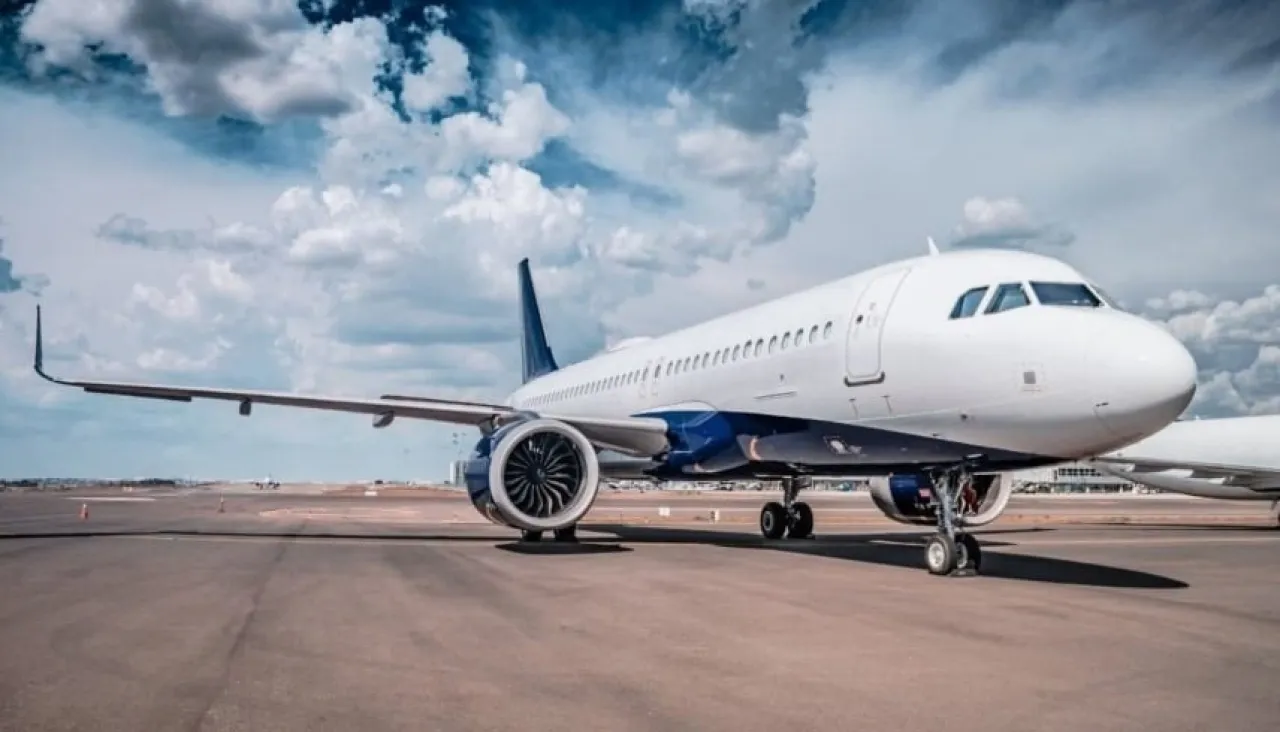
Khaberni - Worldwide airlines compete daily to stay above the clouds of profitability, in a sector known for its extreme operational costs and financial risks.
With increasing questions about the feasibility of low-cost tickets that may not exceed 19 euros, an in-depth analysis of the European aviation market has revealed that the difference between prosperity and bankruptcy could rest on "just one empty seat" during a flight.
Fuel.. The Engine That Devours Budgets
The fuel bill consumes the lion's share of any flight's budget, with its cost equivalent to the load of 54 seats out of 189 in medium-range aircraft.
Costs are not limited to the price of "kerosene" alone, but also include hedging contracts against price fluctuations, and the additional fuel burned during flight delays or route changes.
This variable is the most volatile and difficult to predict, making it the primary nightmare for financial managers in airlines.
A Legion of Employees Behind Every Takeoff
The costs of human resources occupy the equivalent of 39 seats on the plane, and these costs include:
- Flight crews: Pilots and flight attendants who receive handsome salaries for their extensive training, in addition to uniforms and hotel accommodation costs and allowances during layovers.
- Technical team: Aeronautical engineers who ensure daily maintenance to guarantee the safety of the structure and engines.
- Administration and operations: Employees unseen by passengers, from accounting system programmers, revenue management analysts, to legal experts.
- Ongoing training: Companies bear significant costs in exchange for training hours on simulators and mandatory periodic medical examinations.
Aircraft ownership and taxes
Even if the aircraft remains parked on the tarmac, the financial meter does not stop, because most aircraft are leased, meaning monthly installments or loan interest payments whether the aircraft is flying or not, as leasing contracts and loan interest cost the equivalent of 28 seats, plus comprehensive insurances against accident risks, wars, and terrorism.
As for taxes and sovereign fees, they consume the value of another 23 seats; as companies pay fees for each landing and takeoff, and the use of airspace controlled by air traffic control, in addition to increasing environmental fees and passenger taxes.
Maintenance.. Security That Cannot Be Bargained
Equalling 18 seats, funds go to heavy maintenance centers, with an emphasis that these costs are indispensable regardless of the financial status of the company, as regulatory bodies impose strict periodic inspections (C-Checks and D-Checks), which include replacing original parts and updating navigation softwares.
Hidden Costs
The remaining value of 24 seats is distributed over a wide range of necessary services:
- Technology and distribution: Fees from global booking systems, commissions from travel agents, and credit card fees.
- Customer service: Financial compensations, meal and hotel vouchers given to passengers in cases of flight cancellations.
- Marketing and sustainability: Branding expenses and investments in biofuel to reduce the carbon footprint.
- Catering and comfort: From meal services to entertainment systems and onboard "Wi-Fi" networks, as well as essential technical systems for operating the flights.
The Final Outcome.. Where Is the Real Profit?
When these figures are added up, costs consume nearly 100% of ticket revenues often, thus, most of the airline's revenues are entirely absorbed in operating costs, leaving a very slim profit margin.
This reality explains why companies resort to "Ancillary Revenue" to achieve a real profit margin, among them: cargo shipping in the aircraft's belly, selling premium tickets (business class), in addition to fees for extra baggage and onboard sales of beverages, meals, and duty-free goods.
In this manner, an additional seat or minor revenue can transform a slim profit margin into significant earnings, as the aviation world is based on precision in calculations and ultimate efficiency, where any empty seat or slight delay can directly impact a company’s profits. Therefore, the aviation industry requires meticulous financial planning and multiple strategies to achieve sustainability and profitability.