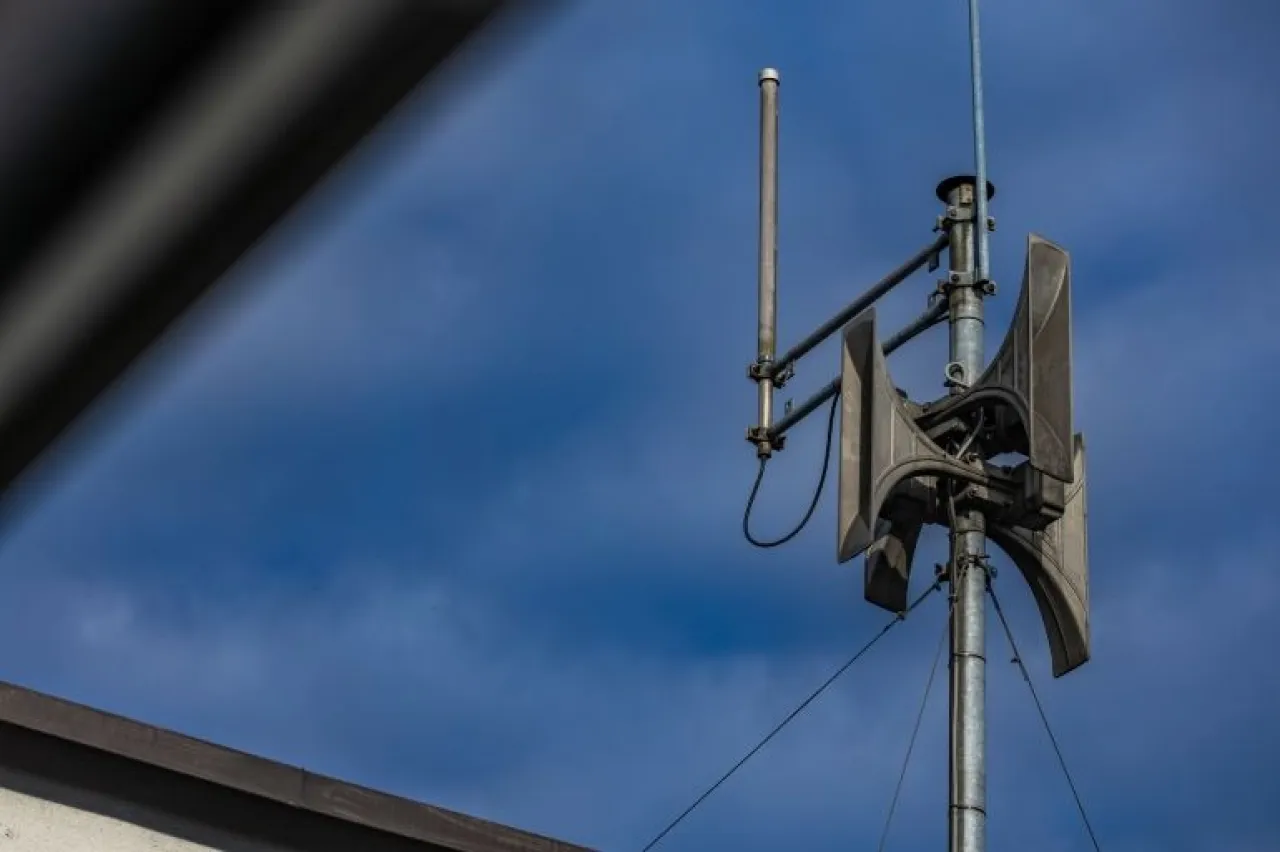
Khaberni - With the outbreak of a new round of Israeli-American-Iranian confrontation, the sound of sirens is renewed in Tehran, Tel Aviv, and a number of Arab cities affected by the escalation consequences. These sounds come to the forefront, reminding us of the roots of the "machine" that go back more than two centuries, and the transformations it has undergone.
Starting from horns and bells
Before the advent of modern sirens, ancient communities relied on primitive means of mass warning through brass horns and drums used to alert the population of approaching enemy armies or outbreaks of fires or other emergencies. In Europe, church bells were sometimes used for alarms during times of danger.
But with the doubling of population and the expansion of cities during the Industrial Revolution, these means were no longer sufficient, hence the need for devices capable of producing a louder sound that could be heard from far distances emerged.
A scientific invention becomes an alarm tool
While horns and bells played the warning role in ancient cities, the "siren" represented the new stage in the history of public alarm.
The word "siren" (Siren) is used in English to describe modern alarm sirens, which originally did not refer to an alarm device but to mythological sea creatures known as "mermaids" in Greek myths. These mermaids were famous for their enchanting voices that lured sailors and led them to their doom.
This historical legacy was later used in physics. In the late 18th century, Scottish scientist John Robison developed a mechanical device in 1799 that relied on air flowing through rotating holes to produce a steady sound, primarily used in sound experiments and music.
About twenty years later, the French physicist Charles Cagniard de la Tour named a similar device designed for studying vibrations "siren" in 1819, inspired by the mythological origin of the word.
With this transition, the word "siren" moved from a poetic image in a Greek myth to a scientific term. Initially, the purpose of the "siren" was not to warn of danger, but to study the nature of sound. However, industrial development and the expansion of cities in the 19th century paved the way for the use of this device outside the laboratory, gradually becoming a public alarm tool.
The World Wars.. Birth of organized civil defense alarms
World War I was the first extensive test of using modern alarm devices - then - in European cities, yet the system evolved further during World War II.
Sirens became part of civil defense systems, centrally operated through electrical networks, with each tone having a specific meaning for which the residents were trained: from a preliminary alarm, to announcing air raids, to announcing the end of the danger. Thus, the sounds of sirens became a "language" understood by everyone.
With the escalation of nuclear tension during the Cold War in the 1950s, sirens developed to become stronger and more widespread. The American company "Federal Signal" introduced huge siren models, including the "Thunderbolt", known for its ability to carry sound to far distances.
High-capacity sirens such as the "Chrysler Air-Raid Siren", which were used as part of civil defense plans in anticipation of a possible nuclear attack, also appeared.
With this transformation, the alarm siren moved from the stage of mechanical devices mounted atop main buildings in cities to an integrated national security system.
Why do they sound similar?
There is no global standard for the tone of alarm sirens, but most systems rely on high, fluctuating frequencies that rise and fall within seconds. This alarming pattern is more capable of attracting attention and prompting an immediate response.
When a person experiences a sudden change in pitch within a high range, they feel anxious, their heart rate increases, and their focus sharpens, in a instinctive response linked to the perception of danger. Therefore, systems typically include two essential tones: a steady or intermittent tone for the initial warning, and a long, fluctuating tone when actual danger occurs.
From metal towers to mobile phones
In recent years, alarm systems have evolved beyond traditional sirens, now relying on mobile phone networks that allow sending immediate alerts to all mobile phones within a specified geographical range.
This technology has become part of the early warning systems in several countries, due to its ability to reach people inside buildings or in areas where external sound cannot reach.
Has the role of traditional sirens ended?
Despite the proliferation of smartphones, sirens are still used in many countries, especially in cases of sudden air strikes or network outages. The direct sound remains a quick way to notify a large number of people in a single moment.
While the media has changed over time, the fundamental idea remains the same: to deliver a clear message to as many people as possible in the shortest possible time that "there is danger, move now".