The Minister of Health, Dr. Ibrahim Badour, affirmed that mental health and addiction treatment have become national priorities in Jordan, starting from the state's increasing recognition that mental health represents a fundamental pillar of public health, social stability, and sustainable development.
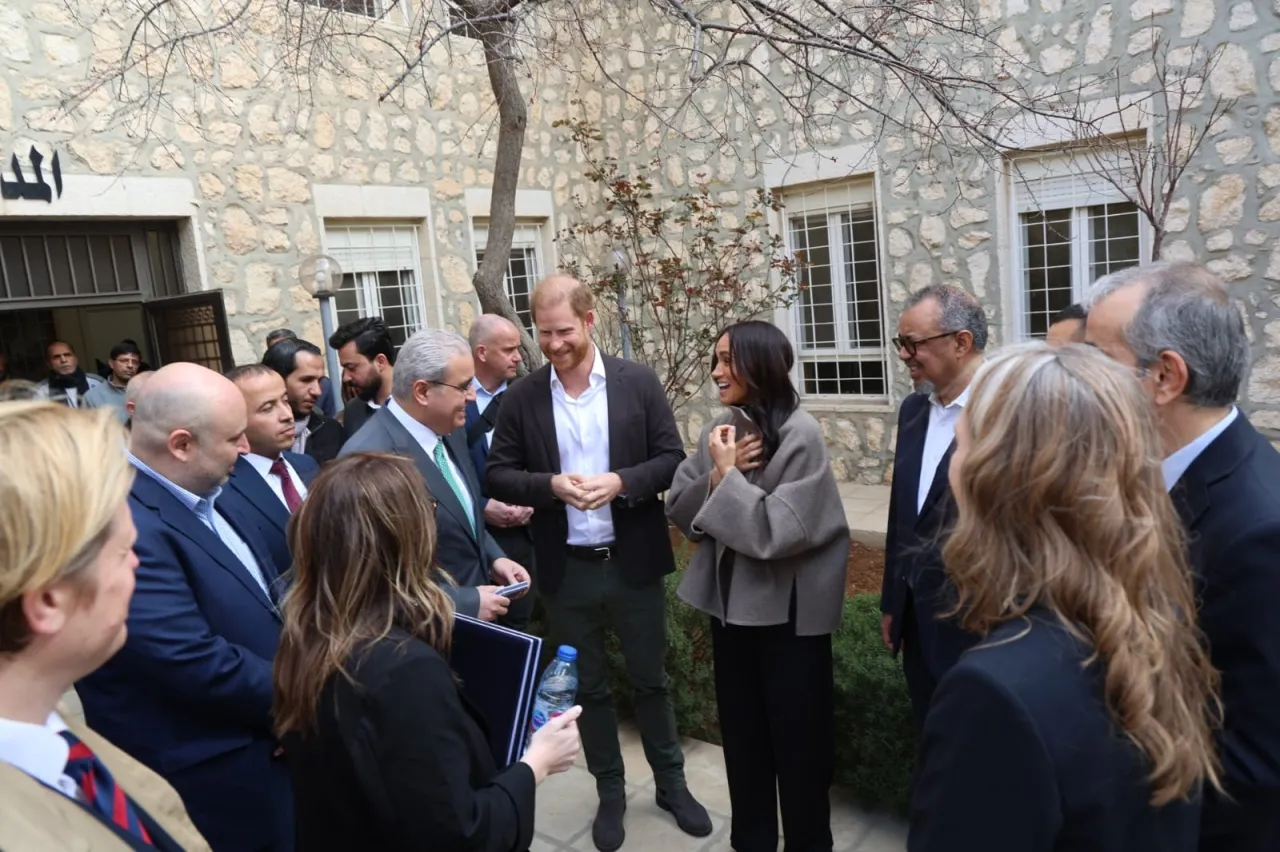
This was stated during a tour of the National Center for Rehabilitation of Addicts in Shafa Badran, in the capital Amman, undertaken today, Thursday, with Prince Harry, Duke of Sussex, his wife Meghan Markle, and the Director-General of the World Health Organization, Dr. Tedros Adhanom.
Badour explained that the Ministry of Health has adopted a comprehensive national framework focusing on prevention, expanding therapeutic services, and integrating health, psychological, and social care within an integrated system, which enhances the effectiveness of the response to patient needs and improves the quality of services provided.
He pointed to the enhancement of community services, where currently 73 mental health clinics are operating across different provinces of the kingdom, contributing to improved access to services and promoting equity in providing mental health care.
The minister highlighted that among the most notable achievements of the ministry in the field of addiction treatment is the establishment of a new facility for inpatient addiction treatment supported by the World Health Organization, noting that the National Center for Mental Health provides short-term residential and outpatient services, including medical detoxification, psychological support, and social counseling.
Badour affirmed the continuation of cooperation with international partners to enhance the quality of services and align them with global best practices, reiterating the kingdom's commitment to investing in mental health as a basis for community security and progress.
The delegation listened to a briefing by the director of the center, Dr. Ahmad Al-Huniti, about the work mechanism and the adopted therapeutic and rehabilitation programs. They also were informed about the stories of several beneficiaries of the center's services and their experiences in recovery and social reintegration, in addition to the key medical, psychological, and social services provided by the center to patients.