Khaberni - In light of the ascending momentum witnessed in Europe in defense spending, investors are increasingly supporting low-cost defense industry companies, in an attempt to boost military capabilities and close existing gaps.
European investors are funding two of the fastest growing technology startups in the region, "Frankenberg Technologies" and "Titan Technologies," which are developing low-cost air defense systems aimed at addressing one of the largest gaps in European military capabilities.
The announcement of funding collection by the two companies coincided with the fourth anniversary of the Russian war in Ukraine, at a time when emerging defense companies in Europe are seeking to expand production capabilities and accelerate their pace.
Co-founder and Co-CEO of Titan, Balazs Nagy, whose AI-supported interceptor drones have been deployed in Ukraine, stated that the recent financing "concerns air defense in general," according to the “Financial Times”.
Special interest in air defense
Recently, air defense has received special attention as the widespread deployment of drones across front lines has revealed the shortcomings of costly traditional air defense systems, originally designed for different threats.
Despite European governments increasing their military spending, NATO warned that the Alliance needs a radical increase in its air and missile defense capabilities to deter Russian attacks.
Titan, headquartered in Munich, raised 30 million Euros in a funding round led by NATO's Innovation Fund and the European investor “Amira,” along with previous investors including OTB Ventures and Lakestar.
The valuation of Titan, founded in 2023, surpasses 100 million Euros, according to sources familiar with the funding process.
The company intends to use the funding to increase its production capacity and expand its product range, aiming to produce 3000 interceptor aircraft per month by the end of this year.
Nagy said: "What we are developing is a project distinctively European," adding that the message of the funding confirms that "Europe is capable of funding emerging air defense companies."
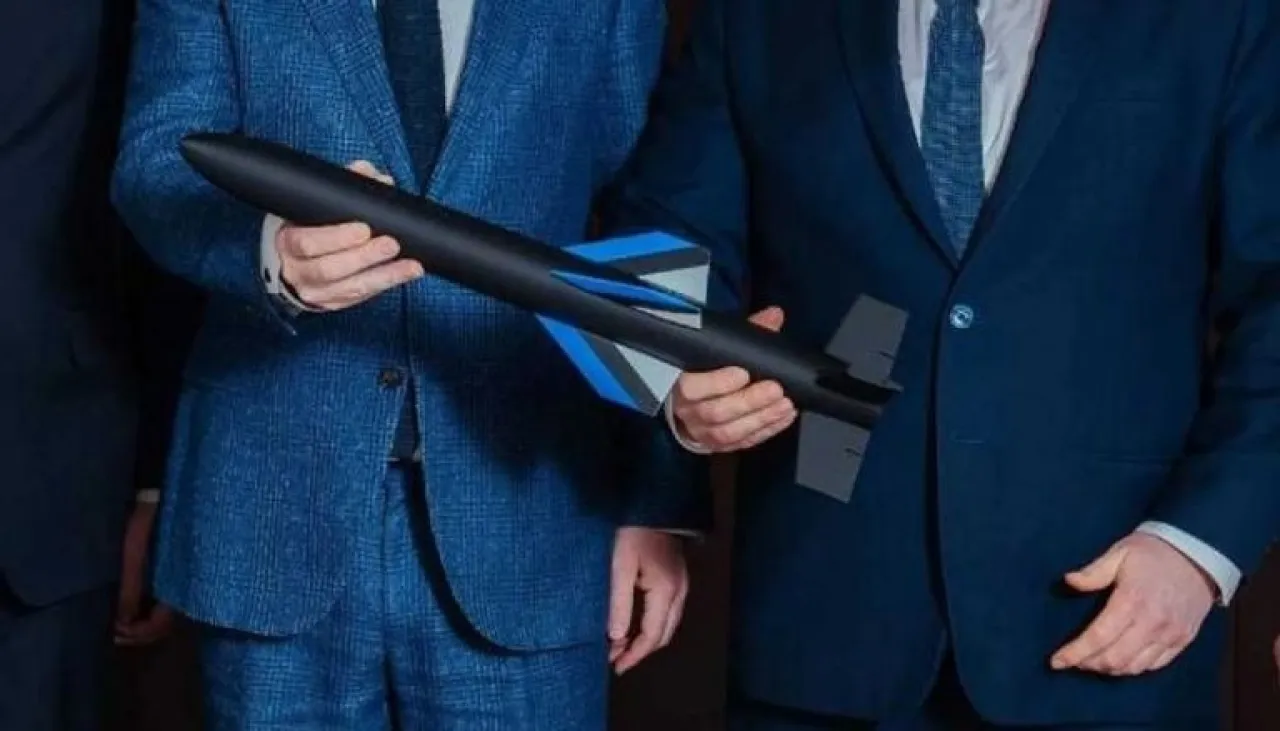
On its part, the Estonian company "Frankenberg" raised 30 million Euros for building low-cost missile systems, in a funding round led by the tech investment firm “Plural,” with participation from "Smart Cap," the Estonian company.
The startup declined to comment on its valuation, which was about 150 million Euros after the founding funding round conducted last year, according to data from the specialized firm “PitchBook.”
Founded in 2024, Frankenberg plans to use the new capital to expand production, with the company, headed by CEO Kosti Salem, the former permanent secretary of the Estonian Ministry of Defense, stating that one of its priorities is to establish two massive production sites within the European Union, producing more than 100 missiles daily at each site.
A portion of the funding will be allocated to securing core components and creating production facilities dedicated to rocket engines and warheads within the European Union.
Stein Tamkevi, partner at "Plural" and one of the prominent supporters of the emerging tech company “Helsing,” said that the companies that will win tenders and make a real impact in the defense sector are those that not only design products but also focus on manufacturing them efficiently and on a large scale.
He added that the defense sector must be "low-cost and fast-producing, capable of delivering millions of units."
Despite the presence of established European rocket manufacturers, Tamkevi explained that these companies "focus heavily on producing extremely advanced, precise, and very costly equipment."
Salem mentioned that "Frankenberg" introduced the concept of affordability and mass production to the missile sector, emphasizing that the company works on shortening supply chains and relying on commercially available components.
He added that the company carefully reviewed all elements of the supply chain to ensure alternatives for every component, which is a fundamental approach for large-scale manufacturing.
Europe boosts its defense spending
According to a recent report published by breakingdefense, defense spending in Europe is seeing a notable increase and will account for more than one-fifth of the total global defense spending by 2025, driven by substantial investments from Germany, according to a report by the International Institute for Strategic Studies (IISS).
The head of the defense analysis and military sector at the institute, Bastian Giegerich, simultaneously with the release of the annual report “The Military Balance,” stated that Europe accounted for over 21% of the total global defense spending in 2025, compared to 17% in 2022.
He added that European defense spending rose by about 13% in real value during 2024 and 2025, noting that Germany accounted for a quarter of this increase, enhancing its status as the fourth largest defense spending country in the world.
The report clarified that total global defense spending reached 2.63 trillion dollars in 2025, compared to 2.48 trillion dollars in 2024.
The institute, in its report published on the fourth anniversary of the Russian war in Ukraine, indicated that the continued European momentum in this field is due to two main factors: the continent's reaction to Russian aggression and the declining willingness of the United States to bear regional security burdens.