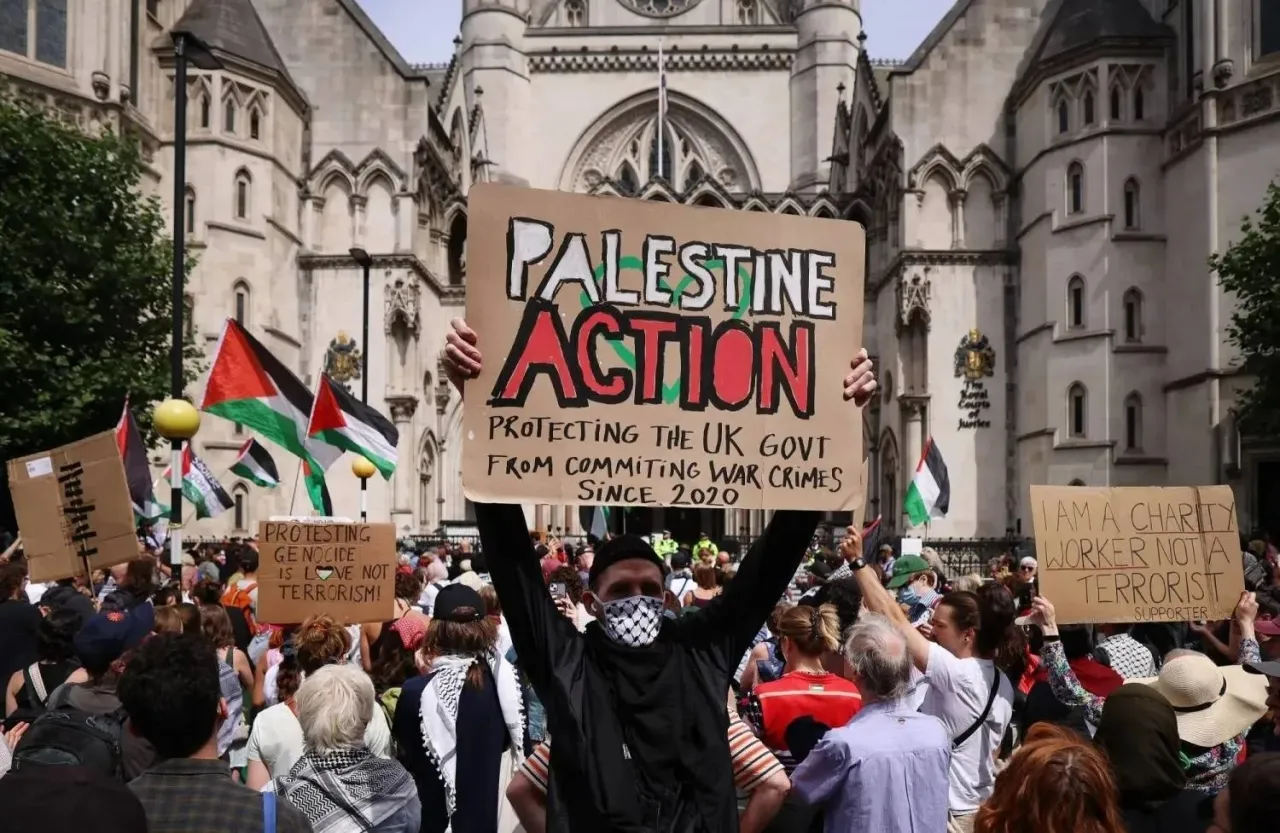
Khaberni - British Foreign Secretary Yvette Cooper defended her decision to ban the organization "Palestine Action" and classify it as a "terrorist group", after the Supreme Court last Friday ruled to lift the ban, considering that the decision was illegal and "disproportionate", stating that the actions of the movement do not rise to the level of terrorism, and that the classification is an assault on freedom of expression.
Cooper had added the organization to the list of banned groups in July last year when she was serving as Home Secretary, after the organization intensified its targeting of defense companies in Britain associated with Israel through direct protests, often involving blocking entrances or spraying red paint.
The organization's ban is still valid at the present time, to allow opportunity for lawyers of both parties to address the court about the next steps, according to Judge Victoria Sharp. Cooper’s successor in the Home Office, Shabana Mahmood, announced that she would appeal the court’s decision.
When asked in a morning show on "Sky News" to clarify the decision-making process, Cooper said, "I followed clear advice and recommendations, through a serious process followed by the Home Office, involving various entities and also police advice, and the recommendation was clear to ban this group".
She added that "the court concluded that this is not a normal protest group, and that some of its actions reached the extent of terrorist activity, and that it promoted violence" however, the court affirmed in its ruling that a very small number" of those actions rise to the level of terrorism, considering that this does not justify listing the organization on the list of terrorist groups, and that the decision was disproportionate.
Cooper declined to disclose the nature of the recommendations she received and that influenced her decision, after being asked, and simply stated, "I received important evidence and advice regarding risks of violence and public safety risks, and these must be taken seriously".
Counter Lawsuit
"Palestine Action" filed a challenge against the decision, which if upheld, could affect nearly 3,000 people arrested for supporting the group during protests across the country.
According to the law, listing the organization on the prohibition list makes affiliation with or support for it a criminal offense punishable by up to 14 years in prison.
According to the police, since 2020, Palestine Action has carried out 385 direct protests about the situation in Palestine and the policies of the Israeli government, while the Supreme Court said a "very small number of these acts rise to the level of terrorism".
Huda Ammori, the co-founder of the organization, filed a legal lawsuit against the Home Office's decision to ban the organization under the Terrorism Act 2000.
The ban was announced after the group claimed responsibility for causing damages estimated at 7 million British pounds (9.5 million US dollars) to military transport aircraft at the Royal Air Force’s Brize Norton base in Oxfordshire.
In a 46-page judgment issued last Friday, the High Court supported two of the challenge reasons, and Judge Victoria Sharp, sitting alongside judges Jonathan Swift and Karen Stein said, "We are convinced that the decision to ban Palestine Action was disproportionate", adding that it "led to a gross violation of the right to freedom of expression and freedom of assembly".
She clarified: "Palestine Action – at its core – is an organization that promotes its political cause, through committing crimes and inciting them, a very small number of its acts reached the level of terrorist activity".
Government Appeal
Meanwhile, Shadow Foreign Secretary Priti Patel said she was "shocked" by the ruling of the Supreme Court, and added in remarks to "Sky News" that it is "correct to appeal the decision", continuing, "I believe the public will be really shocked to see these individuals as if they have escaped from the kind of activities they have been involved in so far".
Conversely, a group of 26 MPs and members of the House of Lords from the Labour Party, including former minister Peter Hain and prominent MP John McDonnell, sent a letter to the government urging it not to proceed with the appeal plan.