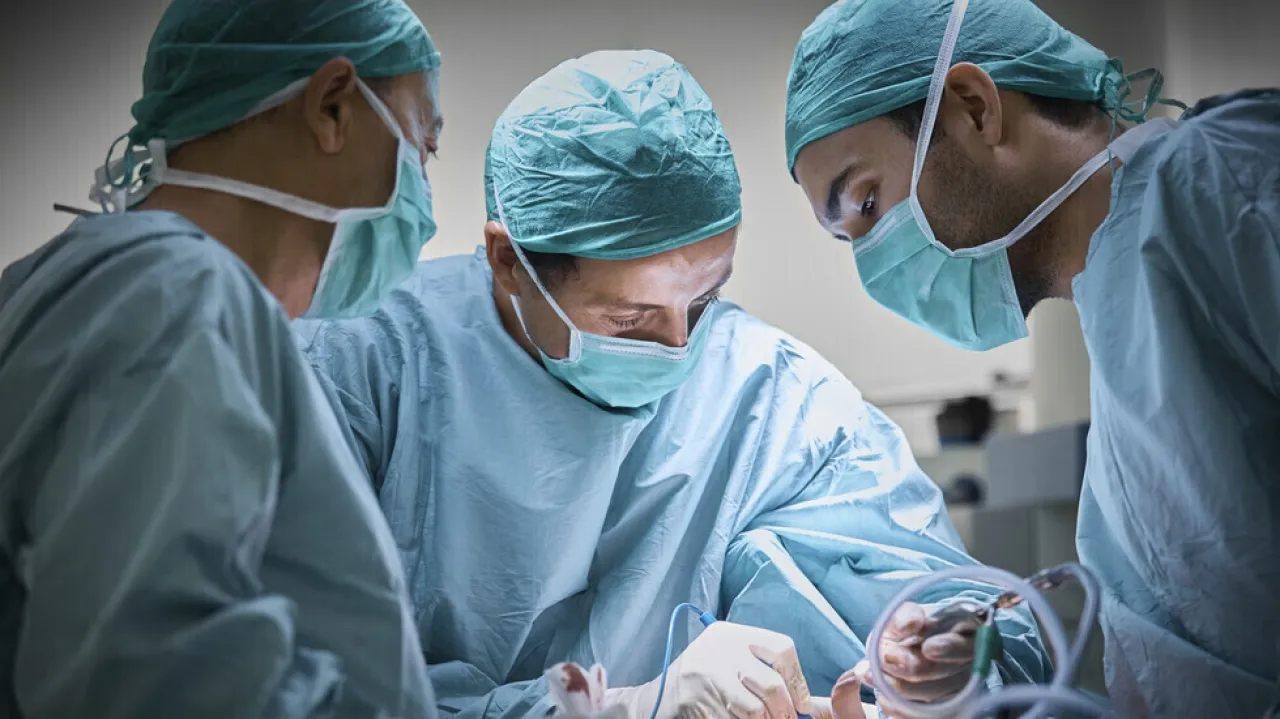
Khaberni - In an unprecedented medical achievement, doctors and surgeons at Northwestern Medicine in Chicago managed to keep a critical patient alive for 48 hours after completely removing his lungs, according to the hospital's announcement.
48 hours without lungs
According to 'Fox News', the patient, a 33-year-old man from Missouri, was airlifted to Northwestern Memorial Hospital in the spring of 2023 after suffering from severe lung failure due to a flu infection. As his condition deteriorated, the infection evolved into severe pneumonia and sepsis, leading to cardiac arrest and the medical team had to perform CPR.
Full artificial lung for a thirty-year-old patient paves the way for a revolution in lung transplantation
Dr. Ankit Bharat, Chief of Thoracic Surgery and Executive Director of the Northwestern Canine Institute for Thoracic Surgery, said: "The patient had developed a severe lung infection resistant to all types of antibiotics," adding: "The infection completely destroyed the lung tissue and then began to spread to the rest of the body."
The doctors explained that removing the lungs was the only option to stop the spread of the deadly infection. However, this procedure comes with a significant risk of immediate heart failure, given the vital role lungs play in relieving pressure from the right side of the heart and regulating blood flow.
Bharat added: "When the lungs are removed, the heart has to pump blood against high resistance, which can lead to its immediate failure, and the absence of normal blood flow from the lungs to the left heart can lead to cardiac chamber collapse or the formation of deadly clots."
Full artificial lung for a thirty-year-old patient paves the way for a revolution in lung transplantation
Life-saving full artificial lung
To face this challenge, the medical team designed an innovative system named "Total Artificial Lung" (TAL), which took over the gas exchange functions (supplying the body with oxygen and getting rid of carbon dioxide), in addition to maintaining normal blood flow to the heart, while the patient remained on life support devices.
Bharat explained that the most significant innovation in this system is that it maintains the normal physiological function of the heart, allowing the blood flow to be regulated autonomously by the patient's heart, rather than being forced through an external machine.
He said: "Just one day after the lungs were removed, there was a noticeable improvement in the patient's condition because the source of the infection was completely removed."
After 48 hours, the patient's condition stabilized enough for a successful double lung transplant to be performed. About two years after the operation, the patient returned to his normal life.
Bharat confirmed that the patient's health is excellent, noting that he has good lung function, a healthy heart, and lives independently without restrictions.
Unprecedented medical achievement
The medical team pointed out that this is the first time that this particular type of system has been successfully used. Although previous attempts to temporarily remove the lungs while waiting for transplantation were made in rare cases, these were faced with significant risks related to blood flow disruption and clot formation.
Bharat pointed out that the new system features a self-regulating bypass that mimics the natural physical characteristics of the lungs, in addition to using two channels for blood return, which preserves its natural flow within the left heart chambers.
In a case study published last week in the journal Med of the Cell Press group, molecular analysis of the removed lungs revealed extensive scarring and severe damage, supporting the opinion that lung transplantation may be the only option in some advanced cases of acute respiratory distress syndrome.
New hope for respiratory distress patients
Researchers hope that the full artificial lung system will serve as a treatment option for patients waiting for lung transplants, especially those suffering from acute respiratory distress syndrome accompanied by necrotizing pneumonia or septic shock.
Bharat said that the mortality rate in this group of patients exceeds 80%, and they are often rejected as candidates for lung transplantation due to the severity of the infection. He added: "This technology allows us to remove the source of the infection, stabilize the patient's condition, and give him a real chance for a successful transplant."
He pointed out that the future goal is to develop artificial lungs that can be permanently implanted, allowing patients to live for extended periods, not just as a temporary solution while waiting for transplantation.