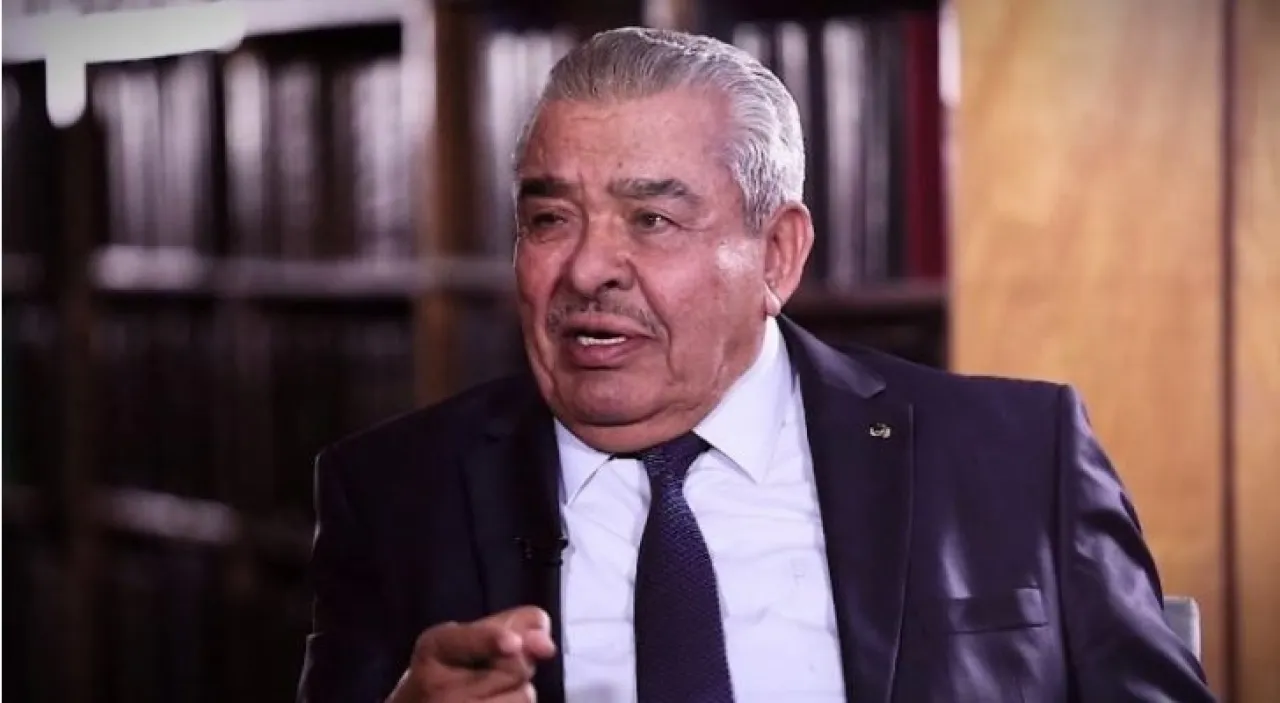
Khaberni - Former Prime Minister Dr. Abdel Ra'ouf Al-Rawabdeh confirmed that since its establishment, the Jordanian state has been based on a clear national and nationalist message, pointing out that the acceptance of the founding king in establishing the Emirate of Eastern Jordan was a decisive political step that took Jordan out of the framework of the "Balfour Declaration," and established its independent national existence and its pivotal role in its Arab surroundings.
This was during a lecture organized by Petra University through the university club entitled "The Jordanian Narrative," attended by the Chairman of the Board of Trustees Dr. Ghazi Al-Zaben, university president Dr. Rami Abdel Rahim, members of the faculty and administrative bodies, and a large gathering of university students.
Al-Rawabdeh emphasized that Jordan, Palestine, Syria, and Lebanon have historically been one people within one geography before the political borders were drawn, pointing out that the deep social overlap between these regions is due to ancient human migrations from the Arabian Peninsula, which contributed to shaping the social fabric of the Levant.
Al-Rawabdeh explained that the Arab identity of the Jordanian state has been entrenched since its inception, pointing out that the first governments were named "Government of the Arab East," and that Amman was a refuge for the free Arabs after the collapse of the Faisal government in Damascus, which made the Jordanian national identity an inclusive identity by nature, emphasizing that "the Jordanian national identity" is the inclusive identity for everyone who holds the national number, rejecting the use of alternative terms that detract from its essence.
Al-Rawabdeh stressed the unity of destiny between the Jordanian and Palestinian peoples, explaining that Jordan does not see itself merely as a neighbor to Palestine, but as an authentic partner in the Palestinian cause, sharing political, humanitarian, and historical responsibilities.
He pointed out that investment in human capital through education and health has transformed Jordanian competences into a strategic resource that contributes to supporting the national economy and building sister nations.
In his turn, the Chairman of the Board of Trustees Dr. Ghazi Al-Zaben confirmed that Dr. Al-Rawabdeh represents an example of national value and sincere stance in defending Jordan and its Arab identity, pointing out the importance of documenting the Jordanian narrative as a pillar in enhancing national identity and protecting collective consciousness.
On his part, the university president Dr. Rami Abdel Rahim described the project of documenting the Jordanian narrative as a national project aimed at preserving memory and enhancing belonging, explaining that the narrative provides an interpretation and meaning to events, and is biased towards the national stance, unlike the story that merely recites time and place.