Khaberni - A recent survey issued by the United Nations High Commissioner for Refugees reveals complex shifts in Syrian refugees' intentions to return, with Jordan emerging as a case that clearly reflects the precarious balance between asylum pressures and return risks, amid ongoing uncertainty in Syria, and escalating economic challenges in host countries.
According to the survey results announced the day before yesterday, the intentions to return among Syrians in Jordan have markedly decreased from 22% in June last year to 11% in December, indicating the sensitivity of the decision to security developments inside Syria, especially with renewed instability during the data collection period.
At the same time, the data revealed a high level of vulnerability among refugees in Jordan, with 96% of households reporting that their properties in Syria are “at risk”, due to destruction, loss of documents, or unavailability of habitable housing, significantly reducing the possibility of return.
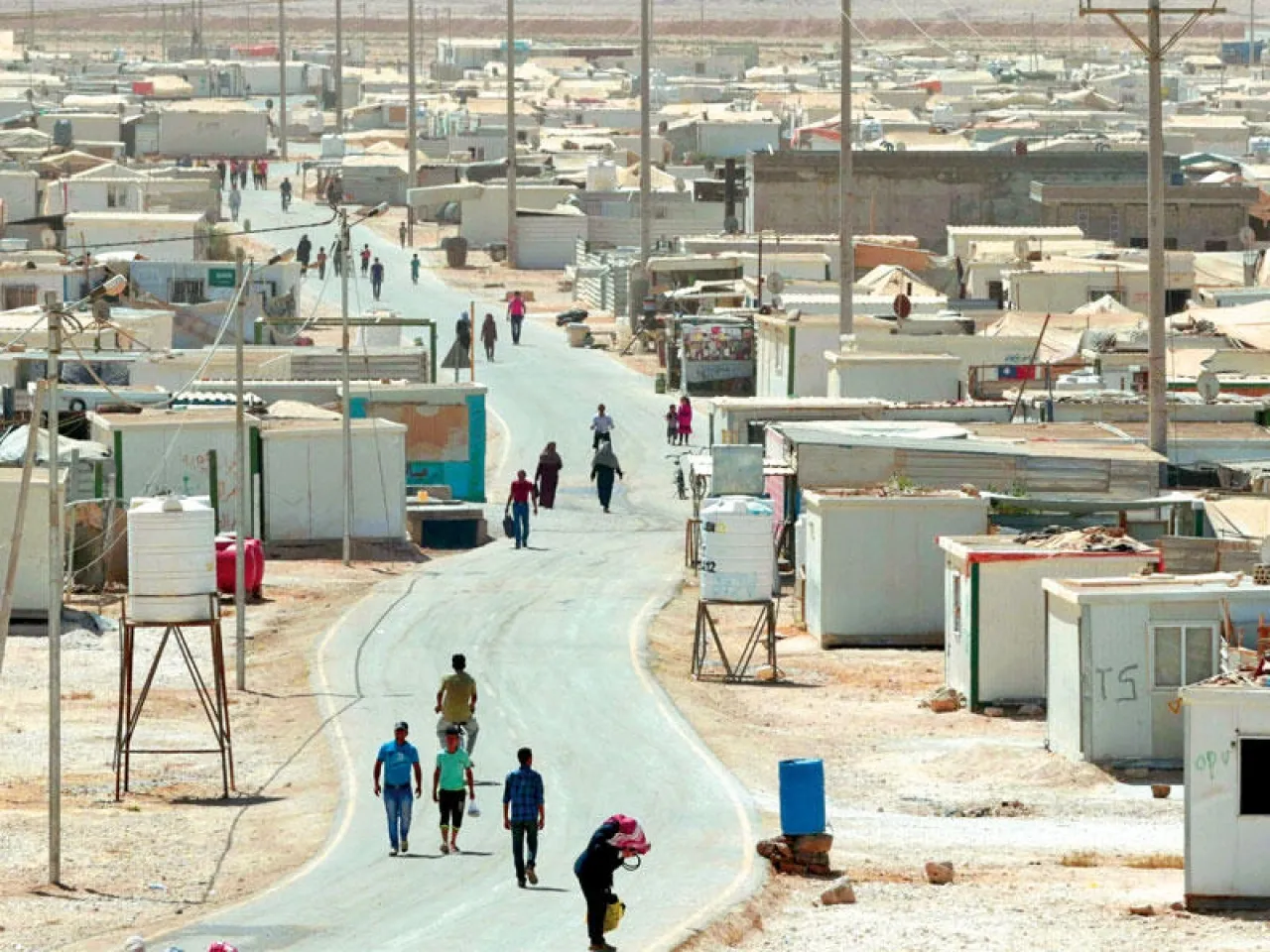
The report noted that most refugees in Jordan live under unstable economic conditions, relying on informal work, often as day laborers, with sharp fluctuations in income and its inadequacy to cover basic needs, pushing more than half of the families to depend on humanitarian aid.
The percentage of work permit holders has also declined, reflecting limited access to the formal labor market and legal protection. These challenges have intensified with a reduction in humanitarian aid due to a funding crisis, increasing financial pressures, raising debt levels, and complicating the meeting of basic needs such as food, housing, healthcare, and education.
Conditional Return
Despite these pressures, the decision to return for the majority of refugees in Jordan remains conditional, primarily linked to improved security inside Syria, and the availability of housing and basic services.
According to survey results, return intentions in the host countries (Jordan, Lebanon, Egypt, and Iraq) over the last 12 months since 2024 have seen remarkable fluctuations, increasing from less than 2% in April 2024 to 27% in January 2025, before decreasing again to 18% in June and 14% in December of the same year.
Despite this short-term decline in intentions, the hope for return in the long term remains high, as 77% of refugees expressed their desire to return to Syria someday, a figure close to the levels recorded in June and December 2025 (80%), indicating that long-term aspirations have remained relatively stable, albeit contingent on improved stability inside Syria, increased investment in basic services, enhanced access to government services, and economic growth providing employment opportunities.
At the level of the host countries, return intentions over the last 12 months between June and December 2025 dropped from 4% to 2% in Iraq, and from 22% to 11% in Jordan, while staying relatively stable at 29% in Egypt and 15% in Lebanon.
The declared return intentions provide important indicators about the refugees' perceptions and expectations, but they do not represent final decisions, since decisions are made under extremely volatile conditions. This is confirmed by the fact that 68% of refugees who returned between June and December 2025 had previously reported no intention to return in the next 12 months, reflecting the adaptive nature of decision-making in changing contexts, and confirming that intentions represent conditional assessments and not fixed commitments.
The survey shows that the decision to return is mostly a family decision, where families make their decisions collectively, and often plan to return as a cohesive unit. The return plans included 93% of all family members, with intentions to return to original areas of origin remaining stable at 87–88% throughout 2025, indicating that any potential return flows are likely to be predominantly familial, requiring readiness from origin areas to accommodate entire families, including children, the elderly, and the supporting families.