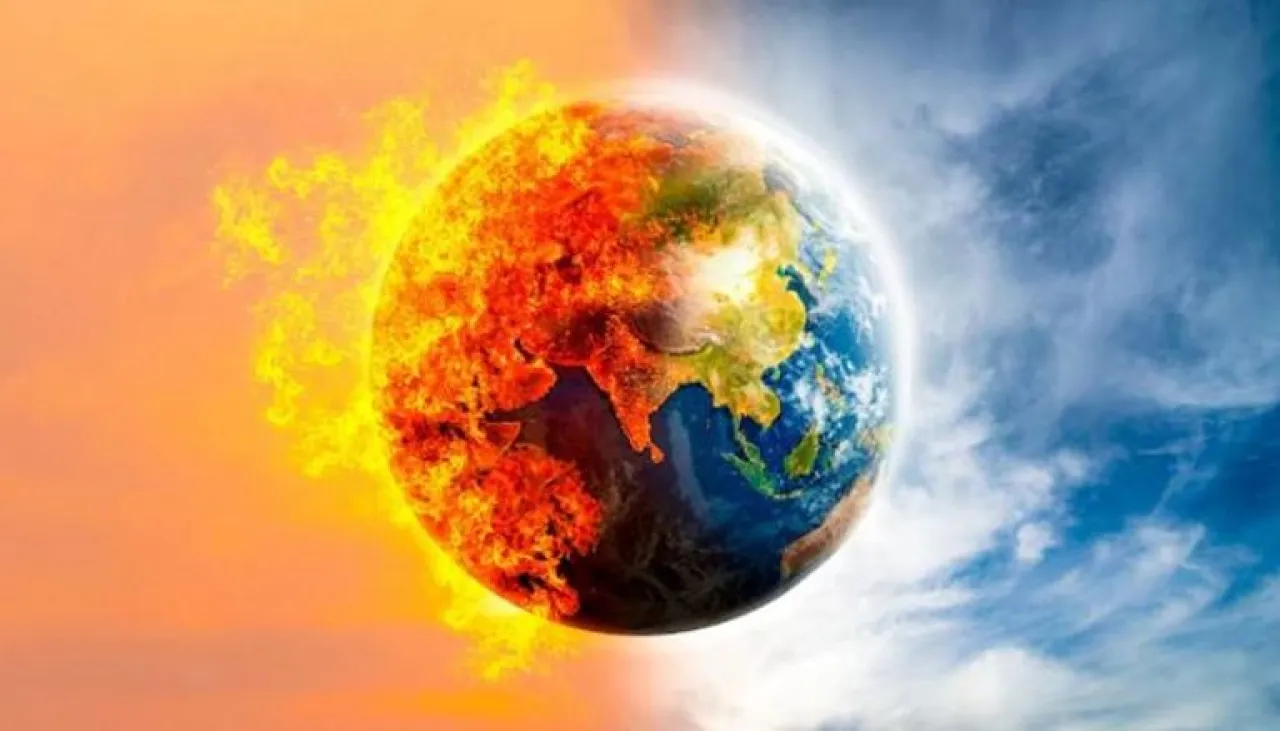
Khaberni - Extreme weather has dominated the global scene in terms of events and their intensity, which has raised questions about whether we have entered a phase where disasters become the rule rather than the exception.
From historic heatwaves to devastating floods and wildfires, these disasters in 2025 even affected major economies, confirming that the climate is changing at an unprecedented rate.
In April/July, a severe heatwave struck large areas in India and Pakistan, with temperatures exceeding 48 degrees Celsius in some areas, placing immense pressure on public health and agricultural production in densely populated regions.
In Europe too, most of the European Union regions suffered from heatwaves and droughts causing massive economic losses and doubling heat-related deaths in major cities.
Forecasts from the World Meteorological Organization indicate that 2025 will be among the hottest years on record, with temperatures continuing about 1.42 degrees Celsius or more above the pre-industrial level.
Many areas experienced sudden and heavy floods, including:
- In Pakistan, due to pre-monsoon rains and heavy monsoon rains, millions of people were affected with over a thousand deaths and widespread damage.
- In Morocco, heavy rains led to deadly floods resulting in dozens of deaths and closing roads and schools in and around the city of Safi.
- In China, Thailand, Vietnam, South America, and other regions, recurring heavy rainfall and sudden floods led to infrastructure damage and risks to the population.
This uncharacteristically heavy rainfall was a major cause of soil erosion, road collapses, and the evacuation of thousands of residents in various parts of the world.
Europe and the Mediterranean region witnessed severe heatwaves leading to extensive wildfires, with over 100,000 people evacuated in some countries, some leading to fatalities and injuries in more than one country.
In the United States, the total number of climate-related extreme weather disasters in the first half of 2025 reached about 14 separate incidents, with losses estimated at over 61 billion dollars due to wildfires and severe storms.
Scientists confirm that global warming increases the likelihood and severity of extreme weather phenomena such as heatwaves, heavy rains, droughts, and wildfires, by raising temperatures and increasing the heat content in the atmosphere and oceans, making the weather more volatile.
Climate data confirms that every year of the past eleven years has been among the hottest since records began, positioning us in a long-term context where the planet incurs the escalating impacts of climate change.
According to expert analyses, the increase in frequency and intensity of climate-related events might be the start of a new era of extreme norms, as today's disasters exceed what was previously considered rare or unusual.
These changes pose an important question: Have we reached a stage where extreme weather can no longer be considered an isolated event, but rather a permanent feature of the global climate?