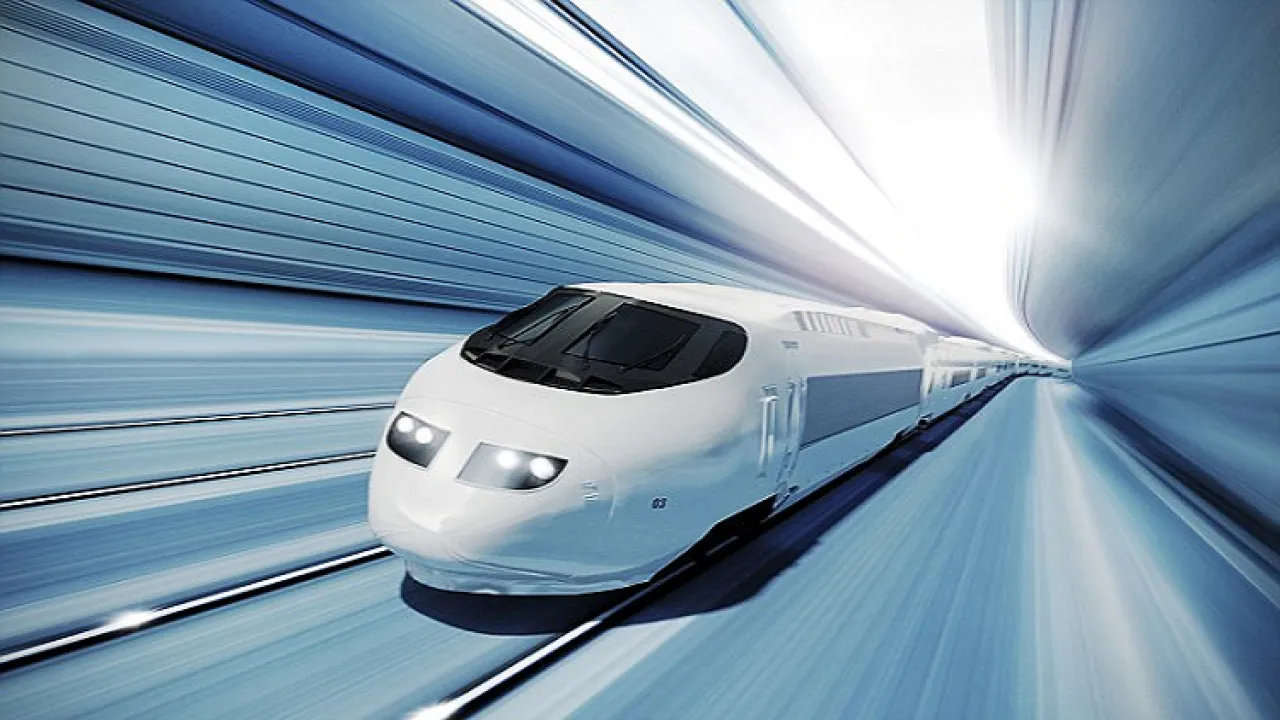
The Chinese state-run channel CCTV announced the success of researchers from the National Defense Technology University in accelerating a 1.1-ton vehicle to a speed of 700 kilometers an hour in only two seconds on a test track that is no more than 400 meters long. CCTV footage shows the vehicle accelerating rapidly, leaving behind fog as a result of the robust motion. The channel clarified that this achievement represents the highest speed and fastest acceleration among superconducting magnetic levitation systems in experimental tests. This result is considered a significant step forward in the path of ultra-high-speed transportation research in China.
The test outcomes and their technical implications revealed surveillance footage of a vehicle, isolated within metal structures, traveling at high speed, followed by a halo of fog due to the violent motion, and then stopping just as quickly at the end of the track. A CCTV report confirmed that achieving this speed in such a short time and distance reflects advancements in the control of electromagnetic forces and energy management. The experiment addressed technical challenges including high-speed electromagnetic propulsion, electric suspension guidance, reverse temporary storage of high-capacity power, and high-field superconducting magnets. Researchers believe that this achievement is not limited to railways but can be applied to broader applications such as supporting ground launch systems for spacecraft and assisting aircraft in taking off with a strong initial thrust that reduces fuel consumption.
This achievement also opens the door to developing transportation systems within vacuum tubes called hyperloops, which aim to surpass the speed limits of current trains. Sources mention that the system's development took ten years of intensive research, and in January last, the team recorded 648 km/h on the same test line before later breaking the record. Sources also note that China has also studied high-temperature operating superconducting systems that provide stable suspension at extremely high speeds, in addition to CRRC Qingdao Sifang testing a train model in 2020 capable of 600 km/h with more than 30 research institutions involved. Experts confirm that the success of these technologies will enhance research and development in ultra-high-speed magnetic transportation in China and continue the development path that began thirty years ago when the university first introduced a manned magnetic train.