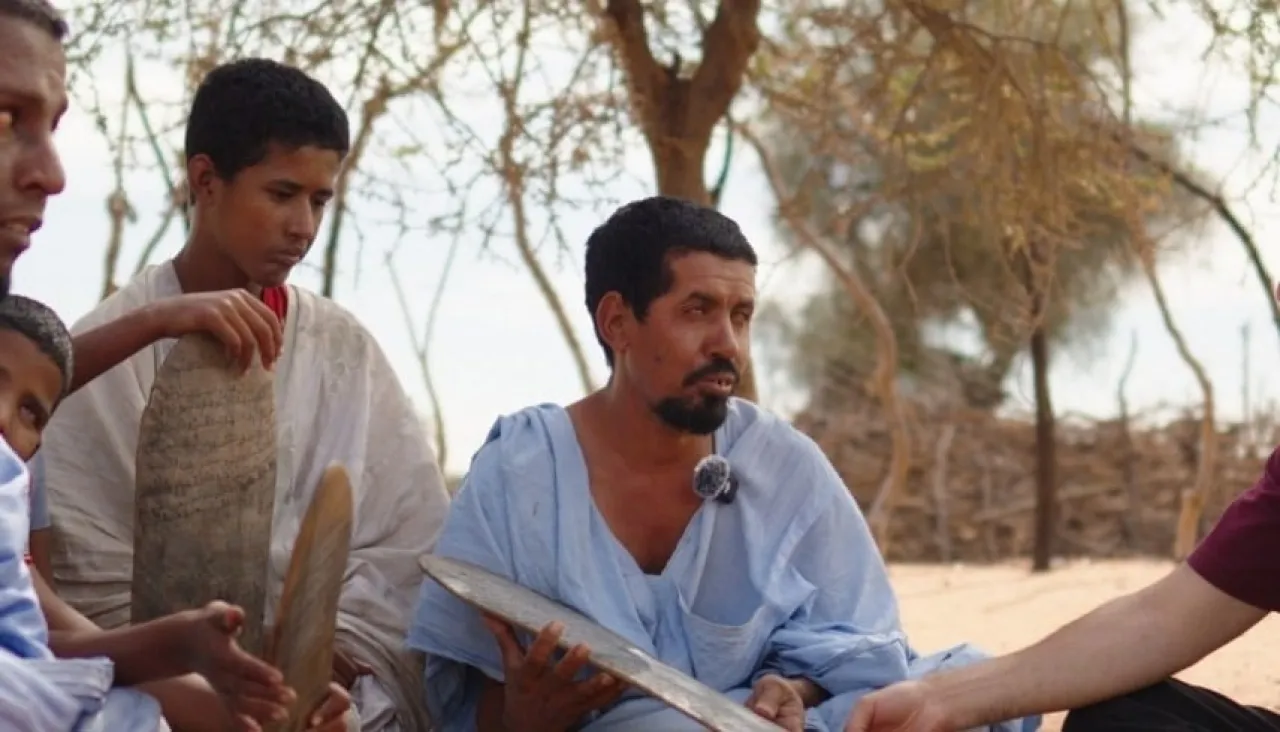
Khaberni - In the depths of the desert, far from the trappings of modern life, stands the remote village of "Dali Kuoambi," one of the most bizarre locations on Earth; where its inhabitants have for centuries experienced an exceptional genetic phenomenon where approximately one in every two individuals is born without sight, in a community living in almost complete isolation from the outside world.
The village is located about 1000 kilometers from the Mauritanian capital, Nouakchott, and is described as the most isolated in the country, making it a demanding task for researchers and explorers to reach it.
According to experts, this harsh isolation has contributed to the transmission of a rare genetic disorder through generations that results in blindness, a result of geographical closure and the absence of genetic diversity.
However, the villagers point to a completely different explanation for this blindness; the village mayor confirms that it is due to an ancient prophecy that has lasted ten generations, which spoke of the birth of a righteous man who was blind, and that blindness has since become a fate that accompanies the villagers.
While the villagers cling to this belief, researchers believe that inbreeding and centuries of isolation play a crucial role in the perpetuation of the phenomenon.
Despite the challenges posed by blindness, the inhabitants have developed a remarkable ability to adapt, as they move inside the houses and sandy roads with astonishing precision, relying on the sense of hearing, touch, and spatial memory, and on a solid community solidarity network that forms the backbone of their daily lives.
The village also lacks electricity, internet, and most aspects of modern life, yet the residents continue their lives using traditional methods handed down through generations, and rely on their deep cooperation to overcome the harsh desert environment and visual impairment conditions, and they warmly welcome the rare visitors, sharing with them their stories and beliefs woven by generations.
So far, "Dali Kuoambi" remains a focus of scientific research and international documentaries, in an attempt to understand this unique genetic mystery, although experts confirm that prolonged isolation is the most prominent factor in the transmission of the genetic disorder over time.