Khaberni - World cultures are dominated by a series of strange traditions and celebrations that continue annually, bringing together religious rituals and popular enjoyment simultaneously.
From tomato battles in Spain to coconut-breaking rituals on heads in India, these practices range from symbolic fun to bold challenges, highlighting the diversity of peoples in expressing joy and celebration.
Tomato Throwing Festival
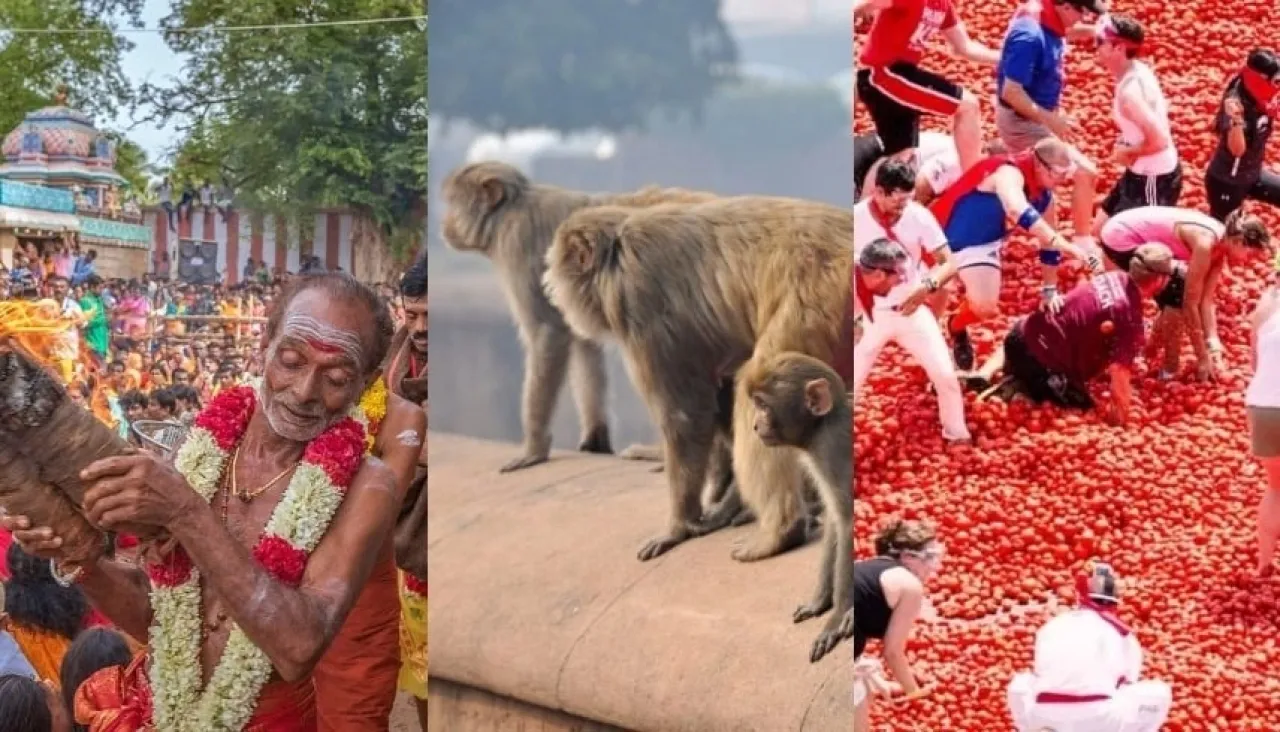
Spain witnesses annually one of the strangest global events on the last Wednesday of August every year, where thousands of participants gather in the town of Buñol to hold La Tomatina festival, during which celebrants throw tomatoes at each other throughout the daylight hours in a massive food fight.
The tradition began after an incident at the "Giants and Big Heads" parade in 1945, when one of the participants went rogue and hit a vegetable stall, leading people to throw tomatoes at each other. In subsequent years, the event turned into a planned festival that attracts thousands of visitors, with considerations for public safety and local police organization.
Breaking Coconuts on Heads in India
Residents of Tamil Nadu celebrate the "Aadi Perukku" festival during the monsoon season, which includes breaking coconuts on willing participants’ heads, seeking blessings, health, and success.
The ritual is associated with religious beliefs about the god Shiva, as the coconut resembles Shiva's three-eyed face. Some trace its origin to the local inhabitants’ resistance to British attempts to demolish temples, demonstrating their pain tolerance to protect their places of worship.
Scrambled Eggs Festival in Bosnia: “Champoria”
In the city of Zenica, residents celebrate the arrival of spring through the "Champoria" festival, which offers hundreds of scrambled eggs in public parks near the Bosnia River.
The day begins with a big breakfast, followed by barbeque parties and water adventures in the river, creating an atmosphere that mixes fun, food, and community participation, highlighting the collective celebration spirit that has lasted for decades.
Cinnamon Sprinkling on Singles in Denmark
This tradition occurs when an individual turns 25 years old without being married, where they are sprinkled with cinnamon by friends and family after being sprayed with water.
At age 30, cinnamon is sometimes replaced with pepper along with eggs to stabilize the mixture, and the ritual symbolizes social fun and jest more than being a punishment, continuing for centuries as an expression of single life in Danish society.
Monkey Buffet Festival in Thailand
The festival is held at the "Phra Prang Sam Yot" temple in the city of Lopburi on the last Sunday of November, honoring the thousands of macaque monkeys believed to bring luck to the city.
Huge tables of fruits and vegetables are set for them, accompanied by dance performances where participants wear monkey costumes, while humans can enjoy food stalls.
Polterabend in Germany
This tradition takes place on the night before a wedding, where friends and family gather in front of the couple's home to break loud household items like dishes and pots, excluding glass and mirrors believed to bring luck.
Afterward, the couple cleans up the mess together, symbolizing future cooperation and organization in marital life.
“La Mordida” Tradition in Mexico
At birthdays, the celebrant's hands are tied behind their back, and their face is pushed into the cake as guests shout "mordida", meaning "take a bite". The ritual stems from ancient Aztec and Maya cultures and reflects the spirit of collective fun and jest.
Orange Battle in Italy
Held before "Mardi Gras" in the city of Ivrea, where residents split into teams and exchange orange throws between them.
The tradition draws inspiration from the city's resistance to a tyrant in the Middle Ages, embodying the community's victory over oppression through collective celebration, and is one of the largest food festivals in Italy.
Finger Cutting in the Dani Tribe in Indonesia
Women of the Dani tribe in Papua cut off the top part of their fingers when losing a family member, in a ritual known as "Ikipalin".
A thread is tied around the finger until it loses sensation, then the top part is cut off and the wound is burned to stop the bleeding and prevent infection. The tradition symbolizes the pain accompanying loss and the preservation of relatives' spirits.
Throwing Children from Temples in India
In some areas of Maharashtra and Karnataka, children under two years old are thrown from heights of around 30 to 50 feet onto blankets held by men, within a religious ritual believed to bring luck and longevity.
The tradition dates back more than 700 years, linked by historians to high mortality rates and lack of medical care in the past.
Today, children are safely thrown onto mesh blankets to avoid injuries while maintaining the religious and social symbolism of the ritual.