Khaberni - The death toll from floods and landslides that struck large areas of Asia has exceeded a thousand deaths by Monday, while authorities in Sri Lanka and Indonesia have deployed military forces to aid in rescue operations and reach isolated areas.
Severe weather fluctuations caused heavy rainfall covering the entire island of Sri Lanka, large parts of the island of Sumatra in Indonesia, as well as southern Thailand and northern Malaysia in recent days.
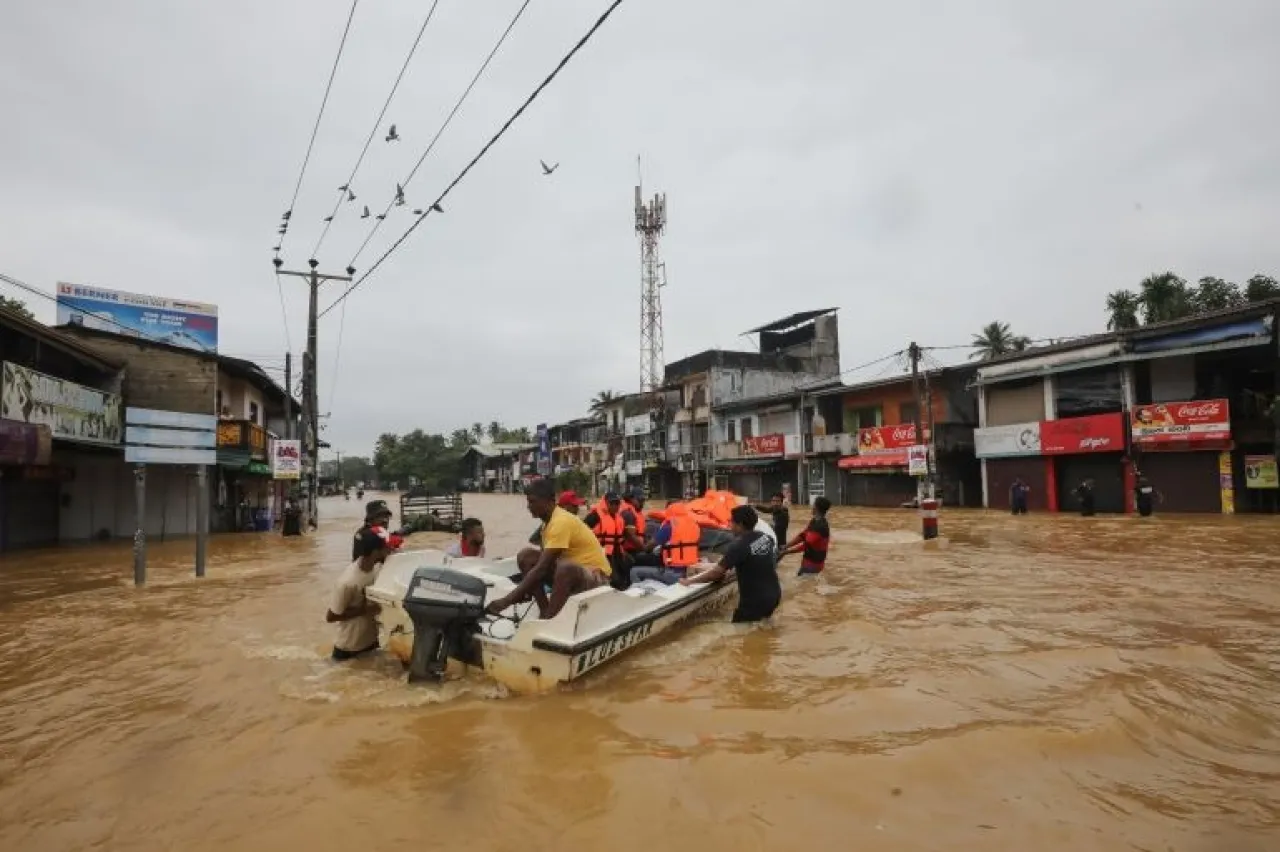
The severity of the floods forced hundreds of residents to take shelter on the rooftops of their homes waiting to be rescued by boats or helicopters, while entire villages were isolated and cut off from aid.
During his visit to northern Sumatra, Indonesian President Prabowo Subianto said he hopes "the worst phase has passed," emphasizing that the government's priority now is to deliver emergency aid immediately to the affected areas, especially those that are still isolated.
Increasing Pressure
The Indonesian government is facing increasing pressure to declare a national emergency after the death toll rose to at least 502, with more than 500 missing amid fears of a rising number.
This is the worst natural disaster the country has faced since the earthquake and tsunami in 2018, which killed more than two thousand people on the island of Sulawesi.
The government has dispatched 3 warships loaded with aid, in addition to two medical ships to the most affected areas, while continuing to cut a number of vital roads.
In Sri Lanka, the government has appealed to the international community for urgent aid and used military helicopters to reach those stranded due to the floods and landslides caused by Cyclone Ditowah.
Local officials have reported that the death toll has reached 340, while search operations for dozens of missing persons continue.
With the rains stopping, waters have begun to recede gradually, allowing the reopening of some shops and offices. However, authorities emphasize that the extent of the damage, especially in the central mountainous regions, is still unfolding as relief teams begin to open blocked roads.
President Anura Kumara Dissanayake has declared a state of emergency to deal with the disaster, stating in a national address, "We are facing the biggest and hardest natural disaster in our history.. and we will definitely build a better nation than before."
These are the worst losses in Sri Lanka since the 2004 tsunami, which killed about 31,000 people and displaced more than one million others.
In southern Thailand, authorities have announced that floods resulting from heavy rainfall have claimed the lives of 176 people, making it one of the most severe floods in the country in the past decade.
Despite launching extensive relief operations, the government faces public criticism accusing it of faltering in response, leading to the suspension of two local officials on charges of "negligence."
Asia is currently experiencing the monsoon season, which annually causes heavy rainfall and landslides, but meteorology experts confirm that climate change has increased the intensity and frequency of storms, making them more destructive than before, with heavy rains, sudden floods, and strong winds.
Observers say the rare tropical storm that hit parts of Sumatra has contributed to deepening the floods in Indonesia, Thailand, and Malaysia, amid fears of continued unstable weather conditions in the coming days.