Khaberni - In an opinion article in the New York Times, writer Michelle Goldberg warns that the United States is disturbingly heading towards a potential military confrontation with Venezuela, despite the nearly complete absence of public debate or convincing justifications.
She stated that the crisis began when the American administration officially announced on Monday that it considers Venezuelan President Nicolas Maduro and senior officials in his government as members of the "Cartel de los Soles," which Washington classifies as a "foreign terrorist organization."
According to the article, "Cartel de los Soles" is a Venezuelan term that disdainfully refers to corrupt figures in the armed forces receiving money from drug traffickers, and the name refers to the sun symbol on their military uniforms.
The Sun Cartel Does Not Exist
The writer quoted Phil Gunson, a senior analyst at the International Crisis Group, saying, "This cartel does not actually exist," and that the term was coined by the media more than 30 years ago as a kind of satirical label.
The article indicates that this classification comes in the context of extrajudicial killings carried out by the United States for months against suspected drug traffickers in the Caribbean and the Pacific Ocean, justifying it by claiming a "armed conflict" with drug gangs.
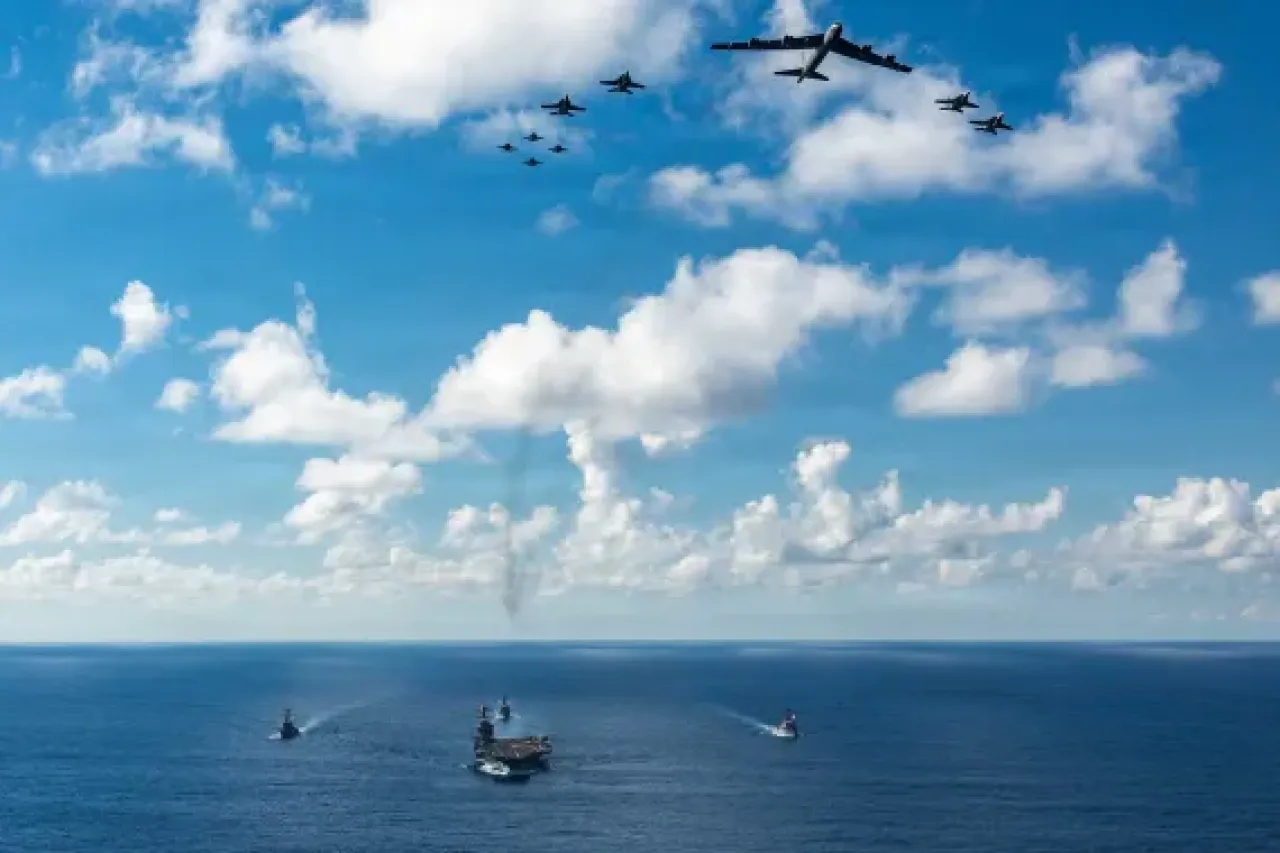
With the arrival of America's largest aircraft carrier to the region, the approval of secretive plans by the Central Intelligence Agency (CIA), and security warnings prompting airlines to cancel flights, the administration of President Donald Trump seems to be paving the way for a large-scale military confrontation.
Drug War Lacks Credibility
However, the writer opinionates that the official rhetoric about the "drug war" lacks credibility because Venezuela is not a source of fentanyl, and the drugs traversing its territory are primarily headed towards Europe, not the United States.
Goldberg wonders: If it's not about drugs, what is the real goal? She answers that the purpose of the accusation involves a mix of motives including Secretary of State Marco Rubio's desire to pressure Cuba, dreams of some officials to bomb gangs in Mexico, Trump's attraction to the idea of "spheres of influence," and the clear allure represented by Venezuela’s wealth.
Difficulty to Retreat
Despite the American public being largely opposed to the war, and despite Trump's promises not to engage in "pointless wars," according to crisis analyst Phil Gunson, his administration might have launched "fake threats of war" pushing it to a point where it becomes difficult to retreat without resorting to force.
Nevertheless, Goldberg believes in her article that it is still possible for Trump to strike a deal with Maduro, but Gunson fears that this is not the most likely scenario, pointing out that the Americans "have gone too far to the point where they are now compelled to fight a real war."
Source: New York Times