Khaberni - U.S. President Donald Trump renewed his defense of directing military strikes against Iran, considering that Tehran was close to possessing a nuclear weapon, which remains a matter of debate among political and intelligence circles.
Trump also attributed his decision to Iran's claim that it would first use its nuclear weapon - if obtained - against Israel and then the United States, according to the "New York Times".
On Monday, the President said: "They (Iran) would use it (nuclear weapon) within an hour or one day".
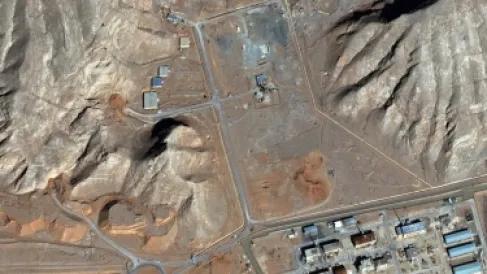
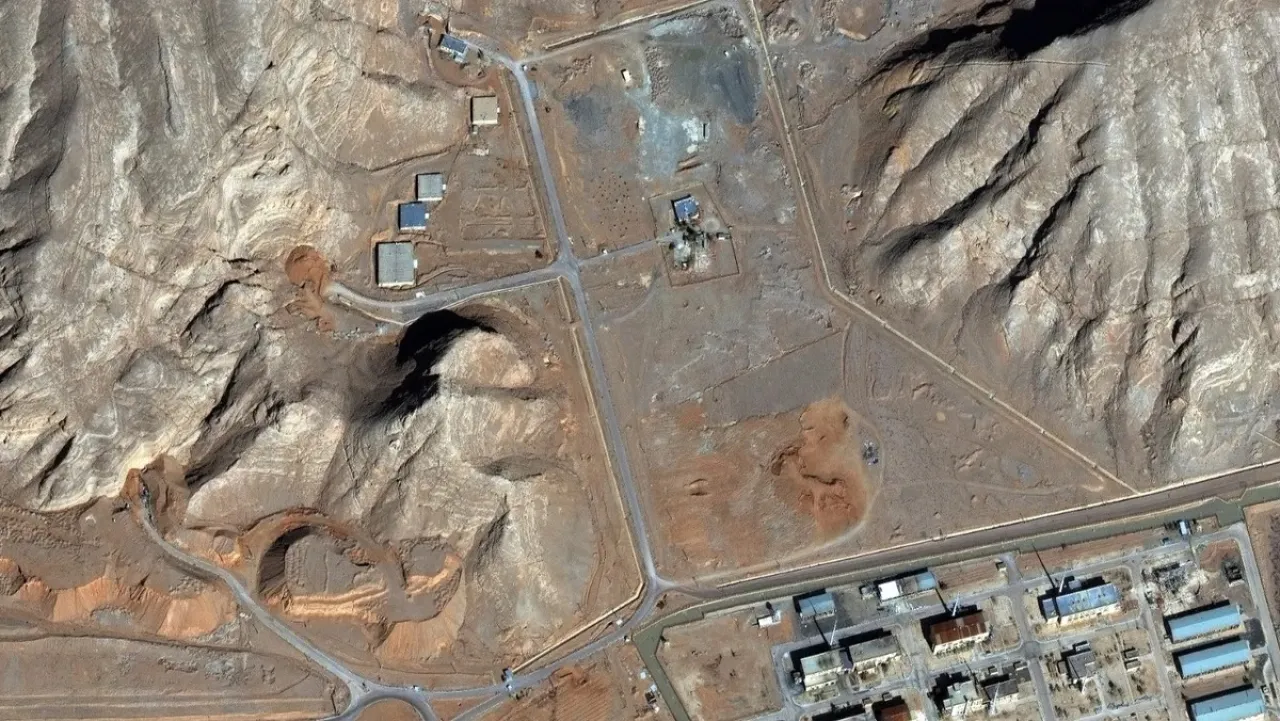
The "New York Times" considered that listening to Trump in recent days was like listening to a president contemplating whether to order the greatest mission ever against Iran, which involves seizing or destroying semi-enrichable nuclear material, believed to be largely stored deep in a mountain in Isfahan. If executed, this step could represent one of the most complex military operations in recent U.S. history, given its technical, radiation risks, and broad regional repercussions.
The newspaper added that no one knows the exact location of all this material, and if the containers holding it were punctured, the leaking gas would be “toxic and radioactive” at once. If the containers get too close to one another, there's a risk of accelerated nuclear reaction.
And as U.S. Secretary of State Marco Rubio said weeks ago in Congress, this operation could only be accomplished if a commando force was sent "to enter and seize it". However, Trump told reporters, on Tuesday, that he is not worried about ground operations, adding: "I really am not afraid of that... I fear nothing".
It seems that Trump is seriously considering this operation, after saying weeks ago that he would only undertake it if the Iranian military was "so exhausted to the point that it could not fight on the ground". But he sharply responded on Monday to a journalist's question about his readiness now, saying: "If any president answers such questions, they should not be president".
However, Trump himself continues to publicly question how to end the war before resolving the core issue, according to the "New York Times".
Iran's stockpile of nuclear fuel
Harvard nuclear expert Matthew Bunn believes that if Trump stops now, he would leave behind a weakened but resentful regime, possibly more determined than ever to manufacture a nuclear bomb, still possessing the materials and much of the necessary knowledge and equipment.
Thus, a president, who has not swayed American public opinion much for an attack on Iran, is now issuing daily warnings in anticipation of a decision to seize Iran's vast stock of nuclear fuel, according to the "New York Times".
With his repeated talks about the nuclear threat, Trump exaggerates the speed at which the stored underground material can be converted to a weapon, saying to reporters in the Oval Office, on Tuesday, that Iran was "one month away" from the ability to produce a nuclear weapon before he bombed three nuclear sites in June 2025.
However, experts said that despite the possibility of enriching this material to a level suitable for making a bomb within a month, manufacturing a primitive weapon would have taken months, and perhaps a full year.
In fact, before the outbreak of the war on February 28 with a joint American-Israeli attack, most intelligence officials believed that the risk of Iran rushing towards the bomb was "not imminent".
This was confirmed, on Tuesday, with the resignation of Joe Kent, director of the National Counterterrorism Center, who stated in his resignation letter that "Iran does not pose an imminent threat to the United States".
American satellites and other intelligence-gathering tools were monitoring major nuclear storage sites in Iran, confirming their ability to detect any signs indicating Iranian attempts to recover fuel from the deep tunnels and rush towards producing a bomb.
But now the situation has changed. After 18 days of U.S. and Israeli bombing, which destroyed a significant portion of Iran's conventional missile capabilities, this nuclear stockpile has become one of Tehran's last lines of defense.
Senior researcher at the Carnegie Endowment for International Peace, George Perkovich, said: "From their perspective, they need it more than ever... and they might be prepared to protect it".
Perkovich, author of "How to Assess Nuclear Threats in the 21st Century", added that based on the level of planning shown by the Iranians in response to the American-Israeli attack, the United States should assume they have prepared similar plans to protect nuclear storage sites.
Similarly, it is unclear whether the U.S. will execute a limited and covert operation similar to the operation that killed Al-Qaeda leader Osama bin Laden, or if Trump will order a large-scale military mobilization with protection forces and air support. It’s also likely that the U.S. would need to inspect several different locations in search of these materials.
Bunn said: "Although a large part of it is in Isfahan, we must assume that not everything is there". He added that some of the material might be in tunnels at a site unofficially known as "Mount Axe", while another part might be at the destroyed enrichment facilities in Fordow and Natanz.
This complexity may prompt the Trump administration to reconsider a proposal made by Iranian Foreign Minister Abbas Araghchi last month, days before the attack.
Araghchi stated that Iran was ready to reduce the enrichment level of all the nuclear materials it possesses to the level used in nuclear reactors, under the supervision of the International Atomic Energy Agency, but it refuses to remove these materials from the country, insisting they stay within Iran and under supervision.
However, Trump's special envoy Steve Witkoff and son-in-law Jared Kushner rejected this proposal, insisting that Iran cannot be allowed to retain stocks of nuclear fuel under any circumstances.
They proposed an alternative which involves the United States permanently and freely providing Iran with low-enriched uranium used in electric reactors, according to sources familiar with the negotiations.
Nevertheless, Araghchi rejected this proposal. There was talk of another meeting, but the American-Israeli attack on February 28 prevented it.
Although all wars eventually end, any future ceasefire negotiations could open the door again for negotiations concerning the fate of the nuclear materials, and the United States might be granted the possibility of accessing these materials, perhaps removing them or reducing their enrichment level, as part of any agreement. But for now, there are no indications of an active negotiation path to exit the crisis, according to the "New York Times".