Khaberni - Canadian researchers designed an air purifier that captures about 94% of germ-sized particles that are exhaled during conversations, as demonstrated through a computer simulation of two individuals meeting face-to-face for 30 minutes.
The device quietly redirects the airflow between individuals to avoid eye and skin dryness
The system works by redirecting airflow between individuals instead of blowing air directly at their faces, and has maintained its effectiveness even when individuals shift their positions by approximately 4 inches.
The simulation estimated that the device reduced the risk of infection to 9.5%, compared to more than 91% for standard room ventilation alone, noting that these are theoretical calculations based on particle count, not actual infections.
Polluted air capture
According to "Study Finds," this system, developed at the University of British Columbia, solves an old problem in air purifiers, as most cannot capture polluted air quickly enough before it mixes throughout the space.
Instead of directly blowing a burst of air onto a person's face, which many find uncomfortable, the device quietly redirects the airflow between individuals to avoid eye and skin dryness.
The device releases clean air at a rate 3 times slower than it pulls in polluted air.
Effectiveness measurement experiment
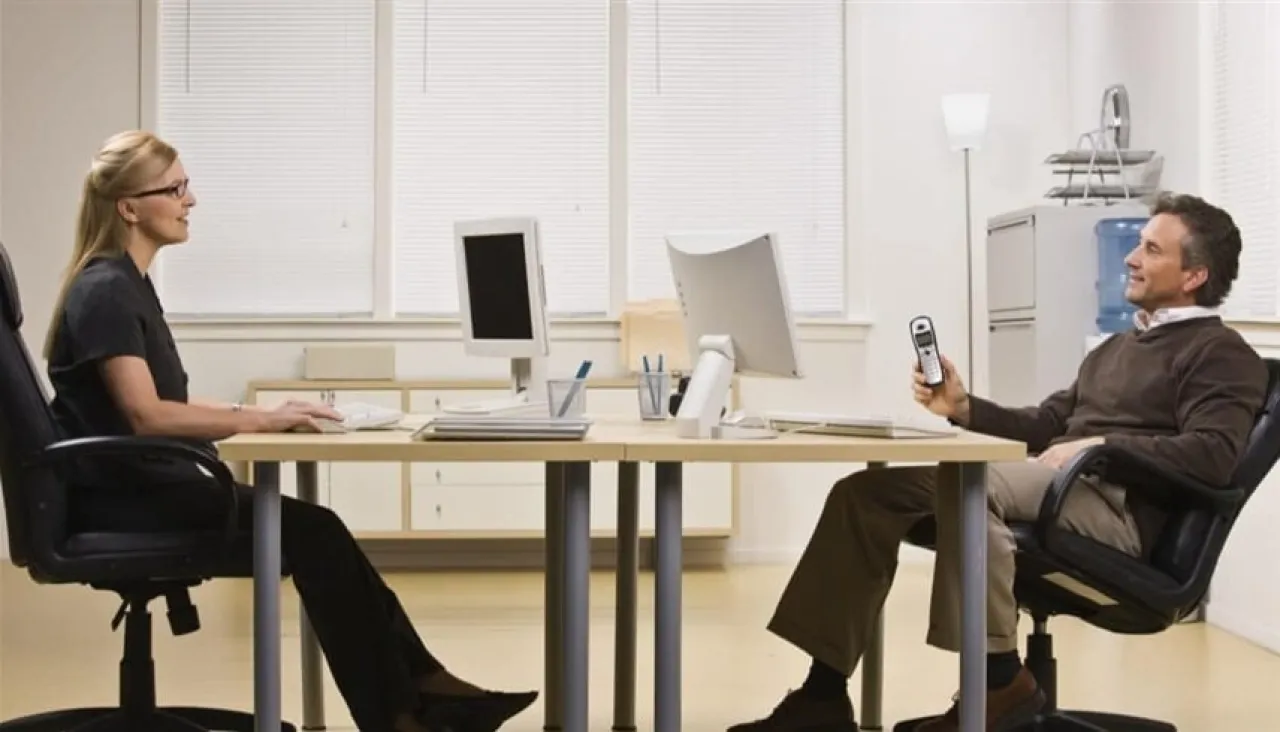
The researchers simulated a real-life scenario where two individuals sit opposite each other for half an hour. One individual acted as if infected, releasing 300 small particles each second, each about one micrometer in size, light enough to float in the air for extended periods.
During those 30 minutes, the infected individual exhaled a total of 540,000 particles.
With the new device operating in optimal mode, only 10 particles reached the other person's lungs.
Conventional room ventilation allowed 247 particles to reach the other person. In contrast, traditional personal ventilation, which blows clean air onto a person's face, allowed 65 particles through.
Traditional ventilation
Traditional personal ventilation has been used for more than 30 years.
Typically, these systems release air at about 8 miles per hour towards a person's face. This continuous breeze dries out the eyes and skin, prompting many to turn them off.
Research has found that these systems can spread more germs if only used by a sick person, worsening the situation for everyone nearby.
What happens when people move?
A key test came when researchers simulated people moving in their seats.
When someone moved about 4 inches to the side, a common occurrence during any meeting, the new device still performed well, with only 69 particles reaching the other person.
On the other hand, traditional ventilation systems failed completely when individuals were not in an ideal position. In this scenario, 872 particles escaped, and the risk of infection modeled rose nearly to 100%.
After just 15 minutes of individuals being in a non-ideal position, traditional ventilation created conditions worse than having no ventilation system at all.
Traditional unbalanced ventilation systems produced almost a guaranteed infection risk in the model. Meanwhile, the new system still operated as effectively as a traditional ventilation system in an ideal position, with an infection probability of about 50%.
This flexibility is important because people do not sit completely still during real conversations. Any ventilation system only works when everyone remains completely stationary.
Practical use of the device
The device maintained an efficiency of about 94% at room temperatures between 16.5 to 26 degrees Celsius.
Performance dropped slightly to 86% at 30 degrees Celsius, possibly because the small difference in temperature between human bodies and the surrounding air weakened the upward air currents that typically help gather particles.