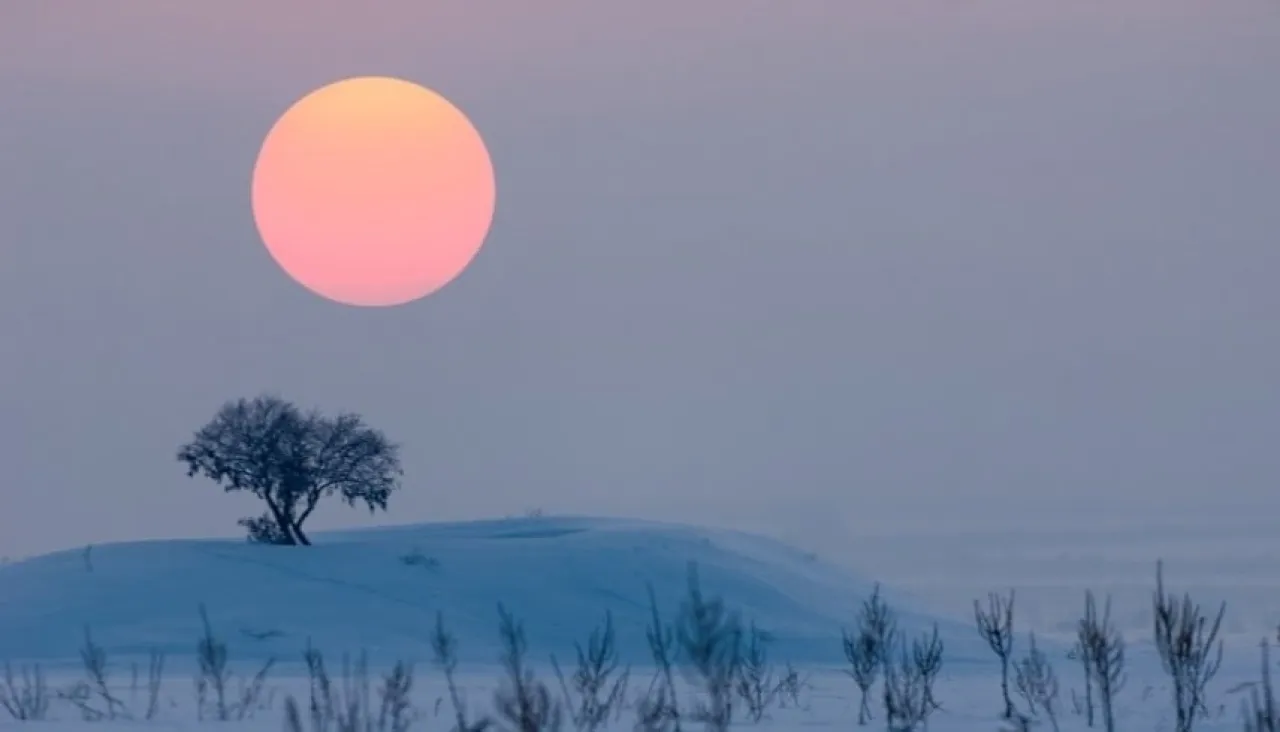
Khaberni - The town of Utqiaġvik in Alaska witnessed its last sunrise for this year, announcing its entry into the "polar night" phase which will last for about 64 days, during which the sun will not appear above the horizon again before January 22 (January) 2026.
According to global weather reports, the town's inhabitants, numbering around 4,400, will spend this period in a state of "civil twilight," which is the faint blue light that precedes sunrise, and usually glimmers on the horizon before dawn, replacing the total darkness typically experienced in polar regions at this time of the year.
The tilt angle of the Earth causes this unique phenomenon, as the winter tilt of the sun prevents it from rising above the horizon, making the town enter a phase of extreme cold with the absence of daylight warmth, which sharply affects the temperatures and increases the formation of a polar vortex in the upper layers of the atmosphere.
The polar vortex is a low-pressure area loaded with extremely cold air, which can sometimes leak towards the southern regions of the United States causing strong frost waves.
Despite the absence of the sun, the daily activity of Utqiaġvik's residents does not stop, as life continues with artificial lighting and school activities, such as the Barrow High School football team, which represents the northernmost point of sports in the United States and continues its training under the twilight light.
During the summer, the town transitions to a reversed pattern where the sun continues to appear for about three consecutive months, making it a contrasting natural experience between total darkness and continuous daylight.
The town is preparing for the next sunrise on January 22, 2026, at 1:23 PM local time, while its inhabitants live on moonlight, artificial lights, and memories of daylight, awaiting the sun's return to brighten the sky once again.