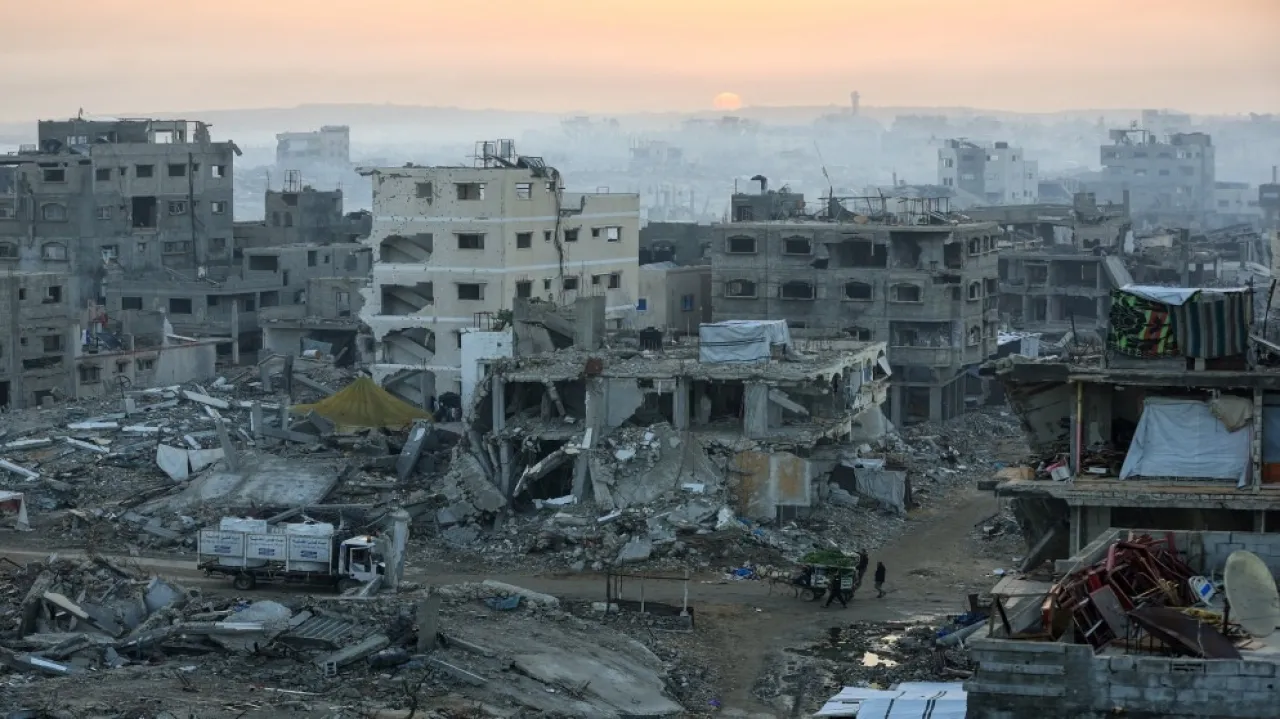
Khaberni - Displaced people in the Gaza Strip have been experiencing extremely harsh conditions for days, trapped in dilapidated tents amid cold weather, heavy rains, and gusts of storms, which led to the collapse of some of their overcrowded and rickety tents they had pitched on the beach, and the flooding of the mattresses they sleep on and the blankets they wrap themselves with seeking warmth.
The stormy weather toppled tents and flooded others with their contents, bringing more suffering to the people of the region even after the ceasefire between Israel and the Palestinian Islamic resistance movement (Hamas).
The Gaza government, run by Hamas, estimated the losses from the stormy weather at about 4.5 million dollars. The losses included damage to about 22,000 tents and infrastructure facilities and spoiled food and medicine, while local relief organizations said there is a dire need for 300,000 new tents.
For more than two years, almost all Gaza residents were forced to flee their homes and residences during the Israeli attack on the densely populated narrow sector.
Many now live in tents and other simple shelters.
* Rescuing properties from water
For Abu Mohammed Al-Qarra, the rain and cold had a devastating effect, as waves reached his family’s tent, erected on the beach just 20 meters from the sea, flooding their belongings and forcing them to spend a frantic night moving their items.
He said, "There's neither warmth, nor anything. I've been sitting since five in the morning, and here I am sitting at my neighbors because I want to amuse myself and forget about the cold and the things we are suffering from."
The Al-Qarra family ended up in Al-Mawasi camp in southern Gaza after a previous truce collapsed and after orders from the Israeli army for civilians to head there. However, the family suffered greatly before finding a remaining space to pitch their tent.
Finally, the family settled in a spot near the sea, protected from the waves only by a small sand wall erected by the families living in that area.
He added, "We spent half the night draining and coming out, our clothes drenched, and our mattresses, pillows, and everything."
Ismail Thawabteh, director of the government media office in Gaza, said that the floods destroyed more than 22,000 tents along with tarp fabrics, mattresses, and cooking equipment, causing damages exceeding two million dollars. He added that emergency shelters also collapsed in some areas, turning the camps into pools of water and mud.
Other costly damages were caused to water and sewage networks, including temporary waterlines and septic tanks, as well as small solar power facilities that provide almost all the electricity that Gaza residents rely on.
* Increase in stomach diseases
Amjad Al-Shawa, the head of the Palestinian Non-Governmental Organizations Network, which communicates with the United Nations and international humanitarian agencies, said that 1.5 million people in the sector need new tents.
He added, "The tents currently in Gaza are no longer adequate and have become worn out and will not protect people from rain."
Even in the depths of Gaza, the rainfall caused significant problems, as most people who shelter in tents lack suitable toilets or sewage facilities and rely instead on small pits and tanks near their tents, which overflow when heavy rains fall.
Most people also live near heaps of random garbage because garbage dumps and other facilities have either become inaccessible or were destroyed.
Hospitals, already exhausted, have repeatedly warned of rising rates of stomach diseases and skin diseases due to crowding and unsanitary conditions exacerbated by rampant malnutrition, which weakens the immune system.
Large ponds that were used to store rainwater before the war were filled with sewage, and as pipes and pumping systems broke or were damaged, these large ponds became a threat as they might overflow into the densely populated tent areas surrounding them.
Farhan Haq, the deputy spokesman for the United Nations, said yesterday that the situation in Gaza had sharply deteriorated after the rains flooded the camps. He added that relief teams are distributing tents, tarp covers, and other basic supplies while assessing the damage.