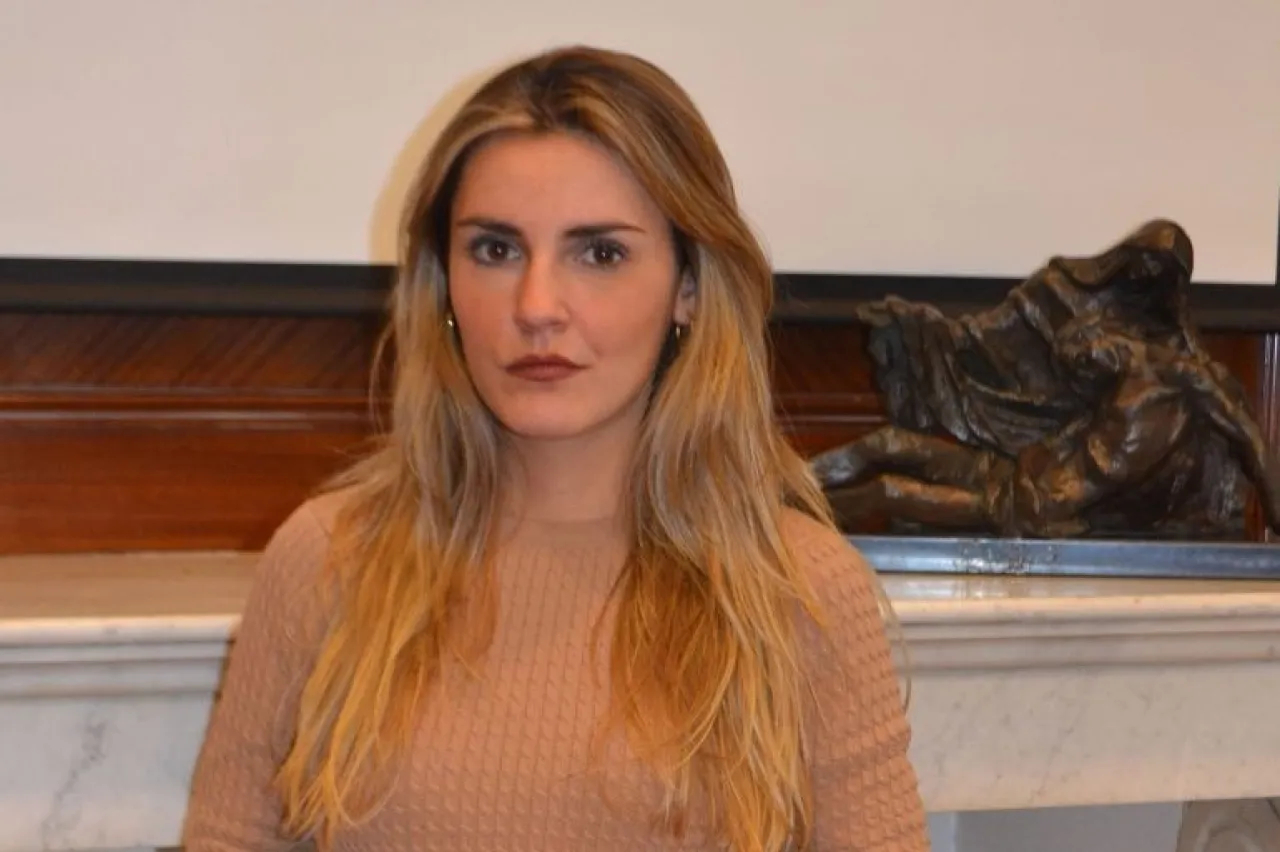
Khaberni - A Spanish correspondent working in Tel Aviv has sparked a wide wave of controversy in Spain and Israel and the Arab world, following her statements made live on air regarding the denial of Arabs in a Haifa neighborhood of their right to access shelters during Iranian strikes.
The correspondent and journalist Laura de Chiclana, who covers the Israeli-American war on Iran and the accompanying internal security tensions for a Spanish channel, said during a live intervention:
"Just a few seconds ago, while I was waiting to speak with you, one of those drones appeared and it was intercepted right behind us. What happens in these situations is that people run toward the shelters."
She then added, speaking about discrimination in access to shelters within Israel:
"But not everyone in Israel has the right—I'll put it this way—the right to go to the shelters. Here in Haifa, in one of the Arab neighborhoods, Arabs are not allowed to go to the shelter. There is only one public shelter for the entire neighborhood, and this means it does not accommodate everyone. The authorities say that if they want a private shelter, they have to pay about 50,000 euros."
"Correction" from the studio and deletion of the intervention
Following these statements, the program hosts in the studio quickly read what they described as a "correction" that they received from Jewish community representatives. The correction stated:
"This is a correction from our colleague Laura de Chiclana, received from the Jewish community. They say it is not true that Arab Israeli citizens do not have the right to shelters to protect against air raids or that they must pay 50,000 euros."
They added that "these claims are spreading as rumors or misleading information, especially in Arab media networks, but they are not based on facts established by Israeli civil defense law. All Israeli citizens—Jews, Arabs, and Druze—have equal rights to protection in shelters during emergencies."
The Spanish channel later deleted the segment from its digital platforms, a move seen by many as an attempt to contain the crisis. Meanwhile, the station manager commented on what happened by saying: "We all make mistakes, but the most important thing is to correct the error."
Israeli Outrage and Embassy Intervention
The controversy was not limited to social platforms, but extended to the official level. The Israeli Embassy in Spain issued a sharp comment on the correspondent's statements, saying:
"How can such a dangerous hoax spread on a program like Cuatro by a correspondent? We must fight fake news. The truth matters."
The embassy considered what the correspondent stated as "misinformation" that does not reflect the legal or field reality inside Israel, according to its description.
In managing the repercussions of the case on Spanish public opinion, a Spanish influencer on social platforms revealed that authorities acted quickly to try to refute the narrative presented by Laura de Chiclana. He wrote in a post commenting on the case:
"Following the scandal caused by Laura's information about Israel not allowing non-Jews into the shelters, the Israeli government has already taken relevant steps, and two Spanish-speaking influencers will travel this week to refute that, through a pre-arranged event in Haifa and Tel Aviv."
This step was seen as part of an organized public relations effort intended to present a different image of the situation of Arabs inside Israel, showcasing "equality" in access to shelters to the Spanish-speaking audience.
In the Arab world, the issue provoked a wide discussion about the reality of Palestinians holding Israeli citizenship and discrimination in civil protection systems during wars. One tweeter wrote:
"For your information, the areas where the Palestinians, imposed with Israeli citizenship, reside are not covered by the Iron Dome and are often neglected in military surveillance, so it is said that most targets are in Palestinian areas and not where the occupiers live. This is a kind of incitement against our people there."
While other tweeters resorted to sarcasm to describe what they considered to be duplicity and racism, one wrote colloquially:
"It's a stupid racist move. Why? Because those who are excluded from entering the shelters end up filming the rockets, and we see them the next day!"
In the same context, an opinion article was published in the Times of Israel blog, in which the writer and public policy researcher Ilan Amit highlighted a painful paradox experienced by Arabs in Israel in the midst of the barrage of rockets launched by Iran since the outbreak of the military confrontation last Saturday.
And Amit - co-director of the Arab Jewish Center for Empowerment, Equality, and Cooperation - said that the safety instructions directed by the Israeli authorities for citizens to go to the shelters during rocket attacks reveal a deep gap between Jewish and Arab citizens inside Israel, making those instructions in the eyes of many merely a "silly joke."