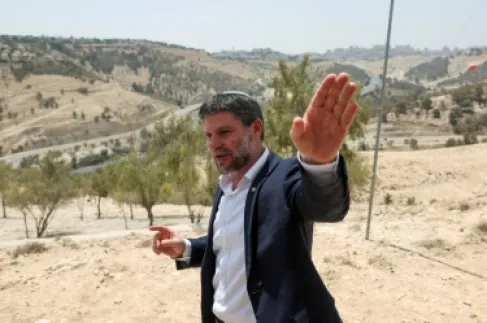
Khaberni - The Israeli occupation exploits, as usual, the regional tension and increasing international preoccupation, despite being a party to it, by escalating its violations against the Palestinian people in the occupied West Bank including Jerusalem, through intensifying the army and settlers' assaults and tightening military measures, within clear schemes aiming at forced displacement and imposing new realities on the ground.
During the first week of the war, the West Bank witnessed a noticeable escalation in settler violations, with estimates indicating an increase of about 25% compared to the period before the outbreak of the Israeli-American military confrontation with Iran.
During this period, 8 martyrs ascended; five of them were martyred by settlers' gunfire, they are: Thaer Farouq Hamail (24 years old), Fareq Joudat Hamail (57 years old) from the village of Abu Falah northeast of Ramallah, and the brothers Mohammad Taha Abdul Majid Maamar (52 years old) and Fahim Abdul Majid Maamar (47 years old) from the village of Qaryut south of Nablus, in addition to Amir Mohammad Shnaran (27 years old) from the town of Yatta south of Hebron.
Also martyred were the young men Mohammad Jihad Masalma from the town of Dura, and Tamer Ismail Qaisia from the town of Adh Dhahiriya, succumbing to their injuries from the occupation forces' gunfire in Hebron, while Mohammad Hussein Mara (55 years old) from the village of Abu Falah perished due to inhaling tear gas, which the occupation forces fired while providing protection for an attack carried out by settlers on the village.
* Military siege and fragmentation of cities
Although the direct military operations theater lies outside the Palestinian territories, the occupation authorities imposed since the outbreak unprecedented strict military measures under the pretext of "providing security".
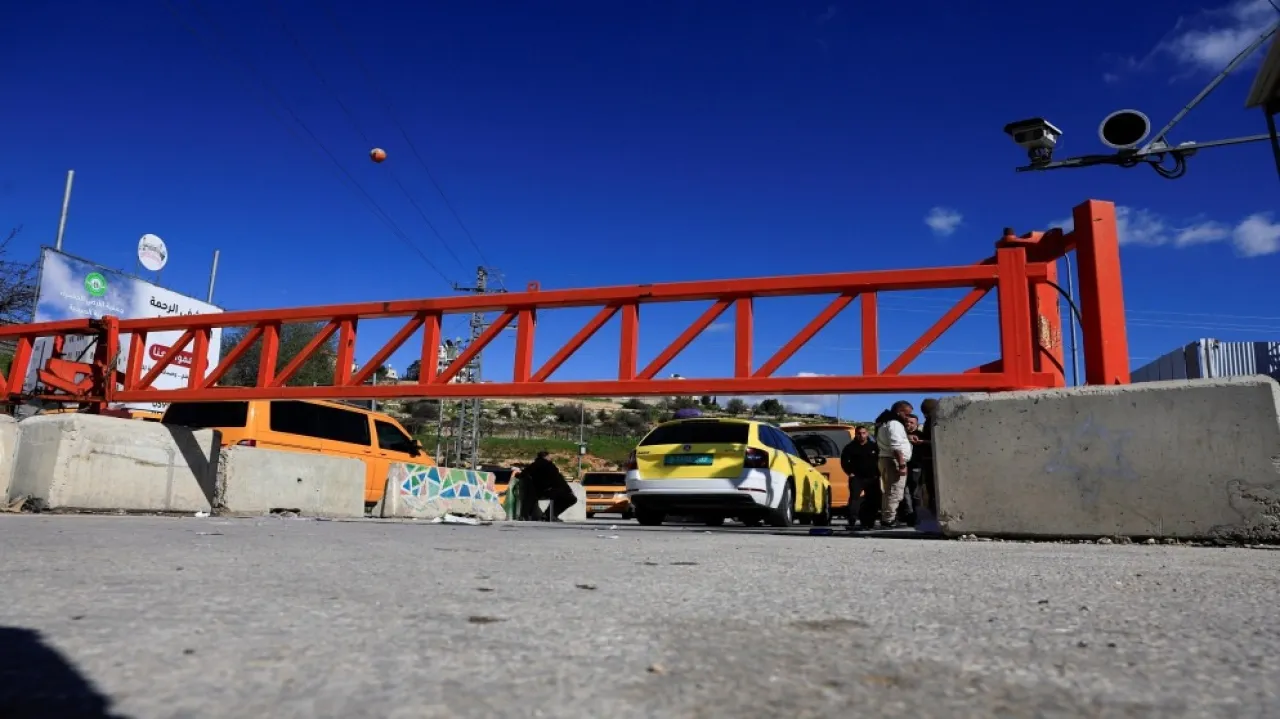
These measures included: closing many main roads and iron gates that connect Palestinian cities and towns to each other, in addition to tightening the grip on existing military checkpoints.
These measures reflected on the daily lives of Palestinians; completely hindering their movement, and disrupting employees from reaching their workplaces, while cities suffer an economic stagnation as Eid al-Fitr approaches.
* Abuse and displacement in Bedouin gatherings
Several areas witnessed a series of brutal settler attacks; in the town of Beit Anan northwest of Jerusalem, a Palestinian was injured with moderate wounds after settlers attacked him amidst his family on his agricultural land.
In the Bedouin gathering "Ma'azi Jab'a" north of Jerusalem, a child was injured during an attack by settlers that included property vandalism and killing several heads of livestock.
In the Northern Jordan Valley, eight Palestinians were injured due to settlers' beating in the area of Ras al-Ahmar south of Tubas.
In a serious development reflecting the policy of displacement, six Palestinian families in the village of Al-Aqabah east of Tubas were forced to dismantle their homes and tents in preparation for departure, after the escalation of attacks against them, injuring 12 citizens with bullets from the occupation army after they attempted to confront an attack by settlers.
Children were also targeted in the area of "Rahum A'la" in Masafer Yatta, with recorded injuries from live bullets in Khirbet Yarza and the town of Qaryut, in addition to the theft of sheep in the village of Rammun east of Ramallah and pepper spraying shepherds in the Jordan Valley.
* Arrests, destruction of property, and uprooting trees
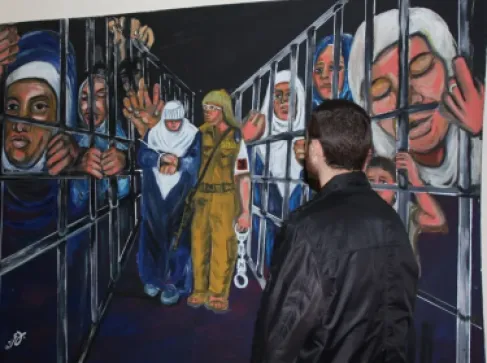
The Israeli occupation forces, during the same period, tightened their military measures in various governorates of the West Bank including Jerusalem, and launched widespread arrest campaigns affecting hundreds of Palestinians, accompanied by field investigations and home raids that wreaked havoc on contents and properties.
Statistics from concerned institutions indicate that the number of detainees during the past week exceeded 225 citizens from various Palestinian governorates, including women and children.
All court sessions in the plea stages for prisoners in the Ofer and Salem courts were postponed for the second consecutive week, and all appeal sessions for administrative detainees were indefinitely postponed, with lawyers from the West Bank being denied entry to the courts due to the closures imposed on the West Bank areas.
The occupation forces and settlers uprooted hundreds of olive trees in several areas, including the town of Idhna west of Hebron where more than 130 olive trees belonging to the Suleimia family were uprooted, alongside dozens of trees in the towns of Biddu and Beit Iksa northwest of Jerusalem, and the village of Jorat al-Shama south of Bethlehem, and the town of Turmus Aya northeast of Ramallah, as well as a notification of uprooting olive trees in the town of Ni'lin over an area exceeding 100 dunums.
The occupation forces also established new military gates at the entrances of several villages in the Jordan Valley and north of Jericho, as part of tightening restrictions on the movement of Palestinians, while a number of homes in Bethlehem, Salfit, and Jenin were taken over and turned into military barracks and sniper points after detaining the residents inside.
* Sole control in Jerusalem and Al-Aqsa
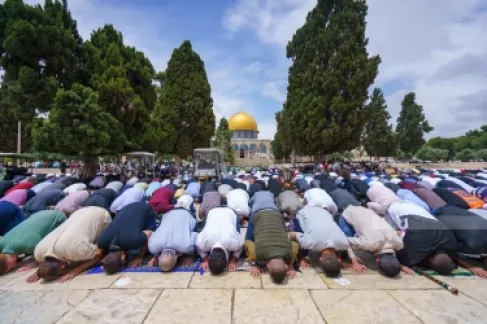
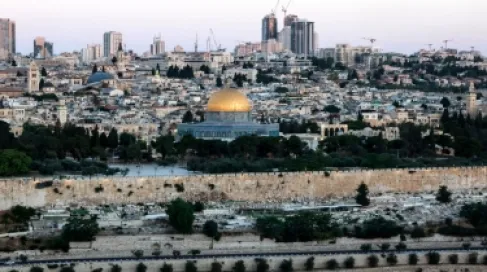
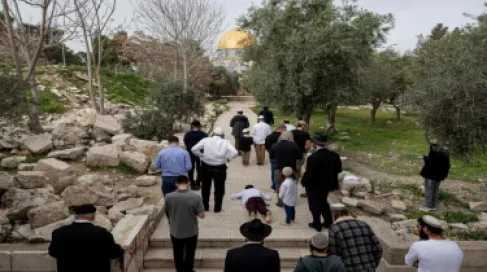
In occupied Jerusalem, the occupation exploited the regional tension to tighten restrictions, closed Al-Aqsa Mosque and prohibited prayers in it including Friday and Taraweeh prayers, and denied Palestinians from the West Bank and the territories of Palestinians of 48 from reaching the city, in addition to closing the Old City and allowing only its residents to enter.
These measures coincided with the month of Ramadan, causing significant losses to about 1400 traders in the Old City of Jerusalem who rely on this religious season, while excavation works under Al-Aqsa Mosque continue in the absence of worshipers and Murabitun, raising concerns about exploiting these conditions to impose new realities on the ground, as part of the policies of the temporal and spatial division of the holy places.
This was accompanied by a warning from United Nations experts that Jerusalem is being subjected to irreparable damage due to the acceleration of Israeli measures aimed at altering its population composition and the religious and legal status in the context of reshaping the demographic reality in the city and imposing exclusive dominance over it.
As for the city of Hebron, the occupation authorities completely shut down the Ibrahimi Mosque and prevented Waqf employees from entering it, and turned the Old City and its surroundings into a military zone, a step considered by observers as part of the measures aimed at exerting more control over the holy places.
* Continuous shelling on Gaza and tightening restrictions on crossings
The occupation forces continued shelling various areas of the Gaza Strip and imposed strict restrictions on the land crossings, thereby limiting the movement of civilians and the entry of humanitarian aid and essential materials, increasing the suffering of patients and injured despite the ceasefire agreement announced since October last year.
According to the Ministry of Health, the number of martyrs and injured since the start of the agreement reached 641 martyrs and 1,711 injured, in addition to unearthing 755 bodies, while the toll of the Israeli aggression on the sector since October 7, 2023, reached 72,126 martyrs and 171,809 injured.
International bodies warned of the direct impact of regional escalation on the humanitarian situation in Gaza, at a time when the stock of medicines in the Gaza Strip is declining, with a low level of access to medical supplies to the sector.
The World Health Organization noted that without steady access to aid, including the safe transport of medical supplies and the resumption of medical evacuation operations, patients will continue to face delays in obtaining care that threaten their lives.
Meanwhile, the United Nations Office for the Coordination of Humanitarian Affairs "OCHA" mentioned that the rotation of UN staff has been postponed, leading to the suspension of medical evacuation and return of the residents, despite efforts to maintain the flow of supplies, confirming that the continuation of the complete blockade threatens to stop them.