Khaberni - The social insurance and protection expert, Musa Al-Subaihi, said that the General Institution for Social Security represents a success story for one of our most important national institutions in the Kingdom, and that it has, throughout its journey which has reached (47) years, been self-financed, and will continue to be so if we enhance its governance, enforce its legislation, and correct some of its policies.
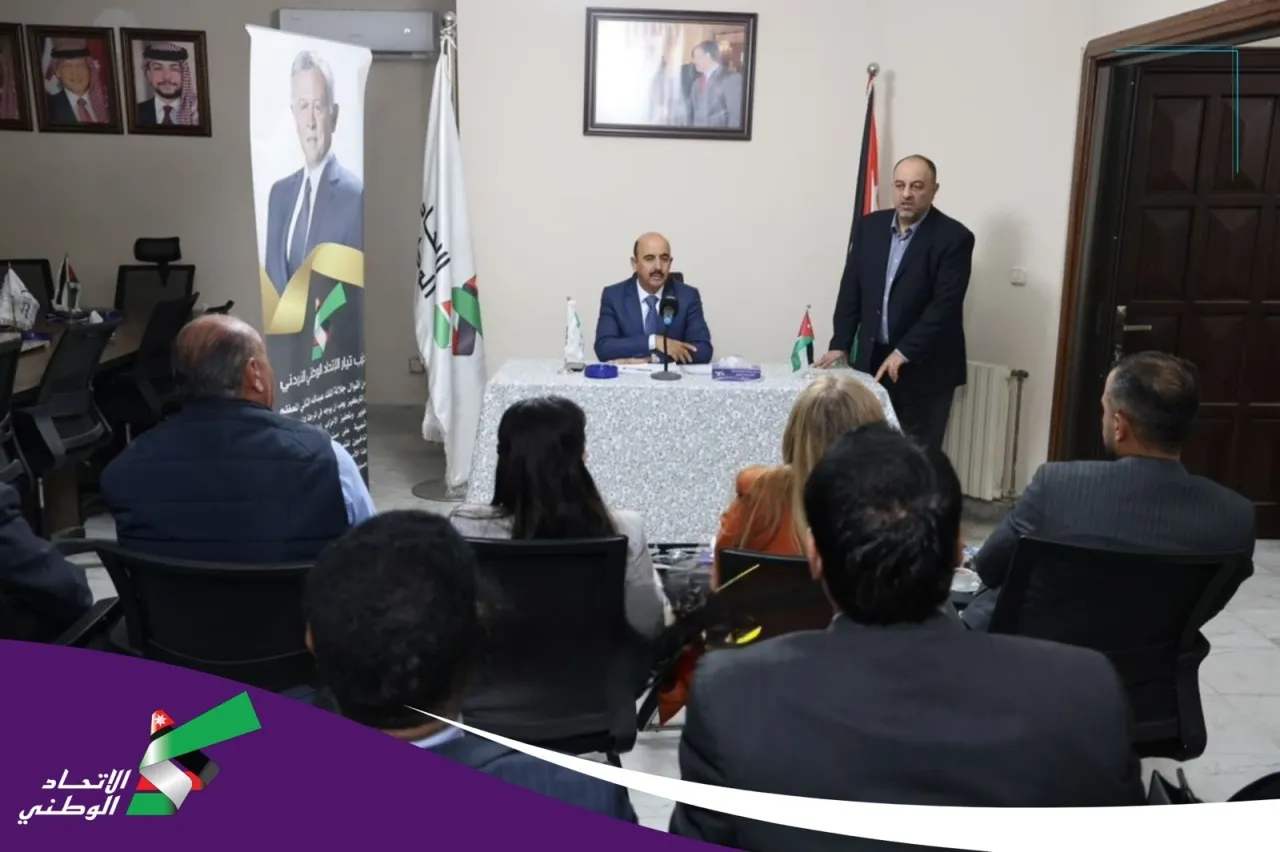
He added, in a dialogue meeting held by the Jordanian National Union Party at its headquarters in Amman and moderated by the lawyer Tariq Abu Al-Ragheb, that the institution has achieved cumulative insurance surpluses from contributions since the implementation of the social security law amounting to about (8.3) billion dinars. However, the insurance surpluses began to decline due to increased retirement expenses resulting from the excessive early retirement referrals witnessed by the public sector over the past six years, with the institution's expenses in 2024 representing about (86%) of its insurance revenues. Whereas ten years ago (in 2014) they did not constitute more than (63%) of the revenues.
He pointed out that the actuarial studies conducted by the institution every three years aim to assess the financial status of the institution and its insurance system in the medium and long term to ensure the system's continuity and the institution's financial solvency and its ability to effectively fulfill its increasing commitments towards the beneficiaries. He emphasized that the three breakeven indicators that the actuarial studies usually reveal are not necessarily going to occur, as much as they are alert indicators for decision-makers and policymakers to take the necessary measures and reforms to ensure the financial status of the Social Security Institution remains secure and reassuring. He affirmed that the social security law itself is considered one of the most important guarantees to not even reach the first breakeven point between insurance revenues (subscriptions) and expenses through the text of Article (18/C) of the law.
Al-Subaihi said that both the government and the Social Security Institution are today obliged to introduce reforms to the social security law in light of what the eleventh actuarial study will reveal of indicators, and that he expects the first breakeven indicator between insurance revenues and expenses to occur in either 2031 or 2032.
He mentioned that what is more important than amending the social security law is to correct a number of policies and practices that pose challenges to the security, including: insurance evasion, which reaches about 22% of those employed in the structured sector. And only a small percentage of non-Jordanian labor is covered by security, not exceeding (15%). Poor returns on investment of the security funds, which hover around (5%). Forced referrals to early retirement that included tens of thousands of public sector employees. Weak governance of the Social Security Institution and unclear responsibilities and authorities among its different bodies and councils, both insurance and investment. In addition to the challenge of implementing social health insurance. And the challenge of ensuring the social sufficiency of social security retirees, and not accepting the existence of a slice of them living at the subsistence and poverty levels.
Regarding the anticipated amendments to the law, he said that he expects them to touch on the main topics, including early retirement, and it is expected that early retirement will be abolished, mostly for new subscribers, and there may be an increase in the age and duration of subscription for specific categories of subscribers. The amendments will also include retirement conditions for those working in dangerous professions by raising the age along with increasing the subscription period. In addition, revisiting the table of dangerous professions in the regulations issued under the law. And amending the percentage discounts from the early salary.
Regarding the amendments related to old-age retirement, it is expected to raise the minimum duration of subscription for eligibility for an old-age retirement salary.
Also from the expected amendments related to the terms of mandatory inclusion, and expanding the base of inclusion and accommodating flexible work modes, remote work, and others. And expansion in the categories of optional subscription.
Further expected are amendments to restructure unemployment insurance, with more determinants and controls, and reevaluation of the concept of the savings account for the insured in the unemployment fund, and amending the conditions for eligibility for the unemployment benefit for both Jordanian and non-Jordanian insured.
The amendments may also involve revisiting the formula for calculating retirement salary by reconsidering some factors of the equation used to calculate the salary based on the average wage of a specified number of last subscriptions.
It is also expected that the amendments will enhance the eligibility conditions for some beneficiaries, heirs, and positive changes in some conditions for claiming a share from the salary of the insured or deceased retiree, especially concerning the spouse's entitlement to a share from the retirement salary of his deceased wife.
One of the most significant expected amendments includes restructuring the Social Security Institution and organizing its administration, where revising the section specifically about the administrative regulations for the Social Security Institution in the law (Section Two Articles 8 - 18) will relate to granting more administrative independence to the institution and resolving interference in responsibilities and authorities, changing designations. And he believes that an important proposal related to detaching the institution from the Minister of Labor will be considered, replacing it with the creation of the position of Governor of the General Institution for Social Security, a wise idea that limits responsibility and defines it and forms an important tool for accountability.
The amendments might also include changing the mechanism for granting the annual increase for retirees (inflation increase).
Finally, Al-Subaihi called on the government and the Social Security Institution, before initiating the presentation of a proposed amendment project to the social security law, to launch a broad social dialogue about the expected amendments and not rush them so that they can mature at a slow pace.
He also called for the activation of the text of Article (89/A) to raise the minimum retirement salary in order to improve the living conditions of a wide segment of social security retirees, stating that it is not permissible for the social security system to enrich some of the insured by enabling them to receive exorbitant retirement salaries, all the while allowing some to reach the social subsistence and poverty threshold by receiving weak retirement salaries, indeed very low ones that do not provide their holders with subsistence, let alone social sufficiency. Revealing two contrasting categories of current social security retirees; the first category comprising about (9.4%) of the cumulative number of retirees who receive salaries exceeding (1000) dinars monthly, totaling about (36) thousand retirees. And the second category comprising about (9%) of the retirees receiving salaries lower than (200) dinars monthly, touching the extreme poverty line, which necessitates immediate action to rescue this group and improve their living conditions and move them from the level of subsistence to social sufficiency.
The meeting witnessed an intense dialogue from the attendees covering most of the topics and ideas presented.