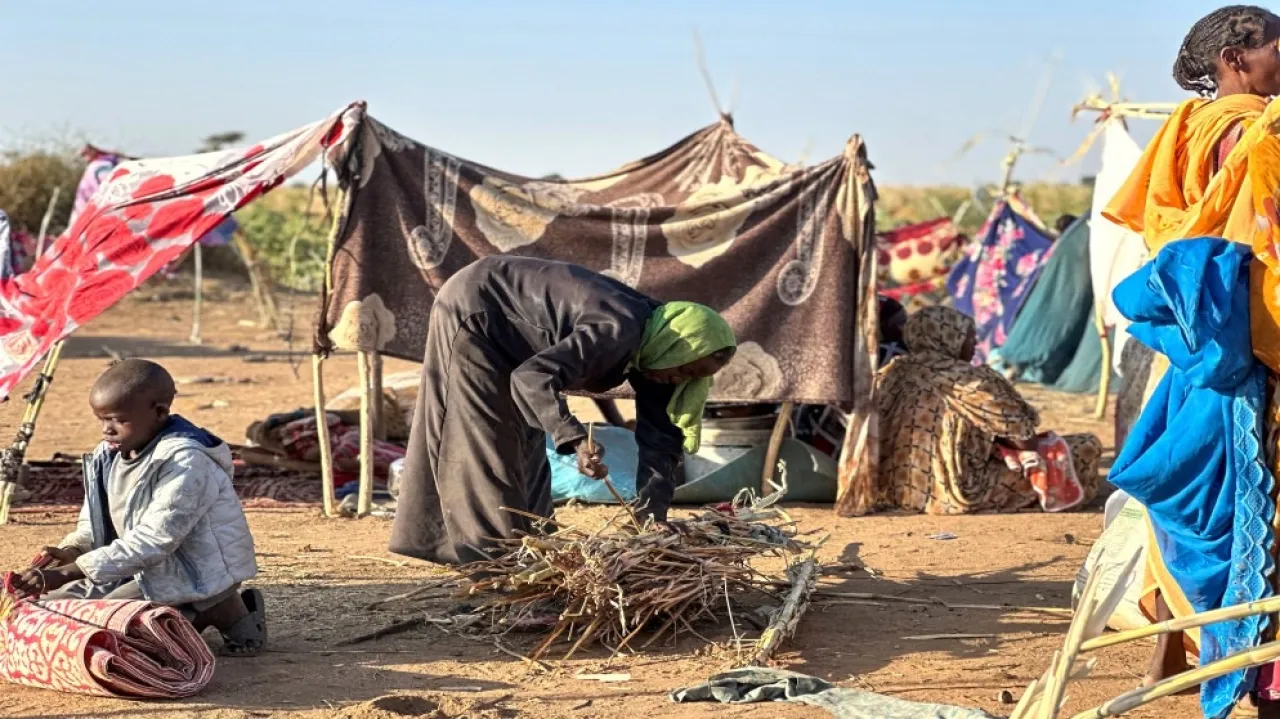
Khaberni - An international organization working in Sudan stated on Thursday that some children fleeing from the Sudanese city of Al-Fashir are reaching a humanitarian camp in North Darfur suffering from severe malnutrition to the extent that treatment sometimes cannot save them.
Mathilde Fou, from the Norwegian Refugee Council, describing the harsh journey across desert areas from Al-Fashir, the largest city in Darfur, to Tawila said, "People arrive suffering from severe dehydration to the point that they cannot speak."
She said that some people have been surviving on animal feed and rainwater, and relief efforts may not be sufficient to save all the children fleeing the siege, as famine has been used as a weapon in the war.
She added, "There are children who have suffered from severe malnutrition and hunger over the past few months in Al-Fashir to the extent that they may not survive even with treatment."
Since the Rapid Support Forces took over Al-Fashir two weeks ago, up to 10,000 people have arrived in Tawila. The town was already overcrowded, hosting more than 600,000 displaced people since April who fled earlier fighting.
About 82,000 people have fled from Al-Fashir and the surrounding areas since October 26, according to the United Nations.
Staff from the Norwegian Refugee Council said they are worried that thousands are still unaccounted for.
Many residents of Al-Fashir estimate that up to 200,000 people are still trapped inside the city.
Al-Fashir, plagued by famine, was the last stronghold of the Sudanese army in the vast West Darfur region before falling into the hands of the Rapid Support Forces after an 18-month siege.
Witnesses reported mass killings following the takeover by the Rapid Support Forces.
The Rapid Support Forces denied any violations and said they have tried to assist residents in obtaining humanitarian aid.
The Norwegian Refugee Council described the displaced persons in Tawila as in a "worrisome" state, suffering from severe shock, but the overcrowding and lack of resources, even basic supplies such as soap and water, make it difficult to save lives.
The Rapid Support Forces agreed to a proposal for a ceasefire for humanitarian purposes on Thursday. The Sudanese army has not yet responded.
It was announced on Thursday that the United Nations Human Rights Council will hold an emergency session about the situation in Al-Fashir.
The war between the army and Rapid Support Forces, which erupted in April 2023, has claimed the lives of tens of thousands of people and caused widespread hunger across the country, displacing millions of residents.