Khaberni - In one of the most thrilling espionage stories since the Cold War, details unraveled of a secret attempt by an American federal agent to recruit the personal pilot of Venezuelan President Nicolas Maduro, aiming to lure the latter to a location where the United States could arrest him, in exchange for a huge fortune and safety guarantees.
An "Irresistible" Offer in the Dominican Republic
The story began in the Dominican Republic in 2024, when federal agent Edwin Lopez, a former officer in the American army and a prominent investigator in the Department of Homeland Security, received a report about two Venezuelan presidential planes undergoing maintenance at "La Isabela" airport in Santo Domingo, in a potential breach of American sanctions, as reported by the "Associated Press" today, Tuesday.
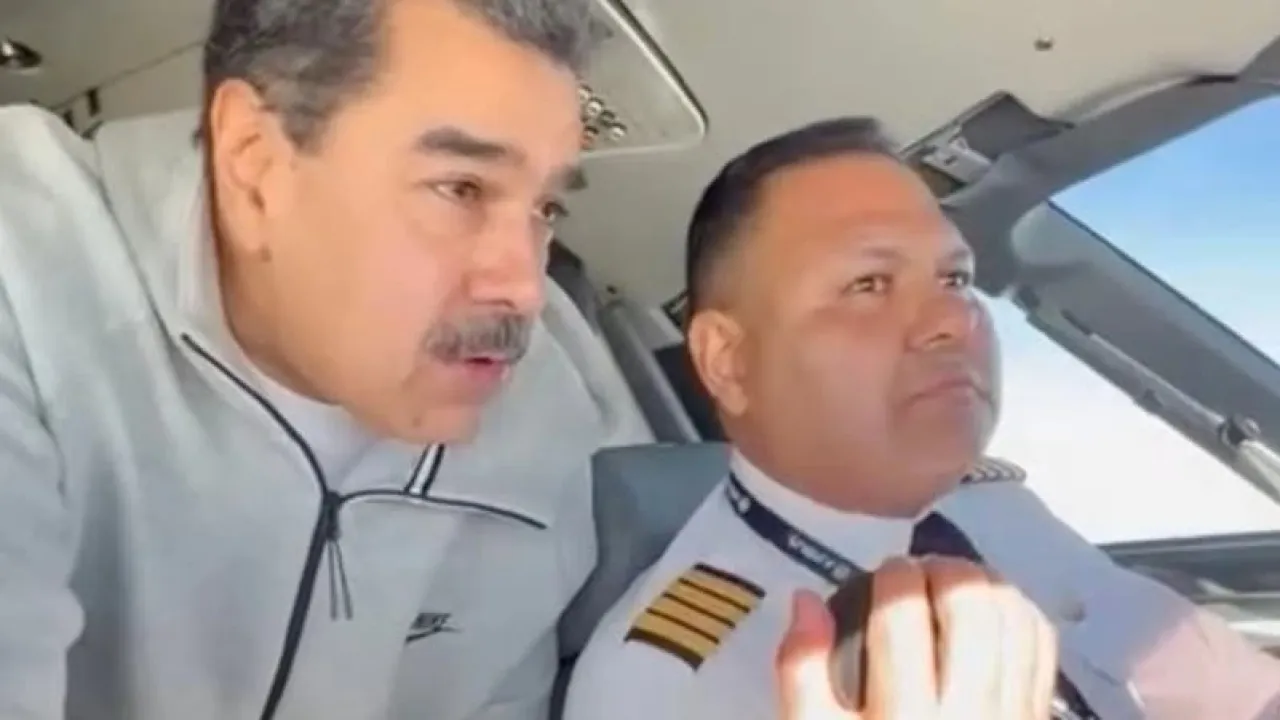
During the investigation, Lopez discovered that among the pilots tasked with retrieving the planes was General Betner Villegas, Maduro's personal pilot and a member of the elite presidential guard.
"Deal of a Lifetime"
That's when the idea was born: What if he could convince him to defect? In a secret meeting inside the airport hangar, Lopez offered Villegas the "deal of a lifetime," embodied in landing Maduro's plane at an agreed location, such as Puerto Rico or Guantanamo Base, to get the Venezuelan president into the hands of the Americans.
In return, he promised him a "huge fortune and heroic stature" in his homeland.
However, the pilot seemed nervous and left his phone number before leaving; a gesture interpreted as a glimmer of hope for cooperation.
Encrypted Communication and a $50 Million Reward
Then, over more than a year, Lopez continued communication with Villegas via encrypted apps, even after retiring in July 2025.
With escalating tensions between Washington and Caracas, the Trump administration doubled the reward for capturing Maduro to $50 million. Lopez leveraged the announcement and sent a message to the pilot saying, "I am still waiting for your answer," accompanied by a link about the reward from the U.S. Department of Justice. However, the repeated messages received no clear response.
As time went by, it seemed Villegas chose loyalty to the president over money.
Psychological Warfare
When Lopez realized the plan had reached a dead end, he decided to turn the situation into psychological warfare targeting Maduro himself.
In coordination with Venezuelan exiles, a former Republican ally in the Trump administration named Marshall Billingslea posted on the "X" platform congratulating Villegas on his 48th birthday, attached with two pictures of him: one from his meeting with Lopez in the airport hangar, and another in his official military uniform with a promotion star added.
The post, which was viewed by about 3 million people within hours, sparked a wave of questions in Venezuela about the loyalty of the pilot close to Maduro, especially after a presidential plane returned to Caracas airport unexpectedly minutes after the image was published.
Loyalty Display
However, after days of silence and debate, General Villegas appeared in a live broadcast on the state channel, alongside Interior Minister Diosdado Cabello, one of the regime's main pillars. Villegas raised his fist silently while Cabello described him as an "unshakable patriot," denying any suspicion of betrayal.
Thus, the recruitment attempt turned into a public display of loyalty, but at the same time, it revealed the fragility of trust within the presidential circle.
American Escalation against Maduro
This incident was part of a broad American escalation against the Maduro regime since Donald Trump returned to the White House. Trump authorized the CIA to conduct secret operations inside Venezuela and sent naval and air forces to the Caribbean to track boats suspected of smuggling cocaine. According to American news reports, these operations resulted in the deaths of 43 people in ten strikes last summer.
Additionally, Washington continued seizing Venezuelan planes and assets abroad, while Caracas insists on describing these actions as "political piracy" targeting Venezuelan sovereignty symbols.
It is worth noting that although the plan to recruit Maduro's pilot failed, it revealed the depth of the shadow war between Washington and Caracas, a war not just waged through sanctions or statements, but through attempts to infiltrate influence from within and exploit every gap in regime loyalties.
As for Maduro, having emerged from the storm still clinging to his crew, he realized more than ever before that the skies he flies in are no longer safe.