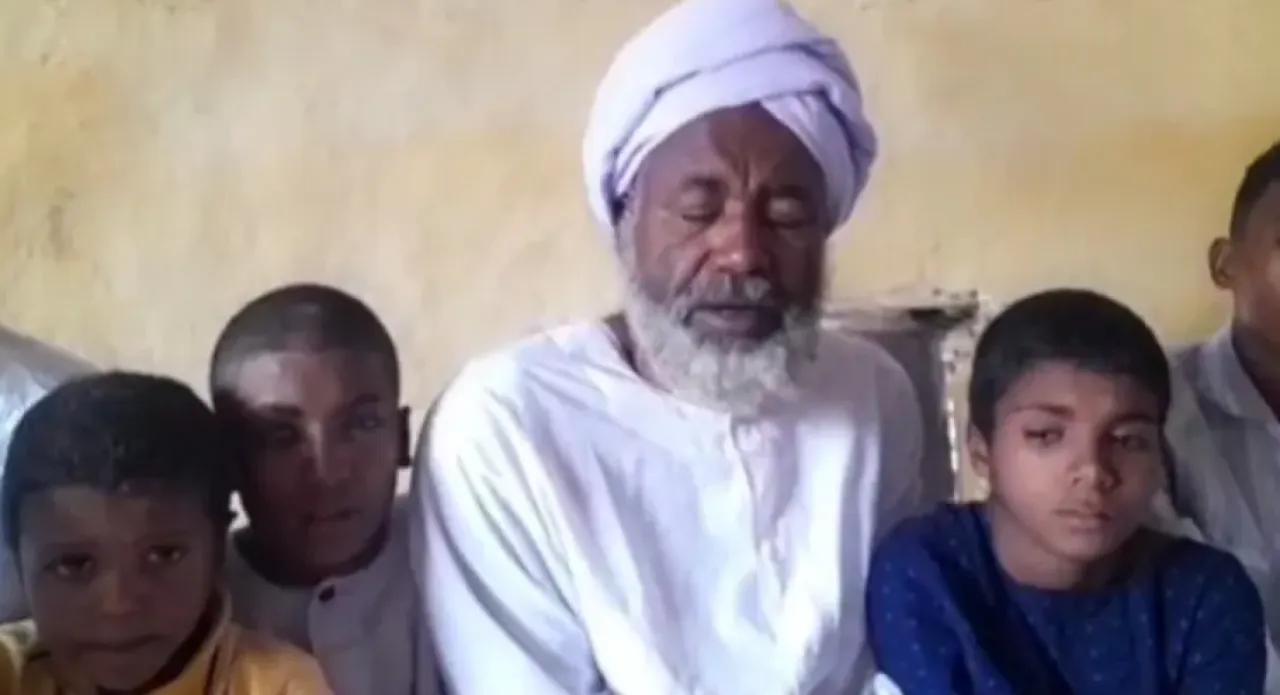
Khaberni - In village (7) in Al Faw locality in Al Qadarif state, eastern Sudan, 251 kilometers east of Khartoum, a scene that encapsulates the severity of human suffering, the tragedy of a Sudanese family has turned into a public opinion issue after ten of its members went completely blind due to hereditary "glaucoma," popularly known as "black water." Others from the same family face the same fate with severe vision impairments threatening total blindness.
Despite the enormity of the tragedy, the family, consisting of 31 members, struggles with extremely difficult living conditions, burdened by debt and healthcare costs, without any significant official support aside from a few visits and unfulfilled government promises.
The beginning of the story
Sebouh Hesab Allah Adam, a family member, tells "Al Arabiya.net" and "Al Hadath.net" that the journey of suffering began with his father at the age of twelve when he exhibited symptoms of severe visual impairment while herding sheep, which quickly evolved into complete blindness. He adds, "Initially, we sought traditional healers, then my father and my brother Youssef traveled to Khartoum in 2005, where it was determined that the condition was hereditary glaucoma."
The spread of the disease among the children
The condition didn’t stop at the father; it quickly began to spread within the family. The eldest brother Youssef lost his sight, followed by Sebouh himself, then five of his sisters, and eventually reaching the youngest brother, Hisham. Despite undergoing surgeries in specialized hospitals in Khartoum, doctors' attempts to stop the progression of the disease failed, settling at ten family members being completely blind, while others are on the brink of blindness.
Children are born with normal visual capabilities, but by the age of seven or eight, they start showing signs of vision impairment, progressively worsening to complete blindness.
The daily challenging life
Despite the harshness of their experience, the family tries to adapt to their situation. Sebouh says, "We have never used a white cane. We live our lives normally. I and some of my siblings work in weaving traditional beds locally known as 'angareeb,' made from raw wood and strung with palm fronds or plastic ropes."
The father, on the other hand, worked in various jobs before his health deteriorated due to diabetes. The youngest son, Hisham, suffered a severe psychological shock, but he continues his studies with the help of his teachers.
In a recorded video, the father, Hesab Allah Adam, confirmed that twenty years ago, doctors told him that all his children would become blind, a prediction that gradually came true.
The suffocating economic burden
The family's tragedy exacerbates with living pressures. Sebouh says, "We live on debts and have financial obligations towards the health center. We have received no stable government support, only unfulfilled promises."
Consolation in faith
Despite the difficulties, the family finds solace in their faith and the Holy Quran, with Sebouh and most of his sisters having memorized the Quran in the religious schools of Al Gezira State. He says, "We thank God in all circumstances, as this tribulation has brought us closer to the book of God and made us more content with His decree."