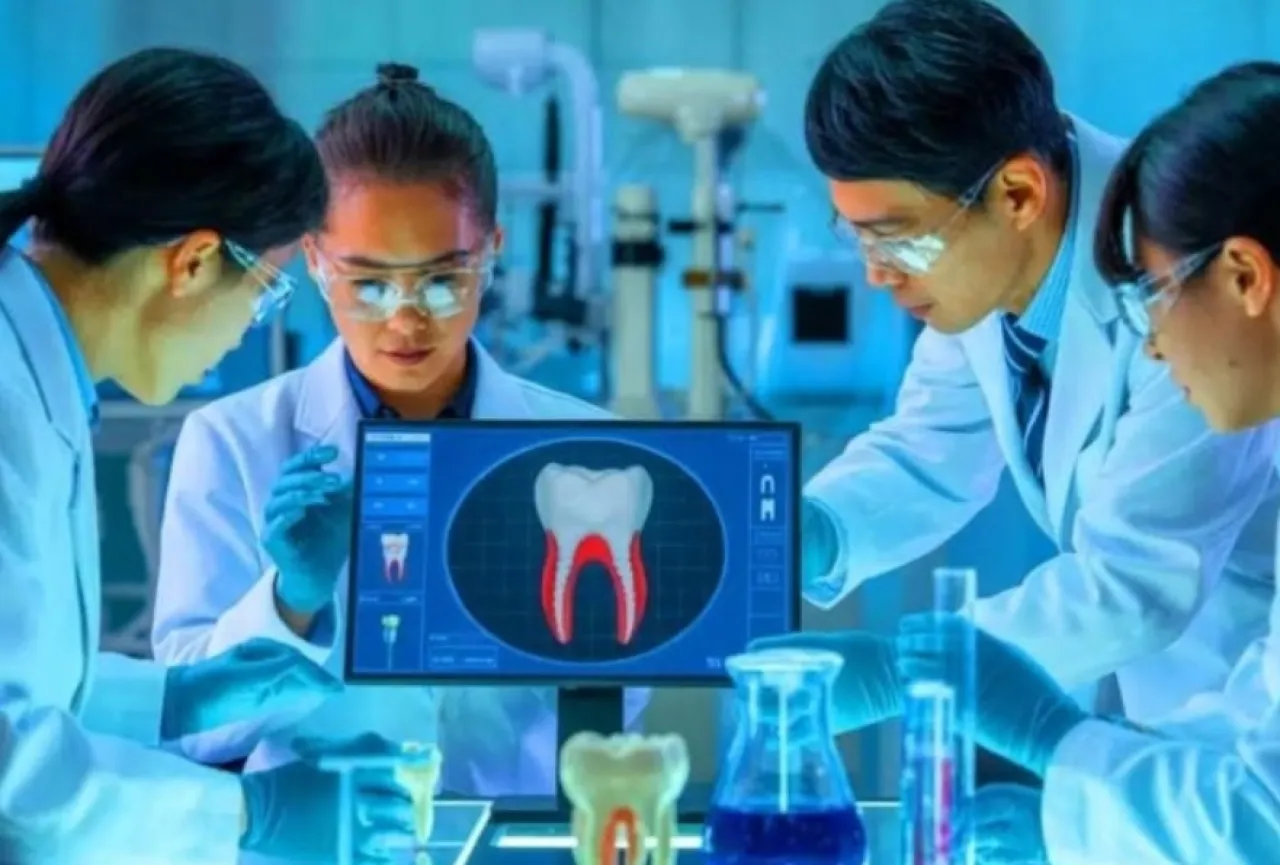
Khaberni - Recent scientific research in Japan has unveiled a medical development that could radically change the future of dentistry, after scientists successfully identified a gene responsible for tooth renewal known as USAG-1, and developed a method to disable its function allowing the growth of a new set of teeth in humans, opening wide prospects for millions of patients suffering from tooth loss or congenital deformities.
Researchers believe that this step, which is the first of its kind, could lead to a revolution in treatment methods, as reliance on dentures or implants is no longer the only solution, but the regrowth of natural teeth could become a realistic treatment option in the coming years.
The scientific team, led by Professor Katsu Takahashi, explained that initial animal trials showed stunning results, as disabling the function of a protein produced by the USAG-1 gene stimulated the growth of additional natural teeth.
Scientists are currently developing a drug that acts to stop the activity of this protein, in preparation for the first clinical trial on humans in a short period.
These experiments reflect great potential, especially for people with genetic disorders such as congenital tooth loss (anodontia), which affects about 1% of humans and results in the complete or partial absence of teeth.
Researchers hope that this discovery will pave the way for more natural and effective treatment solutions compared to traditional methods.
Scientists note that humans typically develop only two sets of teeth, deciduous and permanent, but recent studies have shown the existence of hidden tooth buds for a third set of teeth within the gums that can be activated.
Through genetic control, doctors may be able to revive these buds, just as it happens for some individuals suffering from hyperdontia, where they develop extra teeth.
The importance of the discovery is not limited to the medical field alone but extends to broader horizons in regenerative medicine, where similar techniques can be used to repair other tissues and organs in the body.
If clinical trials prove successful, by 2030 the world may witness a radical transformation in the concept of dental healthcare, and perhaps in other medical specialties as well.